
Maximilien Robespierre Biography Quotes 11 Report mistakes
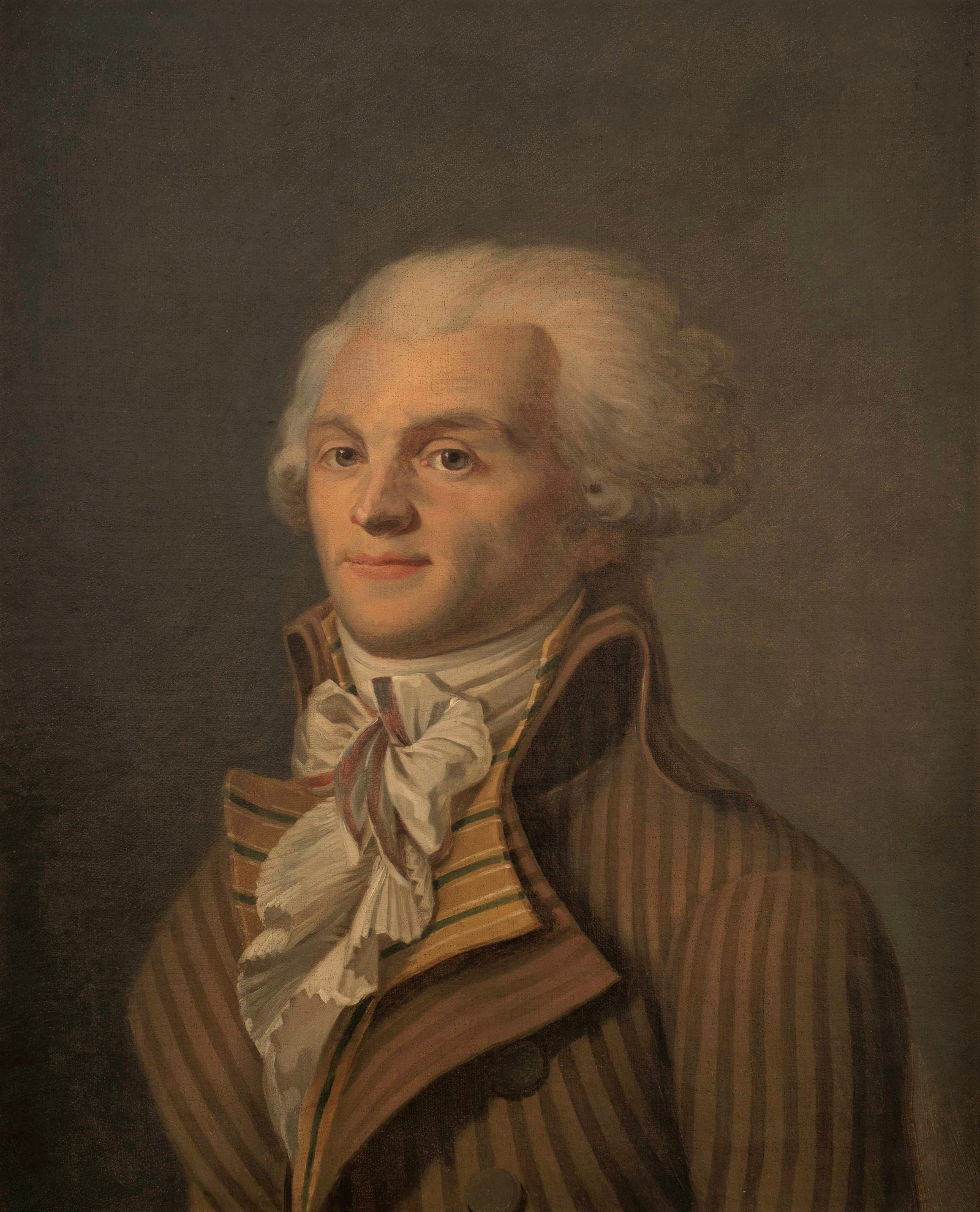
| 11 Quotes | |
| Born as | Maximilien François Marie Isidore de Robespierre |
| Occup. | Leader |
| From | France |
| Born | May 6, 1758 |
| Died | July 28, 1794 |
| Aged | 36 years |
| Cite | |
Citation Formats
APA Style (7th ed.)
Maximilien robespierre biography, facts and quotes. (2026, February 11). FixQuotes. https://fixquotes.com/authors/maximilien-robespierre/
Chicago Style
"Maximilien Robespierre biography, facts and quotes." FixQuotes. February 11, 2026. https://fixquotes.com/authors/maximilien-robespierre/.
MLA Style (9th ed.)
"Maximilien Robespierre biography, facts and quotes." FixQuotes, 11 Feb. 2026, https://fixquotes.com/authors/maximilien-robespierre/. Accessed 26 Mar. 2026.
Early Life and Background
Maximilien Francois Marie Isidore de Robespierre was born on 6 May 1758 in Arras, in Artois, a northern French province where municipal law, Catholic piety, and the memory of Spanish and French rule bred both legalism and suspicion of arbitrary power. His father, Francois de Robespierre, was a lawyer; his mother, Jacqueline Marguerite Carrault, died when Maximilien was a child, and his father drifted away soon after, leaving the family to be raised largely by relatives. The early experience of abandonment and loss did not make him convivial; it seems to have tightened his need for moral certainty and for institutions that could not simply walk away.Arras offered a path for a gifted boy: the law, the Church, and the state. Robespierre learned early how reputations were made in small cities - by probity, by rhetoric, and by unbending principle. He cultivated a spare, disciplined persona, the kind that could survive scrutiny, and he became sensitive to the humiliations of rank that structured the ancien regime. What others treated as mere custom, he came to read as a moral injury - a lifelong habit that later let him interpret politics as an ethical drama of innocence and corruption.
Education and Formative Influences
Awarded a scholarship, Robespierre studied at the College Louis-le-Grand in Paris, where a rigorous classical education met the ferment of Enlightenment political thought; Rousseau in particular offered him a vocabulary for virtue, popular sovereignty, and the "general will". Trained in debate and Latin moralists as much as in law, he returned to Arras as an advocate in the 1780s, writing prize-winning essays for the local academy and building a reputation for defending the poor against seigneurial privilege. This blend of legal reasoning, literary moralism, and Rousseauist politics shaped him into a man who sought not compromise but coherence.Career, Major Works, and Turning Points
Elected to the Estates-General in 1789 as a deputy of the Third Estate for Artois, Robespierre rose from an initially marginal figure to one of the Revolution's most relentless voices - in the National Assembly, the Jacobin Club, and the Paris Commune's political ecosystem. He opposed the royal veto, denounced war as a plot that would militarize the Revolution, and pushed for broader political rights, including early arguments for ending slavery and granting rights to free people of color. After the fall of the monarchy on 10 August 1792 and the creation of the Republic, he became central to the Committee of Public Safety (July 1793), supporting emergency measures to defeat invasion, civil war, and economic breakdown, while attacking rivals from both the radical left (Hebertists) and the revolutionary center (Dantonists). His speeches - not a single authored "book" but a body of oratory and reports - became his major works, culminating in the ideological drive behind the Law of 22 Prairial (June 1794) that accelerated executions. Isolated after the Festival of the Supreme Being and feared as the face of political death, he was overthrown on 9 Thermidor (27 July 1794) and guillotined the next day, 28 July, at age 36.Philosophy, Style, and Themes
Robespierre's inner life was organized around an almost juridical moral psychology: politics as a tribunal in which virtue must be protected from corruption. He believed sovereignty resided in the people, yet he distrusted the ease with which factions could claim to speak for them. This produced a characteristic tension - democratic in principle, prosecutorial in practice. In his rhetoric, he framed enemies less as opponents than as threats to the moral order of the Republic; the Revolution, for him, did not merely change a regime, it purified a social conscience.His most revealing statements fuse pedagogy, virtue, and coercion into a single theory of republican survival. “The secret of freedom lies in educating people, whereas the secret of tyranny is in keeping them ignorant”. Education here was not only schooling but civic formation, the molding of citizens capable of self-rule - a project he deemed urgent because ignorance made the people prey to demagogues and aristocrats. Yet he also insisted that mercy toward those cast as systematic oppressors was itself a vice: “To punish the oppressors of humanity is clemency; to forgive them is cruelty”. From this premise followed his starkest justification of revolutionary violence: “Terror is only justice: prompt, severe and inflexible; it is then an emanation of virtue; it is less a distinct principle than a natural consequence of the general principle of democracy, applied to the most pressing wants of the country”. Psychologically, these lines show a man who sought to reconcile tenderness for an abstract people with hardness toward concrete persons - a fusion that made him feel humane even while authorizing inhuman procedures.
Legacy and Influence
Robespierre endures as both symbol and argument: to some, the martyr of equality betrayed by opportunists; to others, the archetype of ideological absolutism that turns conscience into machinery. Thermidorian France blamed him for the Terror to stabilize a post-crisis order, but later republicans and socialists revisited his defense of popular sovereignty and social rights, while liberals and conservatives cited him as a warning about moralized politics and emergency power. His name remains a shorthand for the perilous proposition that virtue can be legislated - and that a revolution, once it claims to speak for humanity, may find it easier to execute enemies than to tolerate ambiguity.Our collection contains 11 quotes written by Maximilien, under the main topics: Ethics & Morality - Justice - Freedom - Knowledge - Equality.
Maximilien Robespierre Famous Works
- 1794 The Terror and Virtue (Speech)
- 1794 On the Principles of Political Morality (Speech)
Source / external links