
May Sarton Biography Quotes 21 Report mistakes
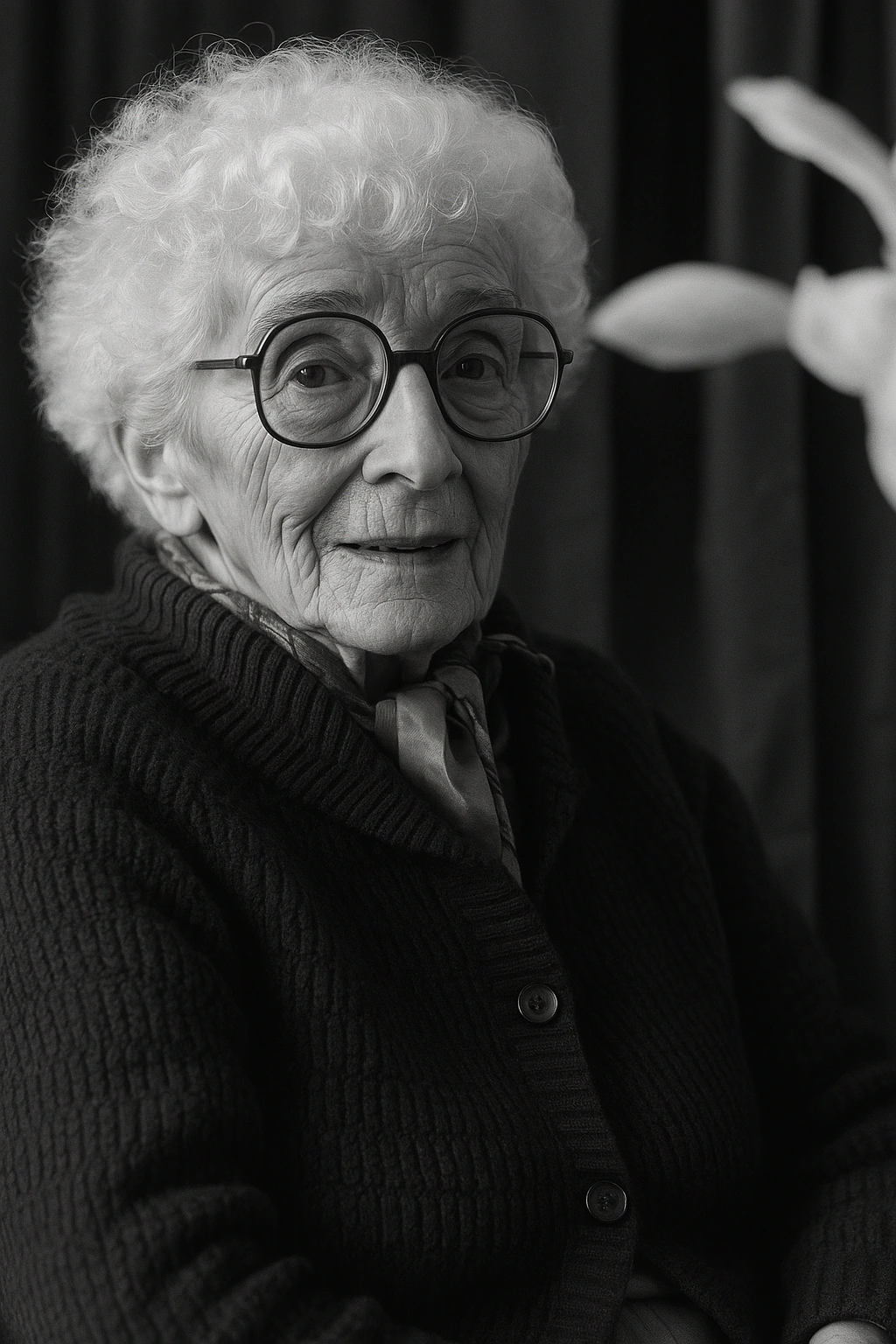
| 21 Quotes | |
| Known as | Eleanore Marie Sarton |
| Occup. | Poet |
| From | USA |
| Born | May 3, 1912 Wondelgem, Belgium |
| Died | July 16, 1995 York, Maine, United States |
| Aged | 83 years |
| Cite | |
Citation Formats
APA Style (7th ed.)
May sarton biography, facts and quotes. (2026, February 11). FixQuotes. https://fixquotes.com/authors/may-sarton/
Chicago Style
"May Sarton biography, facts and quotes." FixQuotes. February 11, 2026. https://fixquotes.com/authors/may-sarton/.
MLA Style (9th ed.)
"May Sarton biography, facts and quotes." FixQuotes, 11 Feb. 2026, https://fixquotes.com/authors/may-sarton/. Accessed 5 Mar. 2026.
Early Life and Background
May Sarton was born Eleanore Marie Sarton on May 3, 1912, in Wondelgem near Ghent, Belgium, into a household already shaped by ideas and exile. Her father, George Sarton, was a pioneering historian of science; her mother, Mabel Elwes Sarton, was an English designer and artist. The First World War ruptured the family almost immediately, turning childhood into flight and improvisation. In 1915 they left war-torn Belgium for England and then crossed the Atlantic, part of a broader current of European intellectual refugees who remade American cultural life between the wars.They settled in Cambridge, Massachusetts, where the presence of Harvard, libraries, and salons gave Sarton an early sense that books were not ornaments but instruments of survival. Yet the security of that world also carried a cost: the emotional weather of a family devoted to work, and a young girl growing into a lesbian identity in an era that offered few public names for it. The tensions between belonging and apartness, between the desire for love and the need for privacy, became the enduring engine of her art.
Education and Formative Influences
Sarton attended Cambridge schools and then studied at the progressive Shady Hill School, where arts education was treated as a way of making a self rather than merely acquiring credentials. As a teenager she fell under the spell of the theater and poetry, absorbing French and English lyric traditions as naturally as the New England landscape around her. The discipline of rehearsal and the inwardness of reading combined into a personal credo: a life could be authored, revised, and held together through daily practice.Career, Major Works, and Turning Points
In the 1930s she founded the Apprentice Theatre in Cambridge and acted and directed before choosing the solitary apprenticeship of writing as her central vocation. Her first volume of poems, Encounter in April (1937), announced a poet attentive to seasons, desire, and the moral pressure of ordinary days. Over the next decades she built an unusually varied body of work: poetry collections, novels such as Mrs. Stevens Hears the Mermaids Singing (1965) and As We Are Now (1973), and later the journals that made her widely beloved, including Journal of a Solitude (1973), The House by the Sea (1977), and At Seventy (1984). A decisive turning point came when she moved to rural New Hampshire in the 1970s, then later to a house on the Maine coast; the public writer increasingly framed her life as a laboratory for making order from loneliness, illness, and the demands of attention.Philosophy, Style, and Themes
Sarton wrote as if the private life were a civic responsibility. Her poems and journals insist that feeling is not merely confession but a kind of evidence, a force that can authorize difficult choices and durable commitments. She repeatedly defended intensity against the American talent for distraction, and her own temperament - sensitive, easily overtaxed, fiercely loyal - became both subject and method. When she writes, “True feeling justifies whatever it may cost”. , she is not celebrating impulsiveness so much as naming the price of integrity for a woman who refused the conventional shelters of marriage and social conformity.Her style is plainspoken and musical, closer to prayer and notebook than to ornament, and it is shaped by a daily ethics of work. The journals especially map a psychology in which structure is not the enemy of freedom but its precondition: “Each day, and the living of it, has to be a conscious creation in which discipline and order are relieved with some play and pure foolishness”. Solitude, for Sarton, is not the romantic pose of the artist but a hard-won condition in which the self can become habitable. She draws a sharp line between deprivation and chosen aloneness: “Loneliness is the poverty of self; solitude is the richness of self”. Across genres, her recurring themes - seasonal change, the holiness of domestic space, erotic candor, aging, and the struggle to keep bitterness from curdling into contempt - are all ways of asking how a life can remain porous to beauty without being destroyed by feeling.
Legacy and Influence
By the time of her death on July 16, 1995, in York, Maine, Sarton had become a bridge figure: modern enough to write openly about women loving women, yet classical in her faith that attention, craft, and moral seriousness can stabilize a life. Her influence endures less through a single canonical poem than through a whole stance toward living - the writer as witness to the inner weather, the home as a site of spiritual labor, the journal as a public gift. For readers navigating creative work, depression, caregiving, or aging, she remains a companionable authority, proving that a disciplined daily practice can transmute isolation into art and that the most private truths, precisely rendered, can become communal shelter.Our collection contains 21 quotes written by May, under the main topics: Ethics & Morality - Wisdom - Truth - Art - Love.
Frequently Asked Questions
- May Sarton The work of happiness: A widely anthologized poem about finding joy in daily work, attention, and ordinary life.
- May Sarton loneliness: A central theme in Journal of a Solitude and many poems, contrasting creative solitude with isolation.
- May Sarton poems on aging: Coming into Eighty; Letters from Maine; late poems in Halfway to Silence; themes of elderhood and resilience.
- May Sarton books: Journal of a Solitude; Mrs. Stevens Hears the Mermaids Singing; As We Are Now; Plant Dreaming Deep; The House by the Sea; The Small Room.
- May Sarton famous poems: Now I Become Myself; The Work of Happiness; The Phoenix Again; The Muse as Medusa; A Light Left On.
- May Sarton Poems: Collected Poems 1930-1993; A Durable Fire; Halfway to Silence; A Private Myth; Letters from Maine; Coming into Eighty.
- How old was May Sarton? She became 83 years old
May Sarton Famous Works
- 1973 Journal of a Solitude (Memoir)
Source / external links