
Maya Angelou Biography Quotes 54 Report mistakes
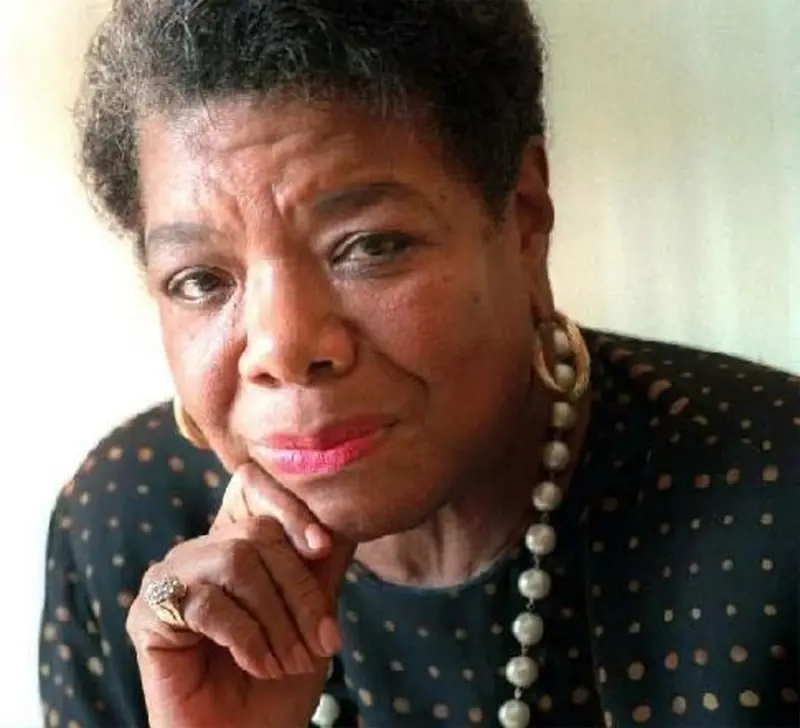
| 54 Quotes | |
| Born as | Marguerite Ann Johnson |
| Occup. | Poet |
| From | USA |
| Born | April 4, 1928 St. Louis, Missouri, U.S. |
| Age | 97 years |
Maya Angelou was born Marguerite Ann Johnson on April 4, 1928, in St. Louis, Missouri, in a United States still structured by Jim Crow law and Depression-era precarity. After her parents marriage faltered, she and her older brother Bailey were sent to Stamps, Arkansas, where they were raised largely by their paternal grandmother, Annie Henderson, a store owner whose stern dignity and communal authority offered a counterweight to the daily humiliations of segregation.
Childhood also brought trauma and the beginnings of a private interior life that would later fuel her art. Sexually assaulted in St. Louis, Angelou stopped speaking for years, convinced her words could harm; that silence became a laboratory for memory, listening, and the moral weight of language. In Stamps she absorbed Black church cadence, blues, and the rituals of survival - the way humor, pride, and faith could function as armor - while also learning how racial terror shaped even ordinary errands and schooldays.
Education and Formative Influences
Her formal education moved with her circumstances: back to St. Louis and then to San Francisco, where she attended George Washington High School and studied dance and drama at the California Labor School. In wartime San Francisco she became the citys first Black female streetcar conductor, an early lesson in strategic audacity. Books and mentors mattered as much as classrooms: she read voraciously, and the sound of Black preaching, the discipline of performance, and the example of women who held families together under pressure formed a template for her later insistence that private suffering could be transformed into public meaning.
Career, Major Works, and Turning Points
Angelou entered adulthood as a performer - dancer, singer, and actor - appearing in the touring production of Porgy and Bess in the mid-1950s and recording the album Miss Calypso (1957). The civil rights era shifted her center of gravity: she worked with Martin Luther King Jr.s Southern Christian Leadership Conference and later with Malcolm X through the Organization of Afro-American Unity. She lived in Egypt and Ghana, writing and editing while joining a community of African and African American expatriates, before returning to the US after Malcolm Xs assassination. Her decisive literary turning point came at the urging of James Baldwin and editor Robert Loomis: I Know Why the Caged Bird Sings (1969) reinvented autobiography as lyric testimony, followed by a sequence of memoirs and volumes of poetry. With the reading of "On the Pulse of Morning" at Bill Clintons 1993 inauguration, she became a civic voice as well as a literary one, while teaching for decades at Wake Forest University.
Philosophy, Style, and Themes
Angelous writing is built on the conviction that voice restores agency. She understood language as something embodied - sounded, witnessed, and answered - and her pages carry the rhythms of sermon, blues, and porch-side story. She aimed for emotional directness without simplification, insisting on craft that moves past argument into recognition: "The idea is to write it so that people hear it and it slides through the brain and goes straight to the heart". That goal reflects her psychology as a survivor of silence: the artistry is not ornamental but reparative, a way to make speech safe again for herself and for readers who have learned to brace for judgment.
Her central themes - home, courage, love, and self-determination - come from a life of displacement and chosen reinvention. The longing to belong is never sentimental in her work; it is a moral demand for a place where the full self can stand unmasked: "I long, as does every human being, to be at home wherever I find myself". Against forces that reduce people to categories, she offers an ethic of action and interior freedom, the stance that meets limitation without surrender: "If you don't like something, change it. If you can't change it, change your attitude". Even when she writes joy, it is hard-won - a practice rather than a mood - and her best lines carry the sense that dignity is something you decide to keep, then build daily.
Legacy and Influence
Angelou died in 2014, but her influence remains unusually broad: she helped establish Black womens autobiography as a major American form, modeled a public intellectual who could speak in both lyric and civic registers, and made survival feel like shared knowledge rather than private shame. Her work continues to shape poets, memoirists, teachers, and activists because it fuses witness with uplift without denying violence; it shows how a life can be edited into meaning while keeping the bruise visible, and how a voice once withheld can become, for millions, a home.
Our collection contains 54 quotes who is written by Maya, under the main topics: Motivational - Ethics & Morality - Wisdom - Truth - Never Give Up.
Other people realated to Maya: Nikki Giovanni (Poet), Oprah Winfrey (Entertainer), John Henrik Clarke (Author), Eric Butterworth (Educator), LeVar Burton (Actor), Guy Johnson (Writer), Alfre Woodard (Actress), Tavis Smiley (Author), John Singleton (Director)
Maya Angelou Famous Works
- 2013 Mom & Me & Mom (Autobiography)
- 2002 A Song Flung Up to Heaven (Autobiography)
- 1995 Phenomenal Woman: Four Poems Celebrating Women (PoetryCollection)
- 1993 Wouldn't Take Nothing for My Journey Now (EssayCollection)
- 1991 I Shall Not Be Moved (PoetryCollection)
- 1986 All God's Children Need Traveling Shoes (Autobiography)
- 1981 The Heart of a Woman (Autobiography)
- 1978 And Still I Rise (PoetryCollection)
- 1976 Singin' and Swingin' and Gettin' Merry Like Christmas (Autobiography)
- 1974 Gather Together In My Name (Autobiography)
- 1972 Georgia, Georgia (Screenplay)
- 1969 I Know Why the Caged Bird Sings (Autobiography)
Source / external links