
Mayer Amschel Rothschild Biography Quotes 2 Report mistakes
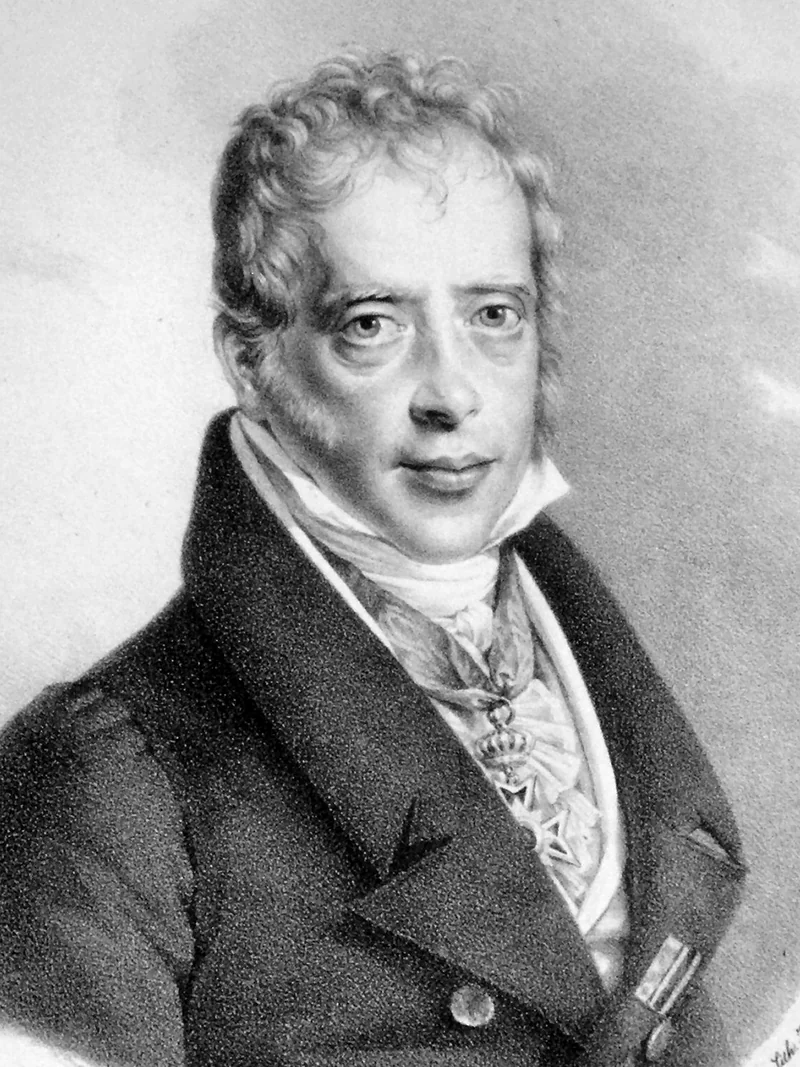
| 2 Quotes | |
| Occup. | Businessman |
| From | Germany |
| Born | February 23, 1744 Frankfurt am Main |
| Died | September 19, 1812 Frankfurt am Main |
| Aged | 68 years |
| Cite | |
Citation Formats
APA Style (7th ed.)
Mayer amschel rothschild biography, facts and quotes. (2026, February 2). FixQuotes. https://fixquotes.com/authors/mayer-amschel-rothschild/
Chicago Style
"Mayer Amschel Rothschild biography, facts and quotes." FixQuotes. February 2, 2026. https://fixquotes.com/authors/mayer-amschel-rothschild/.
MLA Style (9th ed.)
"Mayer Amschel Rothschild biography, facts and quotes." FixQuotes, 2 Feb. 2026, https://fixquotes.com/authors/mayer-amschel-rothschild/. Accessed 26 Mar. 2026.
Early Life and Background
Mayer Amschel Rothschild was born on February 23, 1744, in Frankfurt am Main, in the Judengasse, the walled Jewish quarter that was both a cradle of communal solidarity and a cage of legal restriction. The Holy Roman Empire was a mosaic of jurisdictions, and Jews in Frankfurt lived under curfews, special taxes, and limitations on residence and trade. That environment shaped a temperament attuned to risk, reputation, and the quiet power of networks - the kinds of assets that could not be confiscated as easily as land or titles.He grew up in a household tied to commerce. His father, Amschel Moses Rothschild, dealt in small trade and money-changing, and the young Mayer learned early that survival depended on trust, record-keeping, and fluency across social boundaries. Orphaned while still young, he inherited little capital but absorbed a hard lesson common to the Judengasse: stability was rarely granted by the state and often had to be built, slowly, by family discipline and careful alliances.
Education and Formative Influences
Rothschilds formal schooling is less documented than his apprenticeship, but his education was unmistakably practical: he trained in the habits of an 18th-century merchant-banker - arithmetic, foreign coinage, correspondence, and the etiquette of dealing with Christian courts while remaining rooted in Jewish communal life. Time spent away from Frankfurt as a young man, likely in an established banking and trading environment, exposed him to the rising importance of public finance, court credit, and the market for curiosities and coin collections - niches where a minority outsider could cultivate expertise and enter elite circles through value rather than status.Career, Major Works, and Turning Points
By the 1760s and 1770s, Rothschild had built a business in Frankfurt dealing in coins, antiques, and exchange, a pathway that brought him to the attention of Wilhelm IX, Landgrave of Hesse-Kassel (later Elector Wilhelm I), among Europes wealthiest princes. Securing the title of court factor and managing transactions for the Hessian court turned his shop into a node of princely finance. The era soon turned violent: the French Revolutionary and Napoleonic wars upended borders, currencies, and loyalties, but also multiplied the demand for remittance, credit, and discreet logistics. Rothschild responded by professionalizing a family strategy - placing sons in key capitals to move information and funds faster than competitors. Amschel stayed in Frankfurt; Salomon went to Vienna, Nathan to London, Carl to Naples, and James to Paris, forming the architecture of a cross-border partnership that could arbitrage political fragmentation itself. He died on September 19, 1812, in Frankfurt, having laid the operational and ethical template that his sons would scale into a European financial dynasty.Philosophy, Style, and Themes
Rothschilds inner life is best inferred from method: a preference for endurance over spectacle, for solvency over bravado, and for the kind of power that travels through paper, promises, and kinship. In a world where Jews could rarely rely on formal protection, he treated information as a form of shelter and speed as a form of defense. His style was incremental - cultivate a patron through specialized service, convert one relationship into a reputation, then use reputation to open credit and credit to widen relationships. The emotional undertow was not romantic ambition but controlled anxiety: the sense that political winds could shift overnight, so resilience had to be engineered into the business itself.Later generations attached to him aphorisms about monetary sovereignty that capture, even if not reliably verbatim, the logic of his era and his trade: “Give me control of a nation's money and I care not who makes her laws”. Such a sentence distills a bankers worldview in wartime Europe, where parliaments and princes could decree but only credit could mobilize armies, stabilize currencies, or keep administrations functioning. The harsher variant, “Permit me to issue and control the money of a nation, and I care not who makes its laws”. , expresses the same psychological proposition - that real power is exercised through systems rather than slogans. For Rothschild, that system was not abstract dominance but a disciplined family apparatus: trust internal enough to move vast sums, discreet enough to survive regime change, and adaptable enough to operate across confessional and national lines.
Legacy and Influence
Mayer Amschel Rothschilds enduring influence lies less in any single deal than in the institutional idea he proved: that a family firm, coordinated across capitals, could become a transnational infrastructure for payments, loans, and intelligence at a time when modern states were still improvising their finances. His sons carried the model into the 19th century, helping shape European bond markets and the mechanics of sovereign borrowing, while also attracting myth, envy, and conspiracy - a sign, paradoxically, of how visible financial power became in the modern age. From the Judengasse to the courts of Europe, Rothschild embodied a new kind of businessman: one who converted marginality into method, and method into an influence that outlived him.Our collection contains 2 quotes written by Mayer, under the main topics: Money.