
Medgar Evers Biography Quotes 4 Report mistakes
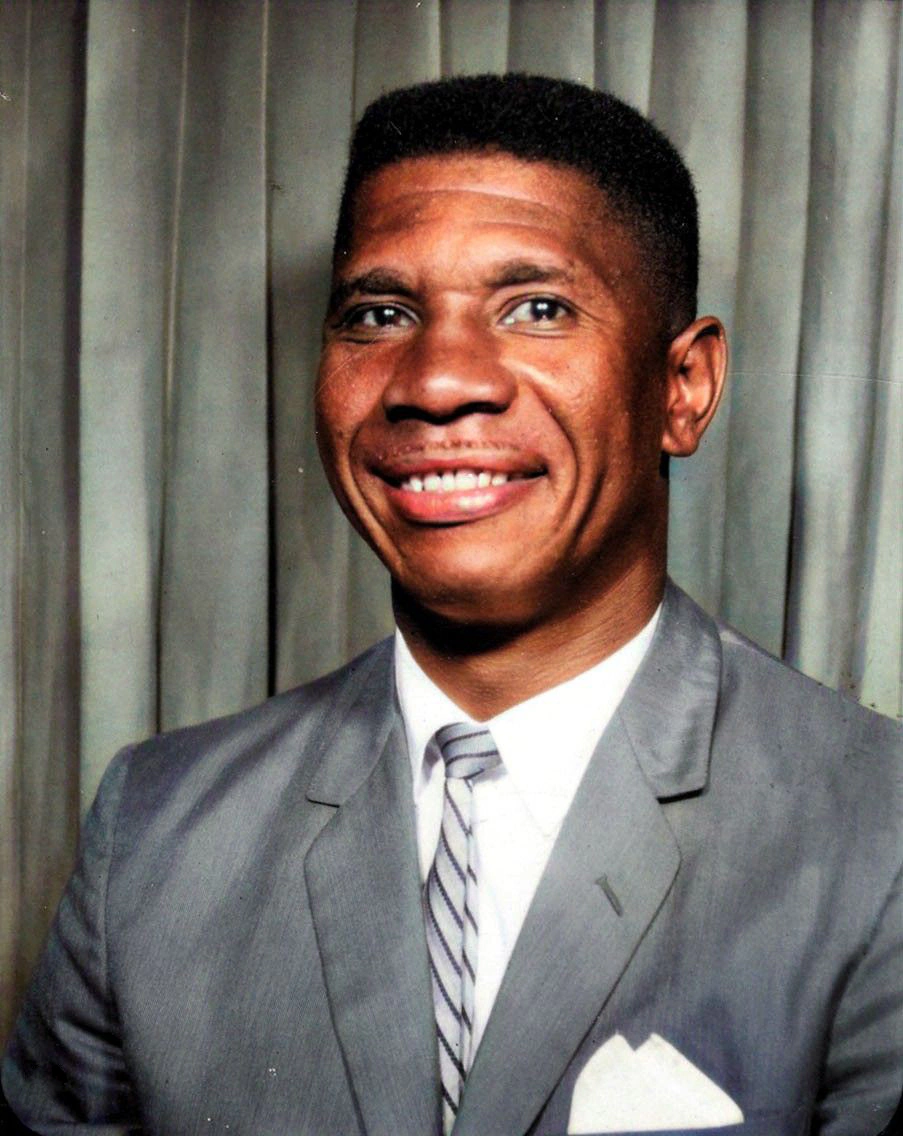
| 4 Quotes | |
| Born as | Medgar Wiley Evers |
| Occup. | Activist |
| From | USA |
| Spouse | Myrlie Evers |
| Born | July 2, 1925 Decatur, Mississippi, USA |
| Died | June 12, 1963 Jackson, Mississippi, USA |
| Cause | Assassination |
| Aged | 37 years |
| Cite | |
Citation Formats
APA Style (7th ed.)
Medgar evers biography, facts and quotes. (2026, February 11). FixQuotes. https://fixquotes.com/authors/medgar-evers/
Chicago Style
"Medgar Evers biography, facts and quotes." FixQuotes. February 11, 2026. https://fixquotes.com/authors/medgar-evers/.
MLA Style (9th ed.)
"Medgar Evers biography, facts and quotes." FixQuotes, 11 Feb. 2026, https://fixquotes.com/authors/medgar-evers/. Accessed 28 Mar. 2026.
Early Life and Background
Medgar Wiley Evers was born on July 2, 1925, in the rural community of Decatur, Mississippi, in Newton County, into the hard constraints and close-knit mutual aid of the Jim Crow Deep South. His parents, James Evers, a sawmill worker, and Jessie Wright Evers, raised their children amid sharecropping economies, segregated schools, and the everyday humiliations that trained Black Mississippians to navigate danger with restraint. That early world formed Evers as both cautious and stubborn - a man who learned that survival required discipline, yet dignity required refusal.As a boy he absorbed the region's brutal racial codes not as abstractions but as geography - which roads were safe, which courthouses were hostile, which storefronts demanded silence. The Great Depression, the Second World War, and the accelerating migration of Black families northward were felt in Mississippi as both loss and possibility. In that tension, Evers developed a rare steadiness: a belief that change would be slow, then suddenly urgent, and that someone would have to stand in the open to make it visible.
Education and Formative Influences
After service in the U.S. Army during World War II, Evers returned to Mississippi with a veteran's sharpened sense of earned rights and a citizen's anger at being denied them. He studied at Alcorn Agricultural and Mechanical College (now Alcorn State University), graduating in 1952, and immersed himself in debate, organization, and the emerging postwar language of civil rights. Marriage to Myrlie Beasley in 1951 anchored him in a partnership that blended family life with movement labor; their home would later become both refuge and target. The era's contradictions - Black military service abroad versus second-class status at home - pushed him toward work that fused moral argument with logistical planning.Career, Major Works, and Turning Points
In the early 1950s Evers worked as an insurance salesman for the Magnolia Mutual Life Insurance Company, a job that doubled as a grassroots listening tour through Mississippi's Black communities. He became active in the NAACP, investigating violence, assisting lawsuits, and helping to organize voter registration drives; in 1954, the year of Brown v. Board of Education, he became the NAACP's first field secretary in Mississippi. From Jackson he built networks across the state, supported campaigns to desegregate education and public accommodations, and publicly confronted cases that symbolized Mississippi's impunity - including the 1955 murder of Emmett Till and the 1963 assassination of NAACP leader George W. Lee (whose killing Evers helped bring to national attention). In May 1963 he aided the Jackson sit-in movement and pressed for enforcement of federal rights; weeks later, after repeated threats, he was shot in the driveway of his home in Jackson on June 12, 1963, and died at age 37. His murder, and the spectacle of his funeral at Arlington National Cemetery, hardened the nation's attention as civil rights legislation moved from aspiration to crisis.Philosophy, Style, and Themes
Evers' inner life was marked by a controlled intensity - an organizer's habit of compressing fear into routine. He did not romanticize martyrdom; he practiced a kind of moral logistics, asking what could be moved, counted, registered, documented, and protected. His calm public manner often masked an unblinking appraisal of Mississippi's violence, and yet he refused despair because he viewed politics as an instrument, not a spectacle. When he insisted, “Our only hope is to control the vote”. he was stating a strategic creed: rights would not be secured by persuasion alone, but by power translated into ballots, officeholders, juries, and budgets.His themes were equal citizenship and the universality of ordinary goods - safety, schools, libraries, jobs, and public space - claimed not as favors but as entitlements. “The gifts of God should be enjoyed by all citizens in Mississippi”. captures his ability to speak in a register that was at once biblical, democratic, and local, aimed at both Black Mississippians hungry for justice and white moderates tempted to call equality "too fast". After his assassination, one sentence distilled what he had already lived: “You can kill a man but you can't kill an idea”. The line is not bravado so much as a psychological self-instruction, a way of turning mortal vulnerability into movement continuity - a reminder that the point was never the hero, but the chain of courage he helped forge.
Legacy and Influence
Evers' legacy is inseparable from the infrastructure he built: investigative files, membership rolls, voter drives, and the model of a field secretary who combined diplomacy with fearless visibility. His death helped catalyze national urgency during the Kennedy administration and the legislative battles that culminated in the Civil Rights Act of 1964 and Voting Rights Act of 1965, even as Mississippi resisted. The long arc of his case - Byron De La Beckwith's two hung juries in 1964 and eventual conviction in 1994 - underscored both the depth of the state's obstruction and the persistence of the movement's memory. In biography and public memorial, Evers endures as a figure of disciplined bravery: a man who made political equality feel practical, and whose life taught that courage is not the absence of fear, but the decision to keep working while carrying it.Our collection contains 4 quotes written by Medgar, under the main topics: Equality - Change - Human Rights.
Other people related to Medgar: Charles Evers (Activist)
Source / external links