
Meister Eckhart Biography Quotes 28 Report mistakes
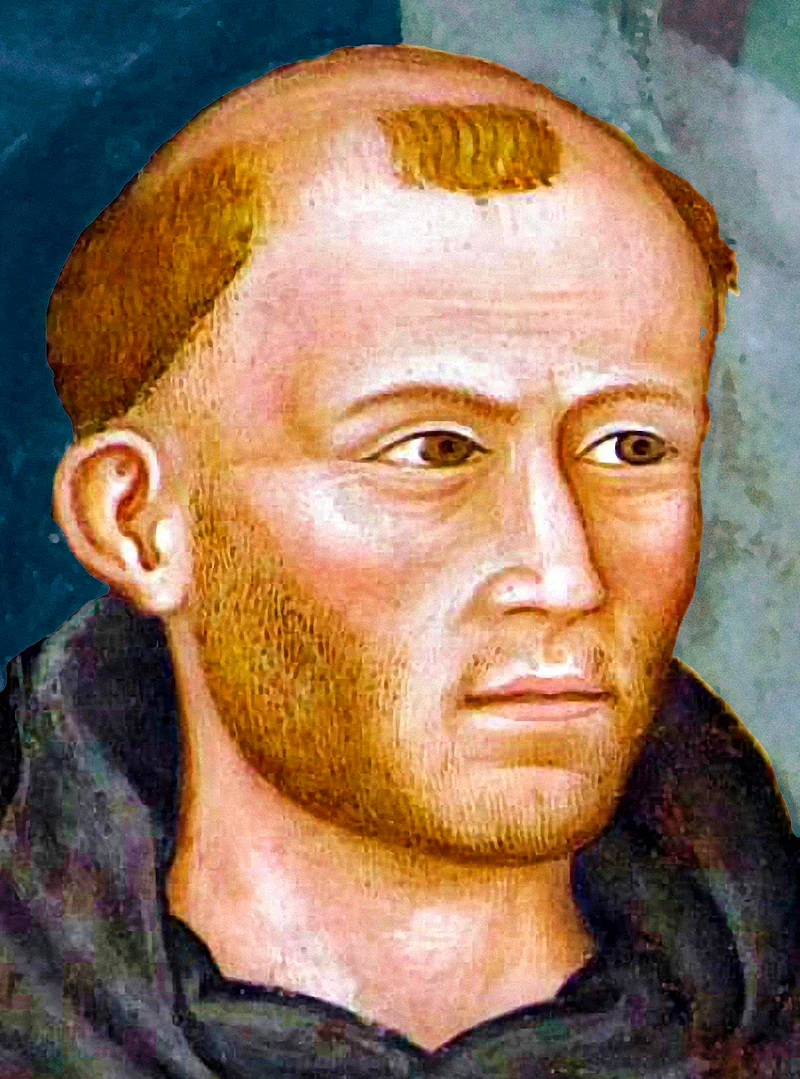
| 28 Quotes | |
| Born as | Johannes Eckhart |
| Occup. | Philosopher |
| From | Germany |
| Born | January 1, 1260 Gotha, Landgraviate of Thuringia in the Holy Roman Empire (now Germany) |
| Died | January 1, 1328 Germany |
| Aged | 68 years |
| Cite | |
Citation Formats
APA Style (7th ed.)
Meister eckhart biography, facts and quotes. (2026, February 2). FixQuotes. https://fixquotes.com/authors/meister-eckhart/
Chicago Style
"Meister Eckhart biography, facts and quotes." FixQuotes. February 2, 2026. https://fixquotes.com/authors/meister-eckhart/.
MLA Style (9th ed.)
"Meister Eckhart biography, facts and quotes." FixQuotes, 2 Feb. 2026, https://fixquotes.com/authors/meister-eckhart/. Accessed 27 Mar. 2026.
Early Life and Background
Meister Eckhart was born Johannes Eckhart around 1260 in the region of Thuringia, in the German lands of the Holy Roman Empire, a world of market towns, monastic estates, and rising urban guilds. His lifetime ran alongside the consolidation of Dominican preaching, the spread of universities, and the social anxieties of famine and plague that would soon darken Europe. From the start, his significance lay not in public power but in a rare inward authority - the ability to translate scholastic theology into an intimate language of the soul.He entered the Order of Preachers (Dominicans) likely at Erfurt, a city where mendicant spirituality met vigorous civic life. The Dominicans trained their members to argue in the schools and to preach among laypeople; Eckhart absorbed both vocations. That double setting - disputation by day, pastoral encounter by night - shaped a thinker who never treated God as an abstract topic, but as an urgent question of how a person stands, suffers, and chooses in the world.
Education and Formative Influences
Eckhart was educated within the Dominican system and studied at Paris, the foremost theological faculty in Latin Christendom, where Aristotle, Augustine, and newly translated Arabic philosophy sharpened debates over intellect, being, and grace. He moved through the era of Thomas Aquinas's afterglow and the intensifying arguments that would later define Meister Eckhart's own profile: whether God is known primarily by concept or by a deeper, uncreated touch of the divine in the ground of the soul. His Latin works show a mind trained in scholastic precision, while his German sermons reveal a teacher determined to make that precision spiritually usable.Career, Major Works, and Turning Points
By the 1290s Eckhart was a prominent Dominican lector and preacher; in 1302 he became magister in theology at Paris (hence "Meister"), later serving in high administrative roles, including provincial leadership in Saxony and a vicar-generalship in Bohemia. He preached and taught in major Rhineland cities such as Strasbourg and Cologne, where communities of devout laity and religious women sought a direct path to God beyond mere external observance. His major corpus includes Latin treatises and disputations (notably within the projected Opus tripartitum) and an extraordinary body of Middle High German sermons and spiritual instructions. The decisive turning point came late: accused of heterodox propositions, he was investigated in Cologne and appealed to Pope John XXII at Avignon; he died around 1328 before the process ended, and in 1329 a papal bull condemned or censured a set of statements associated with his teaching - a posthumous verdict that would paradoxically keep his name alive.Philosophy, Style, and Themes
Eckhart's inner life, as it emerges from his preaching, is marked by a disciplined audacity: he insists that the soul's deepest center is made for God, and that the path involves a radical detachment (Abgeschiedenheit) from possessiveness, status, and even spiritual self-congratulation. His language alternates between scholastic clarity and startling compression, as if he is trying to force listeners past pious images into a more immediate encounter. The recurring psychological drama is the struggle to stop using God as a means of self-security. “To be full of things is to be empty of God. To be empty of things is to be full of God”. Detachment for Eckhart is not contempt for creation but freedom from clinging - the difference between using the world and being used by it.This detachment opens into his most daring claim: a unity of knowing in which God is not a distant object but the life by which the soul knows at all. “The knower and the known are one. Simple people imagine that they should see God as if he stood there and they here. This is not so. God and I, we are one in knowledge”. Yet Eckhart does not recommend spiritual laziness; his sermons repeatedly pivot from contemplation to ethical fruitfulness, treating the inner birth of the Word as the source of action rather than an escape from it. “What we plant in the soil of contemplation, we shall reap in the harvest of action”. His characteristic style - paradox, reversal, and the stripping away of mental idols - mirrors the inner practice he urges: to let go until the soul can receive without bargaining.
Legacy and Influence
Eckhart's legacy is twofold: historically, he stands at the fault line between university theology and vernacular mysticism; spiritually, he became a durable voice for interior freedom within Christianity. Though censured in 1329, his sermons circulated widely and helped shape the Rhineland tradition associated with Johannes Tauler and Henry Suso, while later readers from the Counter-Reformation to modern philosophers and psychologists found in him a vocabulary for self-transcendence that is neither sentimental nor merely negative. In the long run, the controversy did not erase him; it clarified the stakes of his project - a life in which God is not an idea to manage, but a reality that demands the transformation of desire, attention, and the very sense of self.Our collection contains 28 quotes written by Meister, under the main topics: Truth - Wisdom - Justice - Hope - Live in the Moment.
Other people related to Meister: Angelus Silesius (Poet), Johannes Tauler (Theologian), Matthew Fox (Writer)
Meister Eckhart Famous Works
- 2009 The Complete Mystical Works of Meister Eckhart (Book)
- 1994 Selected Writings (Book)
- 1987 Meister Eckhart: Sermons and Treatises (Book)
- 1986 Meister Eckhart: Teacher and Preacher (Book)
- 1981 The Essential Sermons, Commentaries, Treatises, and Defense (Book)
Source / external links