
Mel Carnahan Biography Quotes 7 Report mistakes
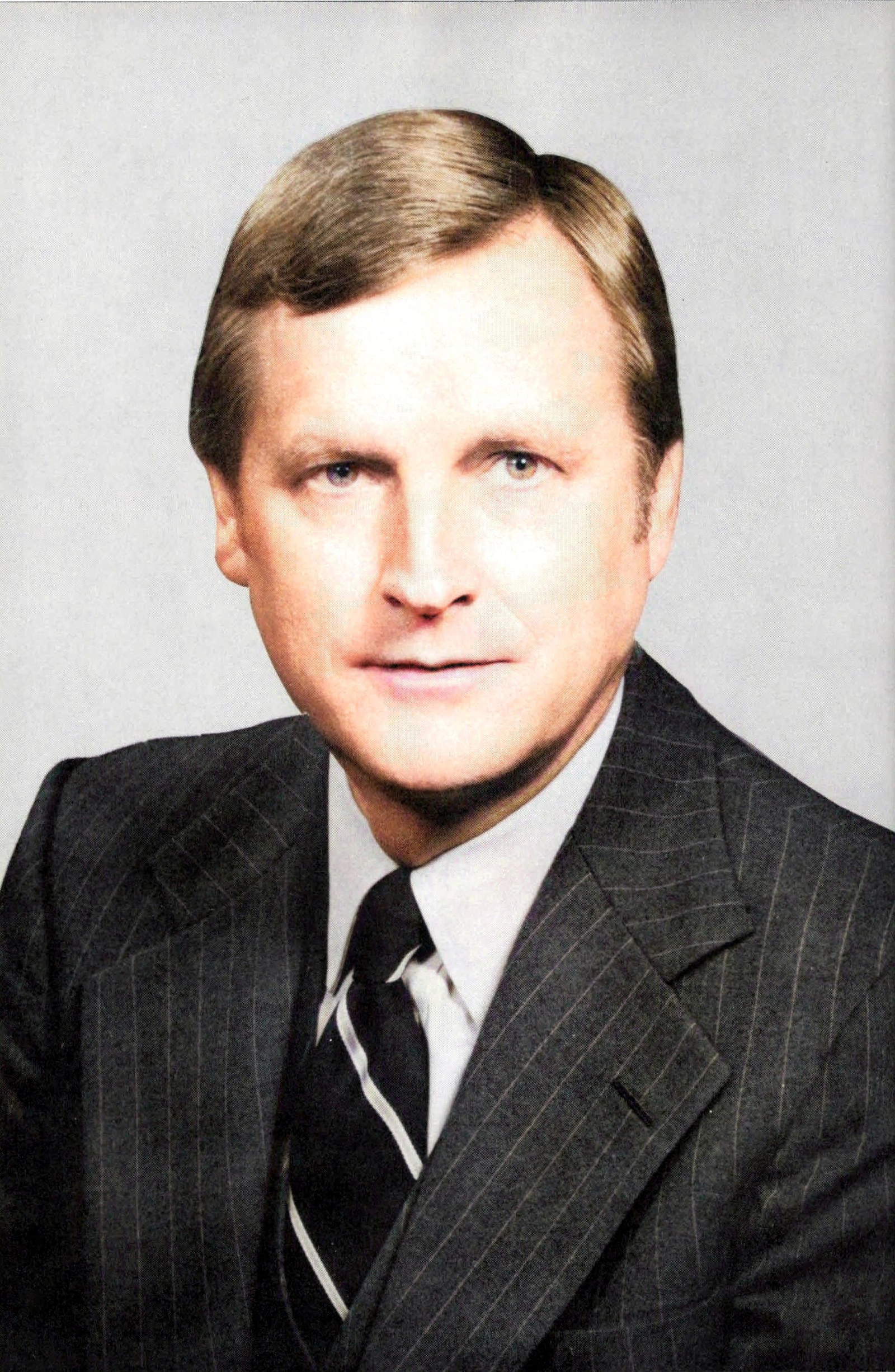
| 7 Quotes | |
| Occup. | Politician |
| From | USA |
| Born | February 11, 1934 |
| Died | October 16, 2000 |
| Aged | 66 years |
| Cite | |
Citation Formats
APA Style (7th ed.)
Mel carnahan biography, facts and quotes. (2026, March 9). FixQuotes. https://fixquotes.com/authors/mel-carnahan/
Chicago Style
"Mel Carnahan biography, facts and quotes." FixQuotes. March 9, 2026. https://fixquotes.com/authors/mel-carnahan/.
MLA Style (9th ed.)
"Mel Carnahan biography, facts and quotes." FixQuotes, 9 Mar. 2026, https://fixquotes.com/authors/mel-carnahan/. Accessed 28 Mar. 2026.
Early Life and Background
Melvin Eugene Carnahan was born on February 11, 1934, in Birch Tree, Missouri, a small Ozarks town whose rhythms of church, courthouse, and farm economy shaped his lifelong political vocabulary. He grew up in a family steeped in public service and Democratic politics. His father, A. S. J. Carnahan, became a U.S. representative from Missouri; his mother, Frances, was equally influential in the household's ethic of duty. For Mel Carnahan, politics was not first an abstract ideology but a local, moral practice - listening, mediating, and delivering. The rural Missouri of his childhood was marked by Depression memory, wartime mobilization, and the postwar struggle to modernize roads, schools, and farms without losing community cohesion. Those tensions stayed with him.
His early life joined religious seriousness to civic ambition. He was raised in a Baptist environment and later became an ordained minister, a fact that helps explain the unusual mixture in his public persona: prosecutorial firmness on crime, but a language of redemption, family responsibility, and common obligation. Missouri itself offered him a political education in complexity. It was never simply southern or midwestern, urban or rural, conservative or populist. Carnahan absorbed that border-state sensibility and made it central to his career, presenting himself less as a culture-war ideologue than as a practical steward of the whole state - farmers and city workers, teachers and sheriffs, black St. Louis wards and small-town courthouse Democrats.
Education and Formative Influences
Carnahan attended George Washington University in Washington, D.C., where proximity to federal power sharpened lessons already learned at home. He later earned theological training and entered the ministry, serving as a Baptist pastor before fully committing to elected office. Those experiences mattered more than a resume line. Washington showed him the scale of national government; the pulpit taught cadence, persuasion, and the discipline of speaking to ordinary anxieties without condescension. His marriage to Jean Carpenter Carnahan in 1954 formed the central partnership of his life - emotionally, intellectually, and politically. Together they became one of Missouri's major Democratic households, with Jean an accomplished political actor in her own right. By the time he returned to state politics, Carnahan had fused three durable influences: a family inheritance of public life, a minister's attention to conscience, and a centrist Democratic instinct that reform had to be sold in moral as well as managerial terms.
Career, Major Works, and Turning Points
Carnahan served in the Missouri House of Representatives from the early 1960s, then as Missouri state treasurer from 1981 to 1985, building a reputation for competence rather than flamboyance. He lost races as often as he won before breaking through - defeats that seasoned his tactical patience. Elected governor in 1992 and reelected in 1996, he presided during a period when Democratic governors often survived by blending economic moderation with activist government in education, public safety, and social services. His administration was associated with school reform, infrastructure, crime legislation, and a pragmatic style of welfare reform that sought work supports rather than rhetoric alone. He became nationally known in 1999 when, as governor, he denied clemency to white supremacist and triple murderer Joseph Paul Franklin, whose execution for the 1977 killing of Gerald Gordon carried deep symbolic force in a state still negotiating race, punishment, and justice. In 2000 Carnahan challenged Republican U.S. senator John Ashcroft in one of the country's most closely watched races. On October 16, 2000, weeks before the election, Carnahan died in a plane crash with his son Randy and aide Chris Sifford. Missouri voters nevertheless elected the deceased governor to the Senate; his widow, Jean Carnahan, was appointed to fill the seat, turning private grief into one of the most poignant episodes in modern American politics.
Philosophy, Style, and Themes
Carnahan's political philosophy was rooted in the belief that government worked best when it reinforced moral agency rather than replacing it. That conviction gave his centrism unusual emotional coherence. On drugs, crime, welfare, and child welfare, he consistently framed policy as a partnership between law and character. “Although our war on drugs must be fortified with the best laws, enforcement efforts and resources, we would not be successful without your individual commitment to this cause”. The sentence is revealing: even at his most punitive, he distrusted purely mechanical state power. He wanted law to set boundaries, but he believed families, churches, schools, and neighborhoods carried the real burden of social repair. The same cast of mind appears in his plainest formulation: “Parents are key when it comes to keeping kids off drugs. Good parenting is the best anti-drug we have!” This was not merely campaign rhetoric. It showed a politician who saw social breakdown as intimate before it was statistical.
His style was sober, almost old-fashioned, and that was part of his appeal. Carnahan rarely presented himself as visionary; he preferred the language of responsibility, order, and immediate relief. In farm policy, a core Missouri concern, he emphasized urgency without abandoning structural reform: “While we believe long-term solutions are essential, the current situation demands a more immediate response”. That sentence captures his governing temperament - practical, incremental, impatient with abstraction when livelihoods were at stake. He was tough-on-crime in ways typical of 1990s Democrats, yet his deeper theme was social maintenance: communities endure when institutions are credible and families are equipped to function. Even his support for welfare reform rested on work supports, child care, and local capacity rather than punishment alone. Behind the calm delivery was a man shaped by ministry, one who treated politics as an arena where moral seriousness had to survive compromise.
Legacy and Influence
Carnahan's legacy rests partly in policy, but more enduringly in political type. He represented a generation of state-level Democrats who held together coalitions now far harder to sustain: rural whites, urban minorities, organized labor, teachers, and moderate suburbanites. In Missouri he embodied a tradition of courthouse pragmatism disciplined by personal rectitude. His death transformed him into a symbol, but it should not obscure the substance of his career: a governor who believed government could be active without being doctrinaire, punitive without theatricality, compassionate without naivete. The extraordinary 2000 Senate election fixed his name in national memory, yet his deeper influence lies in the model he offered - a border-state public servant whose religious formation, family partnership, and instinct for balance made him one of the last powerful exemplars of old Missouri Democratic governance.
Our collection contains 7 quotes written by Mel, under the main topics: Justice - Leadership - Parenting - Equality - Work.
Other people related to Mel: Russ Carnahan (Politician)
Source / external links