
Mel Martinez Biography Quotes 11 Report mistakes
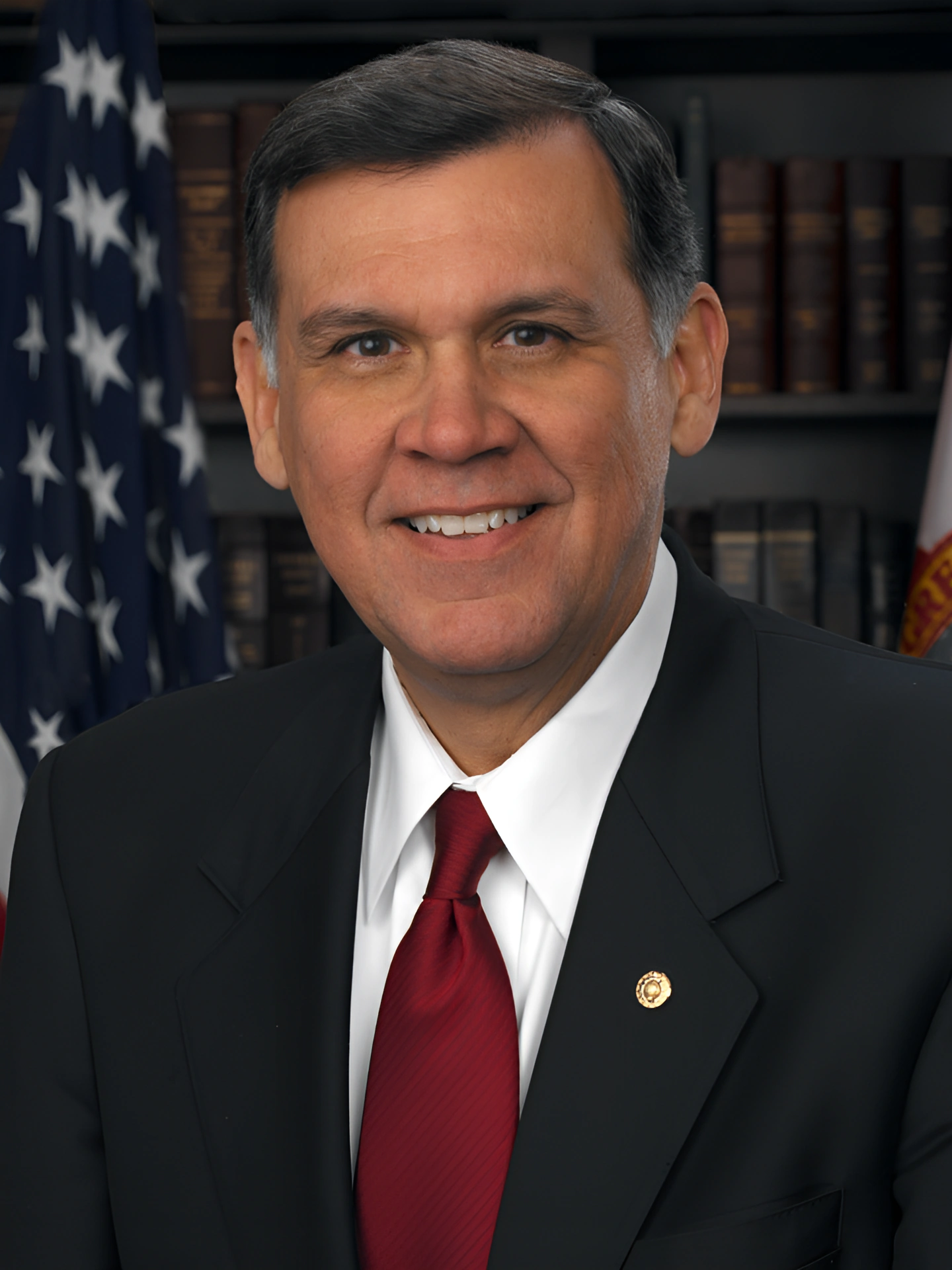
Attr: Public domain
| 11 Quotes | |
| Born as | Melquiades Rafael Martinez |
| Occup. | Politician |
| From | USA |
| Born | October 23, 1946 Sagua La Grande, Cuba |
| Age | 79 years |
| Cite | |
Citation Formats
APA Style (7th ed.)
Mel martinez biography, facts and quotes. (2026, February 11). FixQuotes. https://fixquotes.com/authors/mel-martinez/
Chicago Style
"Mel Martinez biography, facts and quotes." FixQuotes. February 11, 2026. https://fixquotes.com/authors/mel-martinez/.
MLA Style (9th ed.)
"Mel Martinez biography, facts and quotes." FixQuotes, 11 Feb. 2026, https://fixquotes.com/authors/mel-martinez/. Accessed 12 Feb. 2026.
Early Life and Background
Melquiades Rafael Martinez was born on October 23, 1946, in Sagua la Grande, Cuba, and came of age under the tightening grip of Fidel Castro's revolution. His early memories were shaped by the abrupt remaking of civic life into a one-party state, where private ambition and public dissent carried risk. That early encounter with coercive politics formed the emotional bedrock of his later career: an instinctive suspicion of concentrated power and a lasting belief that freedom is not an abstraction but a daily condition of safety.In 1962, amid the Cold War's sharpest tensions, he left Cuba for the United States as part of Operation Peter Pan, arriving as a teenager with little money and uncertain prospects. Settling in Florida, he learned English, worked, and navigated the immigrant's double life of gratitude and pressure - grateful for rescue, pressured to prove it was deserved. The trauma of separation and the discipline of starting over became, in his public persona, a steady insistence on order, opportunity, and national purpose.
Education and Formative Influences
Martinez earned a Bachelor of Arts from Florida State University and later a Juris Doctor from the Florida State University College of Law, training that sharpened his preference for institutional solutions over rhetorical purity. The legal profession suited him: it rewarded preparation, coalition-building, and incremental wins. In Florida's diverse and rapidly growing political landscape, his Cuban exile identity and professional credentials positioned him as a bridge figure - culturally bilingual, politically aspirational, and attentive to how policy lands in real communities.Career, Major Works, and Turning Points
After practicing law, Martinez rose through local civic and party leadership into statewide prominence and national office: he served as secretary of the Florida Department of Business and Professional Regulation, became Orange County chair in 1998 (one of the first Cuban American mayors in the country), and in 2001 joined President George W. Bush's Cabinet as U.S. secretary of Housing and Urban Development, where he promoted homeownership and community development in the post-9/11 era. In 2004 he won election to the U.S. Senate from Florida, serving from 2005 to 2009; his tenure included high-profile work on immigration, homeland security oversight, and Florida-centric concerns ranging from disaster response to trade and tourism. A major turning point came in 2007 when he helped craft a bipartisan comprehensive immigration bill, then withdrew his support as the proposal collapsed under partisan pressure - an episode that exposed the limits of technocratic compromise in a polarized age. In 2009 he resigned from the Senate, citing frustration with dysfunction, and later entered the private sector, including leadership roles in banking.Philosophy, Style, and Themes
Martinez's politics were fueled less by ideological theater than by a personal narrative of escape and repayment. He returned again and again to the immigrant's creed of effort and possibility - "Forty-two years ago, I came to America from communist Cuba so I might have a better way of life, a freer way of life - a more democratic way of life". The sentence reads like autobiography, but psychologically it is also a vow: the past must not be wasted, and public life must justify the gift of refuge. That moral seriousness helped him present conservatism not as nostalgia but as gratitude structured into policy.His style in office blended Florida pragmatism with exile hard lines on authoritarianism. He could sound managerial when confronting crisis economics - "It is proper that the federal government help alleviate short-term disruptions and price spikes such as those brought about by Hurricane Katrina". - yet uncompromising on Cuba, where memory and strategy fused: "Our focus needs to be on freeing dissidents and continuing to support the opposition movement within Cuba - not rewarding Castro and subsidizing and strengthening his totalitarian regime". Across these themes ran a consistent self-concept: he wanted agency, not anonymity, in Washington, framing leadership as an obligation rather than a perk of office, and measuring success by whether institutions protected ordinary people from both sudden shocks and slow erosions of liberty.
Legacy and Influence
Martinez's enduring significance lies in what he represented during a transitional period in American conservatism: a Cuban-born Republican who rose from refugee status to Cabinet secretary and U.S. senator, embodying a pathway for Hispanic political leadership while insisting that anti-authoritarian foreign policy remained central to U.S. identity. His career traced the arc from consensus-era governance to the hard edges of 21st-century polarization, and his early exit from the Senate became, for many observers, a case study in how institutional frustration can drive capable dealmakers away. In Florida and beyond, he remains a symbol of the Cuban exile imprint on national politics - an imprint defined by gratitude to the United States, vigilance toward dictatorship, and the belief that civic freedom must be defended with both policy detail and moral memory.Our collection contains 11 quotes written by Mel, under the main topics: Motivational - Justice - Leadership - Freedom - Learning.
Other people related to Mel: Alphonso Jackson (Public Servant), Bill Nelson (Politician), Cliff Stearns (Politician)