
Mencius Biography Quotes 16 Report mistakes
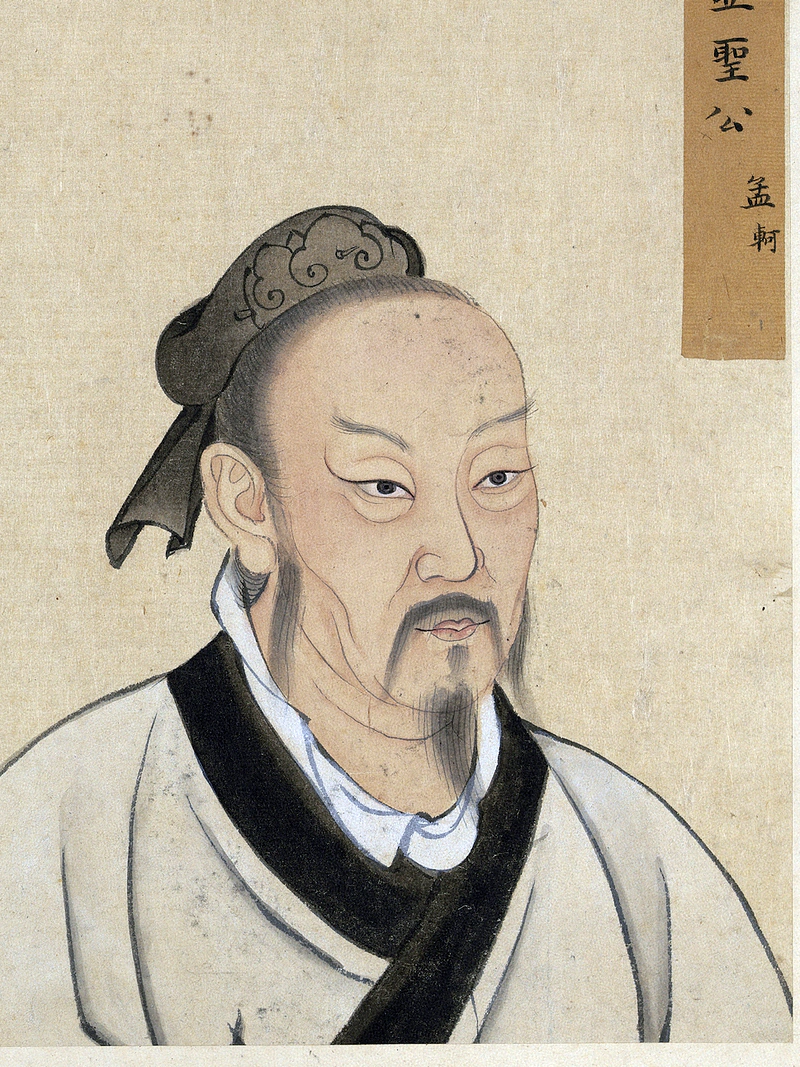
Attr: Wikimedia, Public domain
| 16 Quotes | |
| Born as | Meng Ke |
| Occup. | Philosopher |
| From | China |
| Born | 371 BC |
| Died | 289 BC |
| Cite | |
Citation Formats
APA Style (7th ed.)
Mencius biography, facts and quotes. (2026, February 11). FixQuotes. https://fixquotes.com/authors/mencius/
Chicago Style
"Mencius biography, facts and quotes." FixQuotes. February 11, 2026. https://fixquotes.com/authors/mencius/.
MLA Style (9th ed.)
"Mencius biography, facts and quotes." FixQuotes, 11 Feb. 2026, https://fixquotes.com/authors/mencius/. Accessed 5 Mar. 2026.
Early Life and Background
Mencius, or Meng Ke, was born around 371 BCE in the small state of Zou (often located near modern Zoucheng, Shandong), during the Warring States period - an era when old Zhou rituals still carried prestige but real power lay with competing courts, armies, and administrative reforms. The world he entered was a laboratory of statecraft: rulers hunted advantage through law, land policy, and military innovation, while wandering advisers offered rival blueprints for order. That pressure-cooker setting shaped Mencius into a thinker who treated ethics not as private piety but as the hinge on which political survival turned.Later tradition cast his mother as a fierce guardian of his moral environment, a story that endures because it captures something true about him: he believed character is formed through practiced attention, not sudden revelation. Whether or not every anecdote is literal, his biography reads as the making of a man who trusted the educability of the heart and who measured a society by what it trained people to love. His temperament seems both ardent and practical - impatient with cynical power, yet willing to meet kings on their own ground and argue policy as well as principle.
Education and Formative Influences
Mencius was regarded as a transmitter of Confucius (Kongzi, 551-479 BCE), studying within the broad Ru tradition that preserved ritual learning, classical poetry, and the memory of Zhou governance as an ethical ideal. He absorbed debates with Mohists, early Legalists, and other roaming persuaders, then sharpened his own voice by opposing their reductions of human beings to tools of utility or control. The result was a philosophy anchored in cultivation: self-examination, humane governance (ren), and the conviction that moral insight is not foreign to ordinary people but native, if protected and extended.Career, Major Works, and Turning Points
As a traveling counselor, Mencius sought audiences in major states such as Qi and Liang (Wei), addressing rulers and ministers who wanted prosperity without yielding coercive habits. The text known as the Mencius (Mengzi) preserves these encounters as dialogues, parables, and sharp refutations, including his famous defense of the heart-mind (xin) as capable of benevolence and righteousness, and his arguments for light taxes, secure livelihoods, and restraint in war. A decisive turning point in his career was his refusal to flatter: when kings asked for profit, he redirected them to righteousness; when they prized conquest, he insisted that only humane rule wins genuine allegiance. His later years appear quieter, focused on teaching and consolidating a school whose influence would mature after his death around 289 BCE.Philosophy, Style, and Themes
Mencius is most distinctive for his psychological confidence: he argued that human nature tends toward goodness, not as naive optimism but as a claim about moral beginnings - the quick, involuntary recoil from another's suffering, the shame that checks cruelty, the respect that recognizes order, the discernment that separates right from wrong. He treated politics as the public expression of this inner life: if rulers nurture people's livelihoods, families and virtue stabilize; if they squeeze and terrorize, they manufacture desperation. His style is forensic and dramatic - he stages interviews where a king's self-image collapses under a single question, then rebuilds a path from desire to duty, insisting that the heart can be trained to prefer the harder good.The Mengzi also reveals a relentless hierarchy within the self, a moral anatomy that frames freedom as disciplined attention. “He who attends to his greater self becomes a great man, and he who attends to his smaller self becomes a small man”. That sentence is a portrait of his inner world: he feared not weakness of intellect but captivity to appetite and fear, the "smaller self" that rulers indulge when they chase advantage. Even his political counsel grows from this psychology of reputation and habituation: “Kindly words do not enter so deeply into men as a reputation for kindness”. In other words, moral authority is not performance but accumulated trust - the kind that lets a government govern lightly because people already believe in its restraint. His warnings about ethics and timing also fit the danger of the Warring States court, where a single sentence could cost a life: “Truth uttered before its time is always dangerous”. Mencius did not dilute truth; he calibrated its delivery, because persuasion, like cultivation, depends on seasons.
Legacy and Influence
After centuries of commentary, Mencius became a pillar of Confucian orthodoxy, especially from the Song dynasty onward, when thinkers such as Zhu Xi elevated the Mengzi as one of the Four Books and treated its moral psychology as a guide to self-cultivation and governance. His arguments for humane rule, the moral limits on sovereign power, and the dignity of ordinary people's moral senses gave later officials and critics a language for remonstrance, reform, and education. Across East Asia, he endures as the philosopher who refused to separate inner conscience from public policy, insisting that stable states are built not only by laws and armies but by the patient strengthening of the "greater self" in both ruler and ruled.Our collection contains 16 quotes written by Mencius, under the main topics: Ethics & Morality - Wisdom - Truth - Justice - Friendship.