
Meyer Lansky Biography Quotes 10 Report mistakes
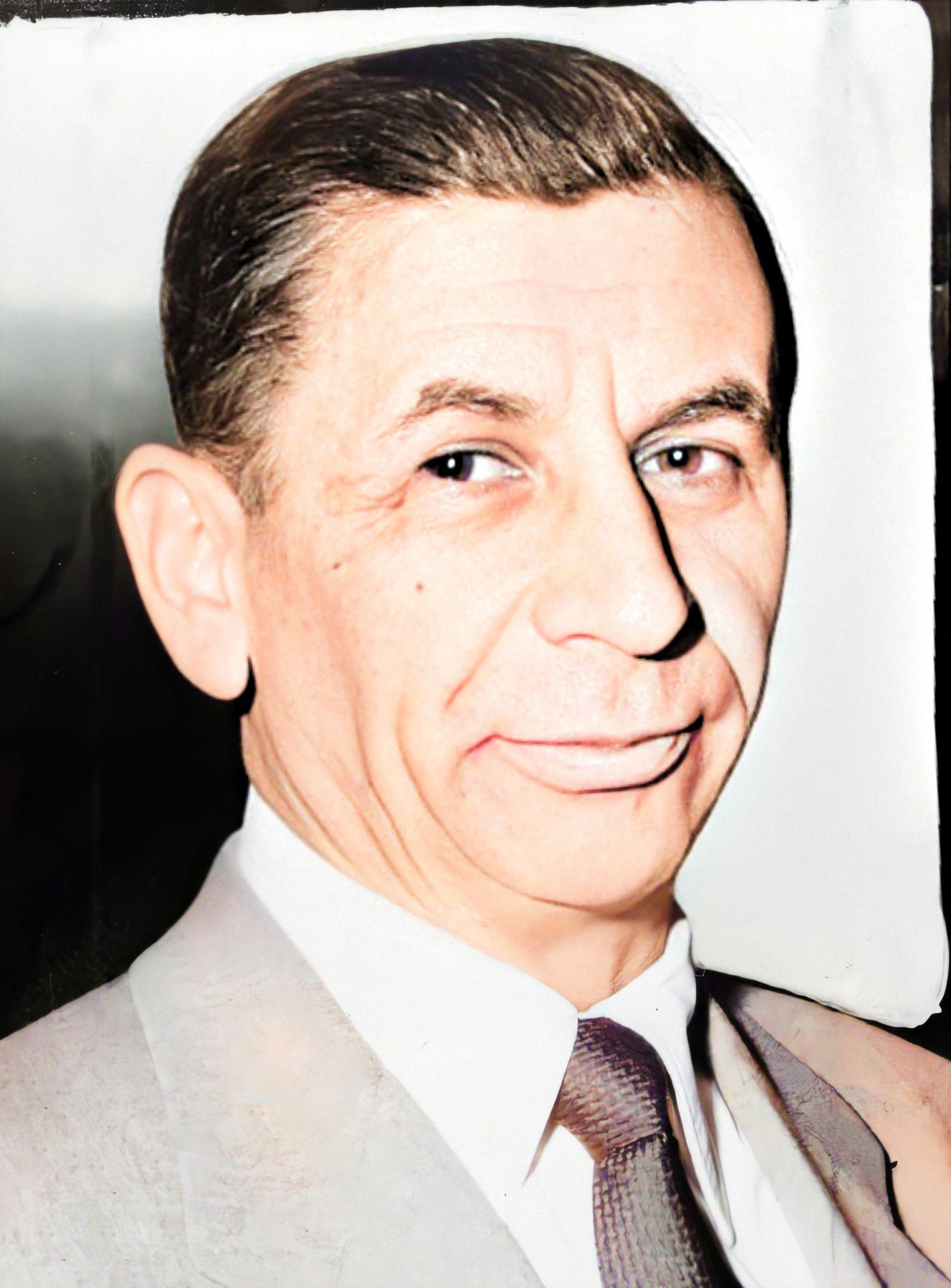
| 10 Quotes | |
| Born as | Maier Suchowljansky |
| Occup. | Criminal |
| From | USA |
| Born | July 4, 1902 Grodno, Russian Empire (now Belarus) |
| Died | January 15, 1983 Miami Beach, Florida, United States |
| Cause | Lung cancer |
| Aged | 80 years |
| Cite | |
Citation Formats
APA Style (7th ed.)
Meyer lansky biography, facts and quotes. (2026, February 11). FixQuotes. https://fixquotes.com/authors/meyer-lansky/
Chicago Style
"Meyer Lansky biography, facts and quotes." FixQuotes. February 11, 2026. https://fixquotes.com/authors/meyer-lansky/.
MLA Style (9th ed.)
"Meyer Lansky biography, facts and quotes." FixQuotes, 11 Feb. 2026, https://fixquotes.com/authors/meyer-lansky/. Accessed 12 Feb. 2026.
Early Life and Background
Meyer Lansky was born Maier Suchowljansky on July 4, 1902, in Grodno in the Russian Empire (now in Belarus), into a Jewish family shaped by the insecurity of the era: poverty, state violence, and periodic pogroms that taught many emigrants to treat stability as something you had to engineer for yourself. His later reputation for calculation and secrecy had roots in a childhood where the safest path was often the quiet one - watch first, speak later, and never expose what you could conceal.In 1911 he arrived in the United States and settled on Manhattan's Lower East Side, a crowded immigrant world where languages overlapped and boys learned street rules early. The neighborhood offered both uplift and temptation: sweatshops, tenements, political clubs, and the quick cash of small rackets. Lansky grew up amid a generation for whom assimilation was not only cultural but tactical - learning how institutions worked, and how they could be bent.
Education and Formative Influences
Lansky had little formal schooling, but he was educated intensely by New York's informal systems: gambling rooms, pool halls, and the ethnic patchwork of street crews that later fed organized crime. He forged a pivotal friendship with Bugsy Siegel in adolescence, and by the late 1910s and early 1920s he was operating in and around the "Bugs and Meyer" gang, learning that violence could be outsourced while money could be structured. Prohibition after 1920 accelerated these lessons, turning criminal opportunity into an industry with supply chains, bookkeeping, lawyers, and political protection.Career, Major Works, and Turning Points
Lansky rose from neighborhood gambler to one of the most important financial and strategic figures in American organized crime. During Prohibition he worked with Siegel and partnered across ethnic lines, cultivating ties with Charles "Lucky" Luciano as the old Mafia order fractured; his talent was not charisma but architecture - setting up games, moving cash, insulating leadership, and investing in ventures that could survive crackdowns. In the 1930s and 1940s he expanded gambling interests in Florida and Cuba, becoming associated with Havana's casino boom and the Batista-era nexus of tourism, bribery, and American mob capital; the 1959 Cuban Revolution was a turning point that wiped out many of those holdings and pushed him toward new channels. In the 1960s and 1970s, as federal scrutiny intensified and Senate investigations popularized the "Mafia" concept, Lansky became the public symbol of the mob financier, pursued repeatedly on tax and racketeering theories yet difficult to convict. His late attempt to relocate to Israel under the Law of Return ended when he was denied residency and returned to the United States, where he died on January 15, 1983, in Miami Beach.Philosophy, Style, and Themes
Lansky's self-concept was built around a disciplined distinction: he presented himself as an accountant of appetites rather than a predator of bodies. "I'm not a gangster, I'm a businessman. And businessmen don't kill each other". The insistence is psychologically revealing - a need to separate the self from the blood that made the enterprise possible, and to claim the moral neutrality of commerce even when the product was vice. It also points to his operational style: minimize spectacle, formalize relationships, keep the violence at a distance, and let infrastructure outlast individuals.That same ethic of rationalization framed his view of gambling and "protection" as services rather than harms. "We're not murderers. We're just businessmen who take advantage of opportunities". Underneath the line is a core Lansky theme: opportunity as destiny, and profit as proof of competence in a world that had once offered his family little security. Yet he could also describe the marketplace he exploited with near-clinical candor: "I have always believed that gambling is a disease of the human mind". In that tension - profiting from what he called a human disease while claiming order and professionalism - lies much of his inner life: an immigrant's hunger for control, a strategist's pride in systems, and a persistent urge to be judged by ledgers rather than victims.
Legacy and Influence
Lansky endures as the archetype of the organized-crime financier: less a street enforcer than a manager of risk, cash flow, and political insulation. His name is inseparable from the transformation of American gangland into a multi-regional, quasi-corporate syndicate, and from the mid-century idea that the underworld could mirror legitimate capitalism in structure while remaining parasitic in purpose. Popular culture elevated him into a model for the "quiet power" criminal - the man behind the casino cage, the offshore transfer, the untraceable partnership - while historians treat him as a window into how immigration, Prohibition, and modern mass leisure created new markets for vice. Even after his death, the Lansky story remains a cautionary biography of how the language of business can become a moral alibi, and how competence, once unmoored from lawful ends, can build an empire that is both organized and profoundly corrosive.Our collection contains 10 quotes written by Meyer, under the main topics: Truth - Justice - Dark Humor - Sports - Mental Health.
Other people related to Meyer: Arnold Rothstein (Businessman), Mickey Cohen (Criminal)
Source / external links