
Michael Dukakis Biography Quotes 2 Report mistakes
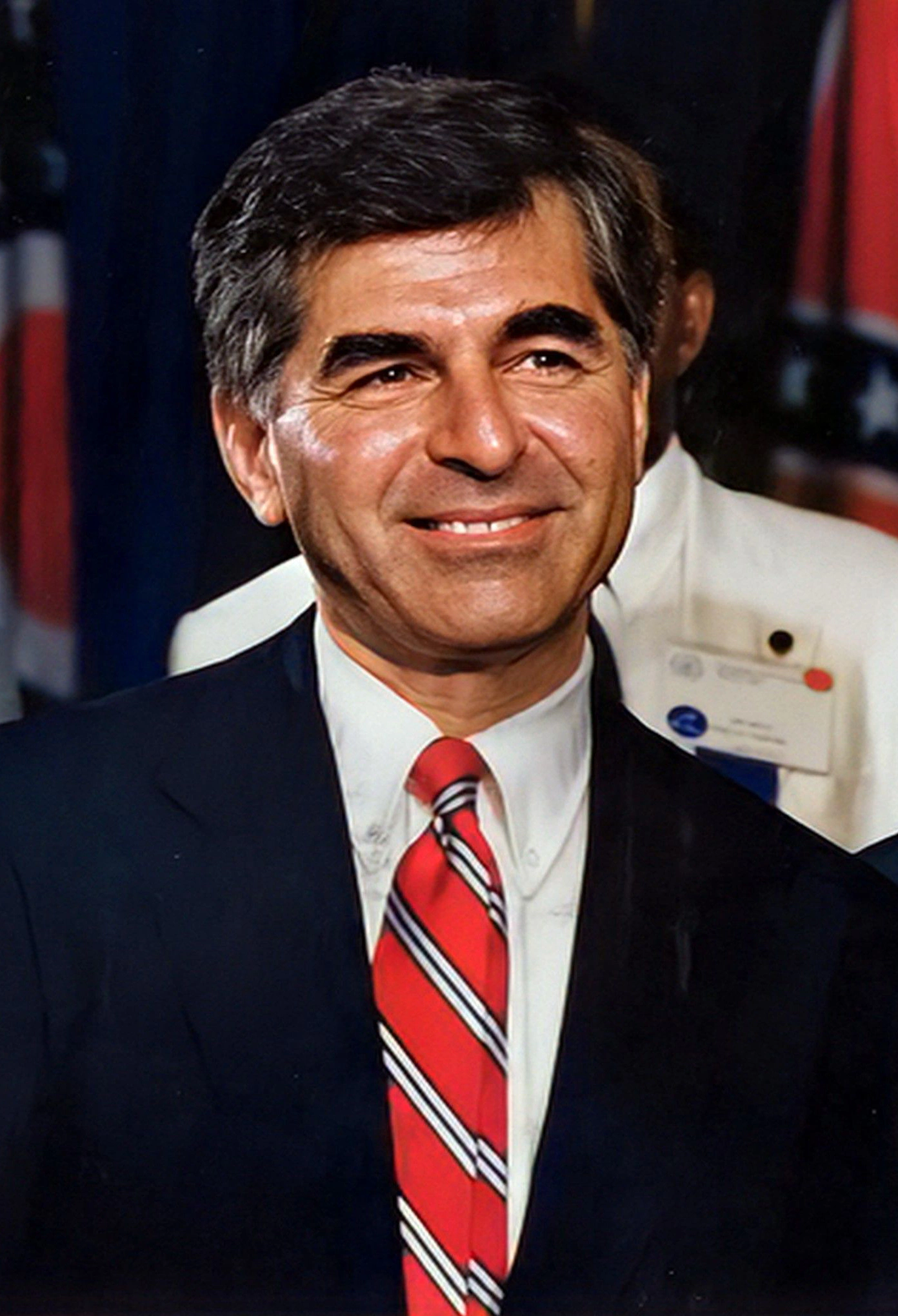
| 2 Quotes | |
| Born as | Michael Stanley Dukakis |
| Occup. | Politician |
| From | USA |
| Spouse | Kitty Dukakis |
| Born | November 3, 1933 Brookline, Massachusetts, USA |
| Age | 92 years |
| Cite | |
Citation Formats
APA Style (7th ed.)
Michael dukakis biography, facts and quotes. (2026, February 11). FixQuotes. https://fixquotes.com/authors/michael-dukakis/
Chicago Style
"Michael Dukakis biography, facts and quotes." FixQuotes. February 11, 2026. https://fixquotes.com/authors/michael-dukakis/.
MLA Style (9th ed.)
"Michael Dukakis biography, facts and quotes." FixQuotes, 11 Feb. 2026, https://fixquotes.com/authors/michael-dukakis/. Accessed 12 Feb. 2026.
Early Life and Education
Michael Stanley Dukakis was born on November 3, 1933, in Brookline, Massachusetts, to Greek immigrant parents Panos and Euterpe Dukakis. Raised in a tight-knit, civic-minded household, he attended Brookline public schools and developed an early fascination with public service and the mechanics of local government. He graduated from Swarthmore College in 1955, where he was known for academic rigor and campus involvement. Immediately after college he served in the U.S. Army from 1955 to 1957, spending time in South Korea, an experience that sharpened his sense of discipline and public duty. Upon returning, he enrolled at Harvard Law School and earned his law degree in 1960, laying the foundation for a career that would blend legal training with political leadership.Entry into Politics
Dukakis began his political journey at the grassroots level in Brookline before winning a seat in the Massachusetts House of Representatives in 1962. In the legislature, he built a reputation as a reformer focused on transportation, consumer issues, and governmental efficiency. He was methodical, data-oriented, and committed to ethical standards. After several terms, he sought statewide office as the Democratic nominee for lieutenant governor in 1970 but was unsuccessful. The defeat did not diminish his ambitions; instead, it clarified his commitment to executive leadership and set the stage for a gubernatorial run.Governor of Massachusetts: First Term (1975-1979)
In 1974, Dukakis defeated incumbent Republican Governor Francis Sargent, taking office at a time of economic strain and public skepticism about government. He prioritized fiscal discipline, professionalized the operations of state agencies, and sought to modernize public transportation management. He cultivated a reputation as an efficient, hands-on manager who prized competence over patronage. Nonetheless, his cautious approach to spending and tough stances in negotiations with public employees created political crosscurrents. In 1978, dissatisfaction within the Democratic Party led to his defeat in the primary by Edward J. King, a more conservative Democrat. During his first term, he worked closely with Lieutenant Governor Thomas P. ONeill III, and although he left office after one term, he retained a base of support intrigued by his managerial style.Return to the Corner Office (1983-1991)
Dukakis mounted a comeback in 1982, defeating Edward J. King in the Democratic primary and winning the general election. Over the next eight years, his administration oversaw what came to be known as the Massachusetts Miracle, a period of robust growth driven by high-technology, finance, and services. He emphasized education, infrastructure, and a predictable regulatory climate to attract investment. He also supported environmental improvements, including efforts that advanced the cleanup of Boston Harbor.He collaborated with an evolving cast of statewide leaders. John Kerry served as lieutenant governor early in Dukakis's second governorship, bringing an emphasis on environmental and fiscal issues before departing for the U.S. Senate. Later, Evelyn Murphy became lieutenant governor, the first woman elected to statewide executive office in Massachusetts, and an important partner in policy deliberations. As the decade turned, the national and regional economies softened, and state revenues fell sharply. Dukakis's administration confronted a sudden budget shortfall, and the political glow of earlier years dimmed amid tough fiscal choices. He had also signed a landmark health insurance law in 1988 intended to expand coverage through an employer mandate, but the recession impeded its implementation. In 1990, he chose not to seek another term, and in January 1991 he was succeeded by Republican William F. Weld.
The 1988 Presidential Campaign
Dukakis's national profile peaked in 1988, when he secured the Democratic nomination for president. His campaign emphasized competence, balanced budgets, and pragmatic problem-solving. Susan Estrich served as campaign manager, making history in the process, while longtime aide John Sasso remained a pivotal strategist despite earlier controversy that had briefly sidelined him. Texas Senator Lloyd Bentsen joined the ticket as the vice-presidential nominee, prized for experience and regional balance.Facing Vice President George H. W. Bush in the general election, Dukakis encountered a sharp-edged campaign climate. The Bush campaign and its allies drew attention to a Massachusetts prison furlough program and the case of Willie Horton, turning criminal justice into a defining issue. A memorable debate moment came when moderator Bernard Shaw asked Dukakis about the death penalty in the context of a hypothetical attack on his wife, Kitty Dukakis; his measured, legalistic response struck many voters as detached. A photo of Dukakis riding in a tank, intended to demonstrate commander-in-chief credibility, was used to lampoon him. After a spirited convention in Atlanta and a vigorous bus tour, the campaign faltered under the onslaught of negative advertising and doubts about whether his technocratic strengths matched the electorate's mood. He lost decisively in November.
Public Service, Teaching, and Advocacy
After leaving the governor's office, Dukakis turned to teaching and policy work, becoming a fixture at Northeastern University as a professor of political science and public policy. He also taught on the West Coast, including at UCLA, bringing practical lessons from a long career to generations of students. His passion for infrastructure and public transit translated into national advocacy; he later served on the Amtrak Board of Directors, where he championed reliable, expanded passenger rail service as essential to regional growth and environmental sustainability.Alongside him, Kitty Dukakis emerged as an advocate on mental health and addiction issues, drawing on her own experiences to promote treatment and destigmatization. Their partnership, often forged in public view during trying times, became part of his political identity. Both remained deeply involved in civic life, lending their names and energy to policy centers and causes focused on pragmatic, results-oriented governance.
Personal Life
Michael Dukakis married Kitty Dukakis in 1963. They raised three children, John, Andrea, and Kara, while navigating the pressures of high-profile public life. Family remained central to him, and his Greek heritage, community ties in Brookline, and lifelong habit of commuting by public transit reflected the continuity of his values. He kept close relationships with trusted advisers and political allies, among them John Sasso and, at different times, statewide leaders like John Kerry and Evelyn Murphy, while maintaining cordial relations with rivals such as Edward J. King and his eventual successor, William F. Weld.Legacy
Dukakis's legacy rests on the twin pillars of competent governance and civic-minded humility. As governor, he helped usher Massachusetts through a transformative era, coupling disciplined fiscal management with investments that encouraged innovation. The "Massachusetts Miracle" and its reversal underscore the volatility of economic cycles, but they also highlight his belief that effective, ethical government can catalyze growth. Nationally, his 1988 campaign crystallized enduring lessons about political imagery, message discipline, and the potency of values-based appeals in modern elections.In later years, he became a mentor to students and young public servants, modeling a brand of leadership attentive to details and respectful of institutions. The people around him, from Kitty Dukakis to campaign leaders like Susan Estrich, policy advisers such as John Sasso, and colleagues including Thomas P. ONeill III, John Kerry, and Evelyn Murphy, shaped and were shaped by a career that spanned local boards, the State House, and the national stage. Michael Dukakis's story is that of an immigrant family's son who rose through persistence and preparation to govern a state and contend for the presidency, leaving behind a durable example of public-spirited pragmatism.
Our collection contains 2 quotes written by Michael, under the main topics: Leadership - Police & Firefighter.
Other people related to Michael: Donna Brazile (Politician), John F. Kerry (Politician), Olympia Dukakis (Actress), Jim Lehrer (Journalist), Dick Gephardt (Politician)
Source / external links