
Michael Gartner Biography Quotes 4 Report mistakes
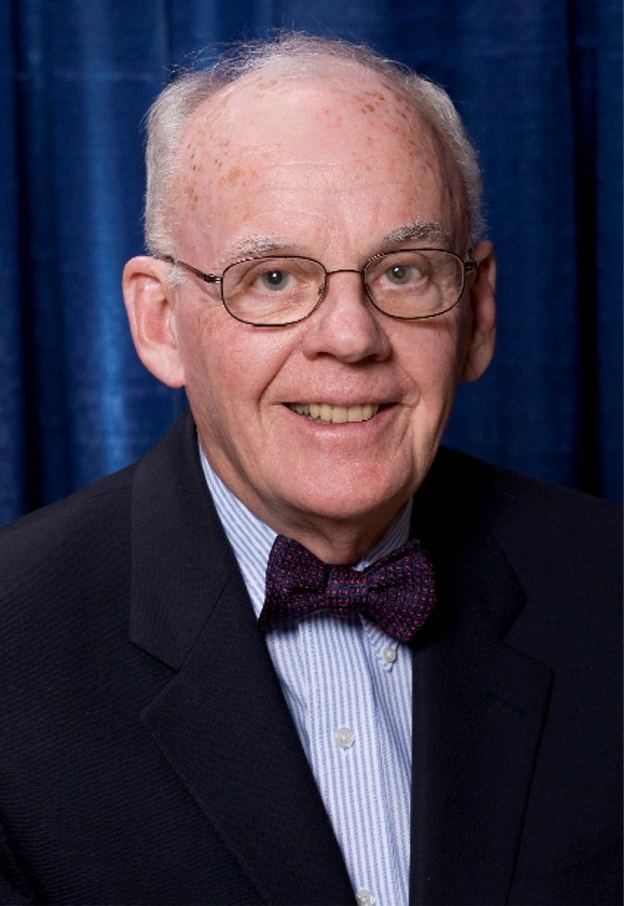
| 4 Quotes | |
| Occup. | Journalist |
| From | USA |
| Born | October 25, 1938 Des Moines, Iowa |
| Age | 87 years |
| Cite | |
Citation Formats
APA Style (7th ed.)
Michael gartner biography, facts and quotes. (2026, February 11). FixQuotes. https://fixquotes.com/authors/michael-gartner/
Chicago Style
"Michael Gartner biography, facts and quotes." FixQuotes. February 11, 2026. https://fixquotes.com/authors/michael-gartner/.
MLA Style (9th ed.)
"Michael Gartner biography, facts and quotes." FixQuotes, 11 Feb. 2026, https://fixquotes.com/authors/michael-gartner/. Accessed 12 Feb. 2026.
Early Life and Background
Michael Gartner was born on October 25, 1938, in the United States, coming of age in a mid-century America where local newspapers still defined civic identity and national television was beginning to redraw the country into a single audience. His formative years unfolded amid the Cold War, civil rights battles, and the rise of consumer affluence - a combination that sharpened the stakes of public information and made the craft of trustworthy reporting feel less like a trade than a form of public service.That backdrop mattered because Gartner would spend his career moving between the intimate scale of regional journalism and the high-wire stage of national broadcast news, often arguing - implicitly and explicitly - that the press should retain a recognizable moral voice even as it professionalized. His biography is best understood as a series of negotiations between independence and institution: how to keep reporting vivid, skeptical, and human while working inside organizations large enough to dilute personality into process.
Education and Formative Influences
Gartner attended Iowa State University, a practical, public-minded environment that suited his temperament and reinforced a Midwestern suspicion of pretension. He gravitated toward journalism not as performance but as disciplined attention - the habit of noticing what power would rather pass unnoticed. The era rewarded that stance: postwar campuses were pipelines into newsrooms hungry for young editors who could combine craft with an instinct for public accountability, and Gartner learned early that credibility is built less by opinion than by evidence assembled under deadline pressure.Career, Major Works, and Turning Points
Gartner rose through print journalism and became a leading newspaper editor before taking on major roles in television news, including senior leadership at NBC News in New York during a period when broadcast journalism was both culturally dominant and institutionally anxious about political blowback. In print, his reputation centered on elevating reporting ambition and editorial clarity; in broadcast, he navigated the network era's mix of star anchors, corporate oversight, and the ever-present fear that one mistake could define an organization. He later returned to Iowa and served as president of the John S. and James L. Knight Foundation, shifting from daily production to shaping the long-term ecology of journalism through philanthropy - a turning point that let him invest in press freedom, community information, and civic literacy rather than a single outlet's competitive cycle.Philosophy, Style, and Themes
Gartner's public remarks show a journalist preoccupied with institutional incentives - how money, consolidation, and celebrity change what the audience receives. He could be wry about the internal rivalries and branding that crept into news judgment, as in his quip, "One of the nicest things about NBC is that Tom Brokaw is not Dan Rather". The line is funny, but the psychology behind it is serious: Gartner believed trust attaches to temperament and restraint, not just to scoops. He was drawn to steadiness - to the kind of authority that does not need to shout - and he worried about news becoming theater in which anchors and outlets compete for dominance rather than clarity.At the same time, he diagnosed a slow emotional flattening in newspapers as ownership structures changed. "There isn't as much passion and outrage in today's newspapers. That may be because of a corporate decision, but they've lost their personality". For Gartner, "personality" was not ideological bombast; it was the unmistakable sense that editors were willing to name wrongdoing plainly and to take responsibility for the paper's civic posture. That emphasis aligns with his willingness to speak directly on public-policy questions when he felt the evidence demanded it, including gun violence: "There is no reason for anyone in this country, anyone except a police officer or a military person, to buy, to own, to have, to use a handgun... and the only way to do that is to change the Constitution". The extremity of the claim reveals an inner logic: journalism, to Gartner, was not neutrality as emptiness, but fairness anchored to a belief that the public sphere can be improved by argument that is candid about consequences.
Legacy and Influence
Gartner's lasting influence lies in the bridge he helped build between regional newspaper seriousness and the national broadcast megaphone, and later between newsroom culture and philanthropic strategy. He stands as a representative figure of late-20th-century American journalism: committed to the craft's ethical spine, skeptical of corporate smoothing, and convinced that credibility is earned through both rigor and a willingness to sound human. In an era when media institutions face renewed fragmentation and mistrust, his career remains a case study in how editors and executives can defend personality without sacrificing standards - and how the most durable authority in journalism comes from disciplined judgment exercised under public pressure.Our collection contains 4 quotes written by Michael, under the main topics: Witty One-Liners - Justice - Writing - Coaching.
Michael Gartner Famous Works
- 2010 The Buck Stops Here: The 28 Toughest Presidential Decisions and How They Changed History (Book)
Source / external links