
Michael Graves Biography Quotes 9 Report mistakes
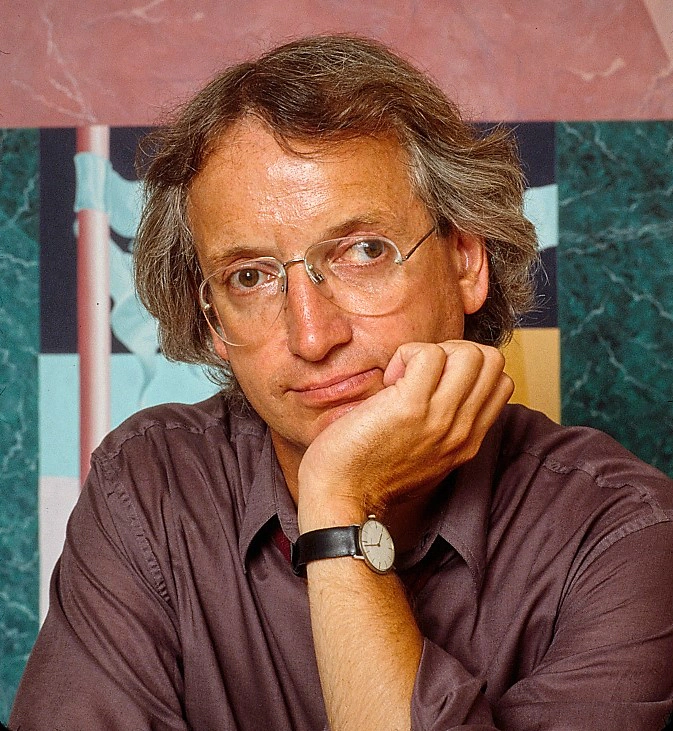
| 9 Quotes | |
| Occup. | Architect |
| From | USA |
| Born | July 9, 1934 |
| Died | March 12, 2015 |
| Aged | 80 years |
| Cite | |
Citation Formats
APA Style (7th ed.)
Michael graves biography, facts and quotes. (2026, February 11). FixQuotes. https://fixquotes.com/authors/michael-graves/
Chicago Style
"Michael Graves biography, facts and quotes." FixQuotes. February 11, 2026. https://fixquotes.com/authors/michael-graves/.
MLA Style (9th ed.)
"Michael Graves biography, facts and quotes." FixQuotes, 11 Feb. 2026, https://fixquotes.com/authors/michael-graves/. Accessed 12 Feb. 2026.
Early Life and Background
Michael Graves was born on July 9, 1934, in Indianapolis, Indiana, a Midwestern setting whose practical building culture and restrained civic classicism would later become a foil for his own exuberant forms. He came of age in a United States remaking itself through postwar growth, highways, corporate campuses, and an institutional modernism that promised efficiency and social progress while often producing impersonal environments.From early on, Graves showed the double temperament that defined his career: a disciplined drafter attracted to order, and a sensual observer drawn to color, memory, and everyday ritual. That inner split - between the dutiful problem-solver and the storyteller - would become the engine of his architecture, especially as he began to question whether the clean moral certainty of mid-century modernism could hold the complexity of lived experience.
Education and Formative Influences
Graves studied architecture at the University of Cincinnati, then earned a master of architecture at Harvard University, absorbing modernism at the height of its institutional authority. A pivotal formative period followed: time in Rome at the American Academy (early 1960s), where measured drawings and direct contact with ancient and baroque urbanism reframed his sense of architecture as a language of precedent, symbolism, and public address. The city taught him that buildings communicate through proportions, colors, and recognizable figures - not only through structural logic - and that the street is a cultural stage, not merely a circulation diagram.Career, Major Works, and Turning Points
Graves began as a rigorous modernist associated with the "New York Five", producing spare white houses that tested abstract composition, then turned decisively toward postmodern classicism and color in the late 1970s. Major works such as the Portland Building (Portland, Oregon, completed 1982) and the Humana Building (Louisville, Kentucky, completed 1985) made him a public symbol of postmodernism, admired for restoring civic legibility and criticized for prioritizing image over performance. A second turning point came in 2003, when illness left him paralyzed; rather than retreat, he redirected his practice toward products, healthcare environments, and accessible design. He died on March 12, 2015, after a long period of continued work and advocacy.Philosophy, Style, and Themes
Graves treated architecture less as ethical proof than as cultural invention, resisting the modernist habit of arguing from first principles to a single "truth". He framed design as a balancing act between use and meaning: "In any architecture, there is an equity between the pragmatic function and the symbolic function". Psychologically, this reveals a designer alert to the anxiety of reduction - the fear that buildings become mere machines - and equally wary of empty spectacle. For Graves, symbolism was not superficial decoration but a tool for orientation, dignity, and delight, especially in civic and institutional work where anonymous systems can erase the individual.He also rejected being cornered by labels, a stance that reads as both strategic and sincerely exploratory. "If I have a style, I am not aware of it". The claim is not literally true - his palette, geometric motifs, and classical allusions are unmistakable - but it exposes a deeper self-conception: he wanted permission to change registers, to move from monumental facades to kettles and door handles without surrendering seriousness. That same impulse shaped his consumer and industrial designs for Alessi, Target, and others, where he argued for daily intimacy between hand, eye, and tool: "In designing hardware to be used every day, it was important to keep both the human aspects and the machine in mind. What looks good also often feels good". Across scales, he pursued a humane ergonomics of meaning - forms that could be read quickly, touched gladly, and remembered.
Legacy and Influence
Graves remains one of the most consequential American architects of the late 20th century: a central figure in the rise of postmodern architecture, a catalyst for public debate about symbolism, and a designer who proved that architects could work credibly across buildings, products, and healthcare environments. While some of his landmark buildings became flashpoints for maintenance and performance controversies, their cultural impact is durable: they reopened questions modernism tried to close - about ornament, narrative, and the public face of institutions. His later advocacy for accessible, patient-centered design broadened the profession's ethical horizon in practical terms, and his household products helped normalize the idea that good design belongs not only to elites and museums but to everyday life.Our collection contains 9 quotes written by Michael, under the main topics: Ethics & Morality - Wisdom - Truth - Art - Technology.
Other people related to Michael: Richard Meier (Architect)
Source / external links