
Michael Jordan Biography Quotes 26 Report mistakes
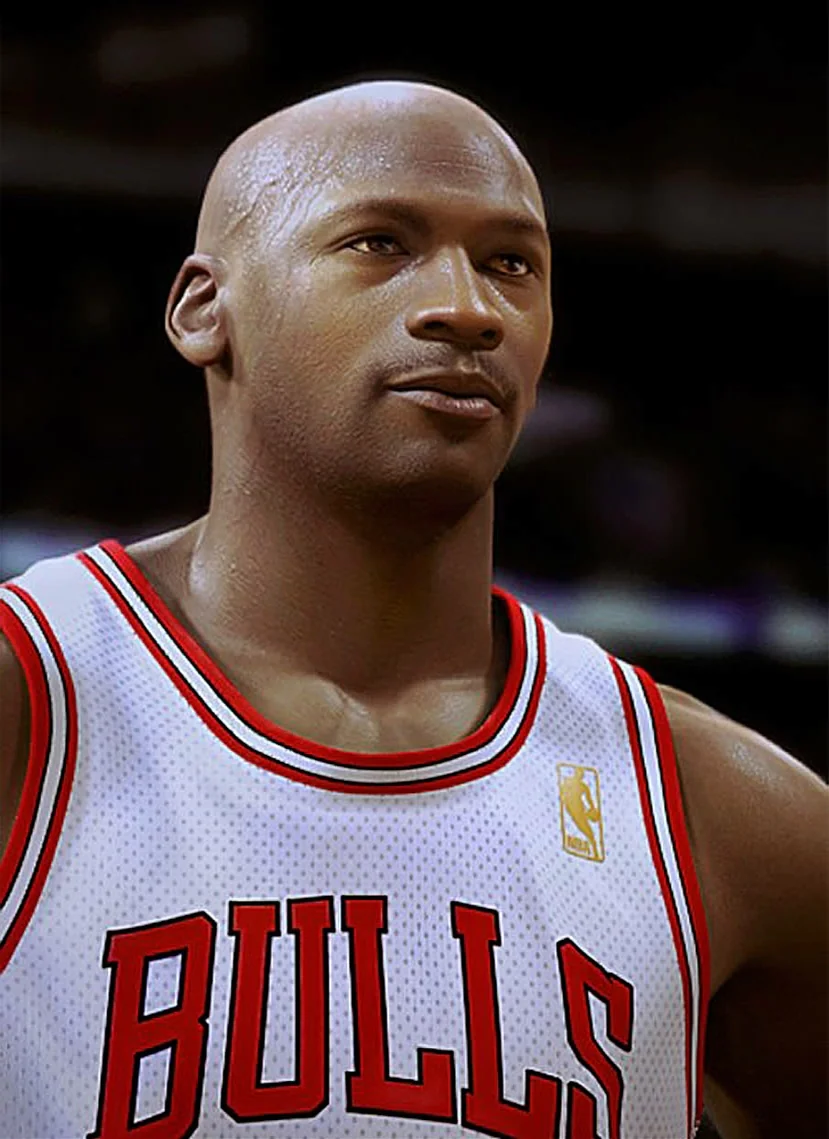
| 26 Quotes | |
| Born as | Michael Jeffrey Jordan |
| Occup. | Athlete |
| From | USA |
| Born | February 17, 1963 Brooklyn, New York, USA |
| Age | 63 years |
| Cite | |
Citation Formats
APA Style (7th ed.)
Michael jordan biography, facts and quotes. (2026, February 2). FixQuotes. https://fixquotes.com/authors/michael-jordan/
Chicago Style
"Michael Jordan biography, facts and quotes." FixQuotes. February 2, 2026. https://fixquotes.com/authors/michael-jordan/.
MLA Style (9th ed.)
"Michael Jordan biography, facts and quotes." FixQuotes, 2 Feb. 2026, https://fixquotes.com/authors/michael-jordan/. Accessed 24 Mar. 2026.
Early Life and Background
Michael Jeffrey Jordan was born on February 17, 1963, in Brooklyn, New York, and raised primarily in Wilmington, North Carolina, the fourth of five children in a close, competitive family. His father, James R. Jordan Sr., worked in equipment management and later at General Electric; his mother, Deloris, was a bank employee. The household fused discipline with play, and Jordan absorbed an early, practical lesson about ambition: status was earned, not granted, and confidence had to be backed by work.In adolescence he built his identity through constant contests - in the driveway, at school, and in the small dramas of Southern adolescence - where losing was never neutral. A defining story in Jordan mythology is his reported omission from the varsity team as a sophomore at Emsley A. Laney High School; whether embellished or not, it captures the emotional logic that followed him: perceived rejection became fuel. He grew taller, refined his guard skills, and learned to treat humiliation as a training partner, not an enemy.
Education and Formative Influences
Jordan enrolled at the University of North Carolina at Chapel Hill in 1981, entering a storied program under head coach Dean Smith, whose system demanded spacing, passing, and defensive accountability as much as individual scoring. He hit the title-winning jumper against Georgetown in the 1982 NCAA championship, but the deeper influence was cultural: Smith and assistants such as Roy Williams sharpened Jordan's ability to be coached, to channel ego into roles, and to handle pressure as a repeatable process rather than a mystical moment. By his junior year he was college basketball's most feared two-way player, then left UNC in 1984 for the NBA.Career, Major Works, and Turning Points
Drafted third overall by the Chicago Bulls in 1984, Jordan electrified a league entering the cable-TV era, winning Rookie of the Year and quickly becoming its central spectacle - a guard with a sprinter's acceleration and a gymnast's body control. Early playoff exits to the Boston Celtics and Detroit Pistons hardened him; the "Bad Boys" forced Chicago into strength training, tactical maturity, and eventually the triangle offense under Phil Jackson. The breakthrough came with the 1991 championship, followed by a first three-peat (1991-1993). After his father was murdered in 1993, Jordan abruptly retired, briefly pursued professional baseball, then returned in 1995 to complete a second three-peat (1996-1998), punctuated by the 1997 "Flu Game" and the 1998 Finals-winning shot in Utah. He retired again, then returned with the Washington Wizards (2001-2003). Across 15 NBA seasons he won six titles, five MVPs, ten scoring titles, and became an emblem of late-20th-century American celebrity through Nike's Air Jordan line and global marketing.Philosophy, Style, and Themes
Jordan's inner life, as teammates and rivals describe it, was a blend of joy and severity - play as liberation, play as judgment. The most famous element of his style was aesthetic: hang time, balletic reverses, a midrange game built on footwork and touch, defense that hunted steals and deflections. Yet the engine was psychological. He treated practice as court litigation, cross-examining peers until they either rose or resented him; the edge was not accidental, but cultivated, a way to control anxiety by controlling standards.His public aphorisms often reveal the private machinery. “I've failed over and over and over again in my life and that is why I succeed”. It is less a pep talk than a self-description of how he metabolized shame - by rehearsing it, owning it, then converting it into preparation. At his best, he framed pressure as a discipline of attention: “I never looked at the consequences of missing a big shot... when you think about the consequences you always think of a negative result”. That refusal to pre-suffer the miss explains both his late-game calm and his intolerance for drift. And despite the myths of solitary greatness, he repeatedly tied the final prize to collective cognition: “Talent wins games, but teamwork and intelligence wins championships”. The paradox of Jordan is that his will to dominate ultimately required trust - in a system, in teammates, and in the slow accumulation of shared habits.
Legacy and Influence
Jordan reshaped professional basketball into a global entertainment language: a style of play, a posture, a vocabulary of clutch, and a commercial template that modern stars still inhabit. His competitiveness became a cultural archetype - admired, imitated, and debated for its costs - while his highlights became the sport's common memory. As principal owner of the Charlotte Hornets for much of the 2010s and early 2020s, he pursued influence from the executive side with mixed on-court results, yet his larger impact remained intact: a standard for two-way dominance, a blueprint for athlete branding, and a reminder that greatness is often less about perfection than about the relentless, sometimes lonely, refusal to look away from what must be improved.Our collection contains 26 quotes written by Michael, under the main topics: Motivational - Never Give Up - Victory - Sports - Honesty & Integrity.
Other people related to Michael: Kobe Bryant (Athlete), Charles Barkley (Athlete), Julius Erving (Athlete), Phil Knight (Businessman), Karl Malone (Athlete), Isaiah Thomas (Athlete), Philip Knight (Businessman), Patrick Ewing (Athlete), Chuck Daly (Coach), Paul Westphal (Athlete)
Source / external links