
Michael Moorer Biography Quotes 6 Report mistakes
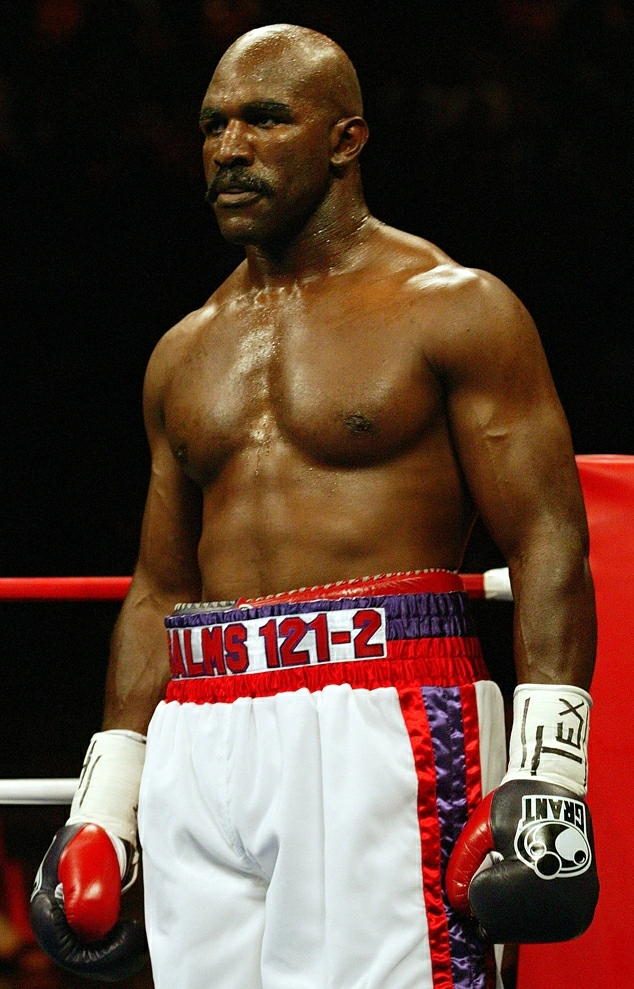
| 6 Quotes | |
| Born as | Michael Lee Moorer |
| Occup. | Athlete |
| From | USA |
| Born | November 12, 1967 Brooklyn, New York |
| Age | 58 years |
| Cite | |
Citation Formats
APA Style (7th ed.)
Michael moorer biography, facts and quotes. (2026, February 11). FixQuotes. https://fixquotes.com/authors/michael-moorer/
Chicago Style
"Michael Moorer biography, facts and quotes." FixQuotes. February 11, 2026. https://fixquotes.com/authors/michael-moorer/.
MLA Style (9th ed.)
"Michael Moorer biography, facts and quotes." FixQuotes, 11 Feb. 2026, https://fixquotes.com/authors/michael-moorer/. Accessed 28 Mar. 2026.
Early Life and Background
Michael Lee Moorer was born on November 12, 1967, in Brooklyn, New York, and came of age in a city where boxing gyms functioned as both refuge and proving ground. His childhood was marked by the pressures common to many working-class families in late-1970s New York - crowded neighborhoods, limited margins for error, and the constant need to project toughness simply to move through daily life. Those conditions helped shape a fighter who learned early to make his body a tool and his composure a shield.As a teenager he relocated to Monroe, Michigan, a move that changed the texture of his life without easing its urgency. Michigan offered steadier routines and a different social climate, but the internal logic of his ambitions stayed the same: discipline as survival, focus as identity. In a sport that rewards conviction more than comfort, Moorer developed a reputation for seriousness - a young man who treated sparring not as play but as rehearsal for a future he could almost touch.
Education and Formative Influences
Moorer did not become famous through collegiate athletics or a formal academic pipeline; his education was essentially vocational, learned under fluorescent lights in boxing gyms. The most decisive influence was Emanuel Steward at Detroit's Kronk Gym, whose system emphasized balance, leverage, and controlled aggression rather than reckless brawling. Steward's mentorship gave Moorer a framework for turning raw athleticism into repeatable craft, and it also placed him inside a lineage - the Kronk tradition - that valued professionalism, preparation, and tactical adaptability.Career, Major Works, and Turning Points
Moorer turned professional in 1988 and quickly established himself as a destructive southpaw, rising through the light heavyweight ranks with speed, power, and an unusually compact delivery for a tall fighter. He became WBO light heavyweight champion in 1992, then moved up to heavyweight and in 1994 outpointed Evander Holyfield to win the WBA and IBF titles - a peak that confirmed he was more than a puncher. That reign was defined as much by its shock as its brevity: later in 1994, he faced 45-year-old George Foreman, controlled much of the fight, then was knocked out and lost the championship in one of the era's most symbolic upsets. He remained a contender for years afterward, including a 1996 loss to Holyfield in a rematch and a 2002 challenge of Lennox Lewis for the IBF title, but the heavyweight landscape of the 1990s and early 2000s - crowded with elite champions and political matchmaking - made repeated title control difficult. Moorer ultimately retired with a record that reflected both dominance and volatility, the story of a champion who reached the summit and then had to live in public with how quickly it could be taken away.Philosophy, Style, and Themes
Inside the ring, Moorer was defined by the paradox of the educated aggressor: a southpaw who liked to lead, break rhythm, and force exchanges, yet who could also box behind a jab and win rounds methodically. His best nights showed an athlete who could switch between pressure and patience, but that same versatility sometimes bred tactical ambiguity - moments when he seemed to negotiate with himself about whether to punish or to coast. The Foreman loss, endlessly replayed, exposed the cruel geometry of heavyweight boxing: a single mistake can negate forty minutes of excellence. In later reflections he spoke without romanticism about the sport's emotional accounting - “You have a winner and a loser and that doesn't bother me, I am man enough to accept that”. The sentence reads like armor, but it also reveals a man trying to master the humiliation inherent in prizefighting by naming it plainly.Moorer's psychology in retirement revolves around boundaries: what he could endure, what he would no longer risk, and what he owed to people beyond himself. He acknowledged the costs directly - “I had a lot of downs too, it is no secret”. That admission matters because fighters are trained to narrate only ascent; Moorer instead points to the private wreckage behind the public record, suggesting a mind that processed pain through candor rather than mythmaking. His later rejection of nostalgia is equally revealing: “No I don't miss fighting, I still got my wits about me and there are a lot of people who do it and get beat up, and I don't want to be one of them, I have children to raise”. Beneath the bluntness is a reordering of values - legacy measured not only by belts but by staying intact enough to live the rest of life responsibly.
Legacy and Influence
Moorer endures as a rare two-division champion in the modern era - a light heavyweight titleholder who captured the heavyweight crown during one of the sport's deepest generations. His career is also a case study in how boxing memory works: the Holyfield victory proves his strategic competence, while the Foreman knockout illustrates boxing's merciless compression of narratives into a single image. For younger fighters, Moorer represents both the possibility of swift ascent and the necessity of long-term self-protection, a champion whose post-career clarity underscored that survival, family, and self-command can be as definitive as any championship line in the record book.Our collection contains 6 quotes written by Michael, under the main topics: Parenting - Legacy & Remembrance - Tough Times - Coaching - Defeat.
Source / external links