
Michael P. Anderson Biography Quotes 10 Report mistakes
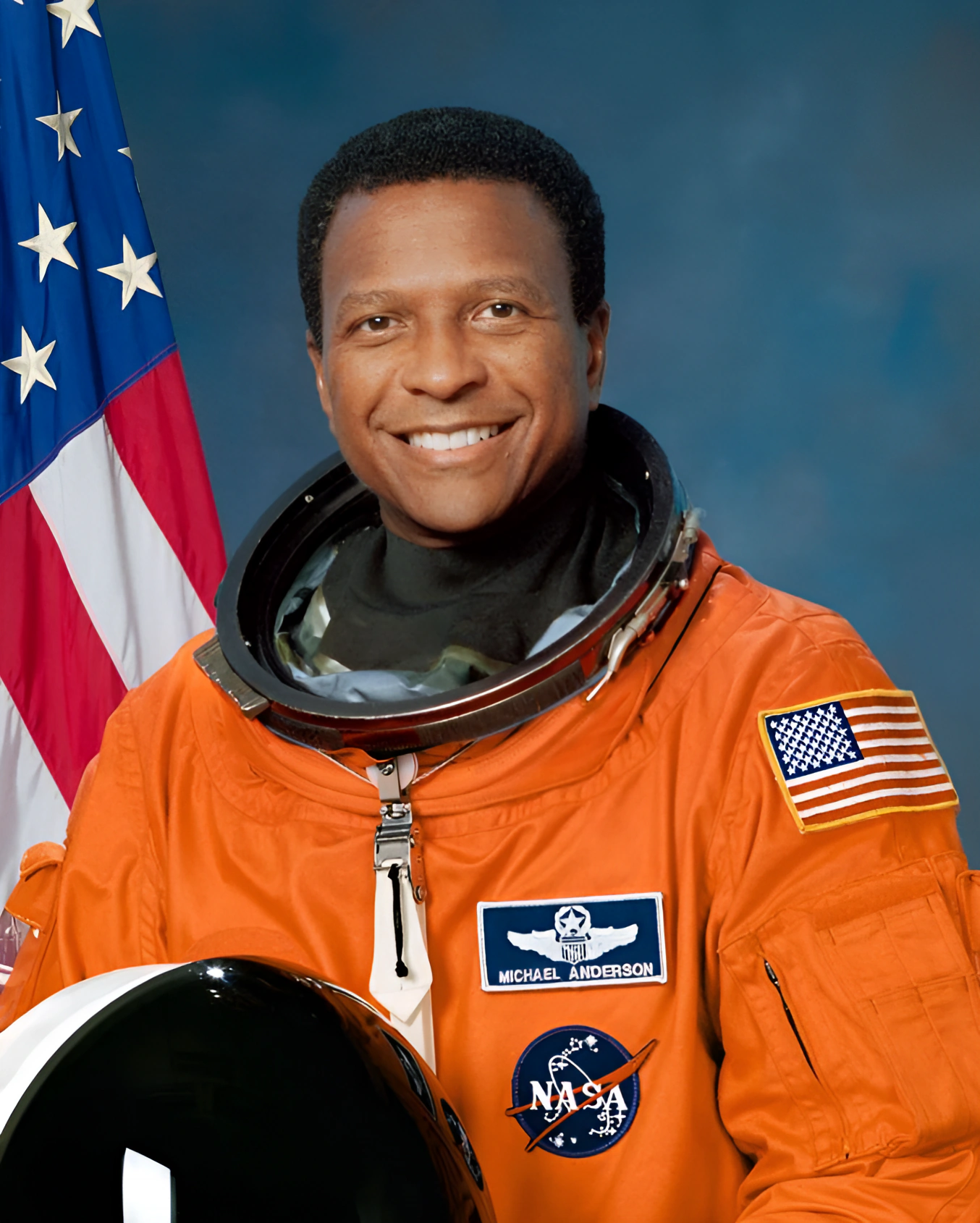
| 10 Quotes | |
| Occup. | Astronaut |
| From | USA |
| Born | December 25, 1959 Plattsburgh, New York |
| Died | February 1, 2003 |
| Aged | 43 years |
| Cite | |
Citation Formats
APA Style (7th ed.)
Michael p. anderson biography, facts and quotes. (2026, February 11). FixQuotes. https://fixquotes.com/authors/michael-p-anderson/
Chicago Style
"Michael P. Anderson biography, facts and quotes." FixQuotes. February 11, 2026. https://fixquotes.com/authors/michael-p-anderson/.
MLA Style (9th ed.)
"Michael P. Anderson biography, facts and quotes." FixQuotes, 11 Feb. 2026, https://fixquotes.com/authors/michael-p-anderson/. Accessed 4 Mar. 2026.
Early Life and Background
Michael Phillip Anderson was born on December 25, 1959, in Plattsburgh, New York, a cold-war garrison town where Strategic Air Command and the aerospace age felt close to daily life. The son of a career Air Force family, he spent childhood moving with assignments and learning the social code of bases - discipline, competence, and the quiet expectation that you pull your weight. That itinerant upbringing gave him an early fluency in new environments, a trait that later read as calm under pressure rather than mere adaptability.He came of age as Apollo receded into history and the Space Shuttle became the emblem of a more routine, institutional spaceflight. Anderson did not grow up in a single mythic neighborhood that produced astronauts; he grew up in the practical infrastructure of aviation - runways, maintenance hangars, and the rhythms of training. Friends and colleagues later described a steady personality: competitive without theatrics, sociable without showmanship, and oriented toward the long game of preparation.
Education and Formative Influences
Anderson attended the University of Washington in Seattle, earning a BS in physics and astronomy in 1981, then pursued an MS in physics at Creighton University, completed in 1990 while on active duty. He was the rare astronaut candidate who could talk with equal ease about orbital mechanics and the feel of an aircraft in turbulent air; he later summed up that two-track ambition plainly: “I went to the University of Washington as a physics and astronomy major. My other interest, of course, was aviation. I always wanted to be a pilot. And if you're going to fly airplanes, the best place to be is the Air Force”. The timing mattered: the late 1970s and early 1980s were years when STEM fields promised both intellectual rigor and national purpose, and Anderson absorbed the era's faith that technique, teamwork, and patience could turn aspiration into operational reality.Career, Major Works, and Turning Points
Commissioned through ROTC, Anderson became a U.S. Air Force pilot, serving in the 1980s and 1990s in assignments that blended flying with technical stewardship, including roles connected to flight test and aerospace operations. His shuttle-era pathway ran through the service's culture of checklists and contingency planning - habits that NASA valued as the Shuttle program matured after Challenger and sought crews who could combine technical competence with procedural discipline. Selected by NASA as an astronaut in 1995, he trained at Johnson Space Center and eventually flew as a mission specialist on STS-89 (Endeavour) in January 1998, the eighth Shuttle-Mir docking mission, contributing to joint U.S.-Russian operations and the handoff of long-duration crews. His public-facing narrative ended tragically on February 1, 2003, when he died with six crewmates in the Space Shuttle Columbia disaster (STS-107), a loss that reshaped NASA's risk culture and forced a reckoning with organizational normalizations that had crept into a program built on razor-thin margins.Philosophy, Style, and Themes
Anderson's inner life, as it emerges from interviews and the testimony of peers, braided humility with a stubborn confidence in preparation. He resisted the heroic pose; his self-description was often that of a working professional lucky enough to do meaningful work. Yet he was not naïve about what spaceflight demanded. His wry honesty captured the astronaut's paradox of control and surrender: “When you launch in a rocket, you're not really flying that rocket. You're just sort of hanging on”. The line is comic, but it reveals a psychological stance - an acceptance that mastery in this domain comes from systems thinking, trust in teammates, and the ability to stay composed when agency narrows to following procedure and managing oneself.A second theme was providence without passivity - the sense that a life is built by layers of mentorship, timing, and institutional support, but also by personal readiness when the moment arrives. He articulated that gratitude as a kind of spiritual logistics: “As you look back at your life, there are just a million different things that have happened, just in the right way, to allow you to make your dreams come true. And you know, someone has all that under control”. This was not fatalism; it was a way to hold risk and loss in a profession where friends die and schedules move on. Underneath it sat a broad curiosity that kept him from becoming only a technician: “Like most kids growing up, I had a very wide interest. I was interested in everything. I tried to take advantage of everything, from the sciences to music to writing to literature”. That breadth helped him translate the abstract work of flight - sensors, experiments, timelines - into a human story the public could recognize.
Legacy and Influence
Anderson's legacy rests in two intertwined histories: the late Shuttle-Mir bridge to the International Space Station, and the Columbia loss that forced NASA and its contractors to rebuild assumptions about foam strikes, inspection, and decision-making authority. He is remembered not only as a fallen astronaut, but as a representative of the working, mid-program spacefarer - an officer-scientist who treated spaceflight less as personal destiny than as collective responsibility. Schools, scholarships, and memorials bearing his name keep his story in circulation, but his deeper influence is institutional: the reminder that competence is a moral practice, that gratitude can coexist with rigor, and that the view from orbit is purchased by teams on the ground and by individuals who accept, soberly, that exploration is never routine.Our collection contains 10 quotes written by Michael, under the main topics: Witty One-Liners - Learning - Science - Faith - Military & Soldier.
Source / external links