
Michael Polanyi Biography Quotes 18 Report mistakes
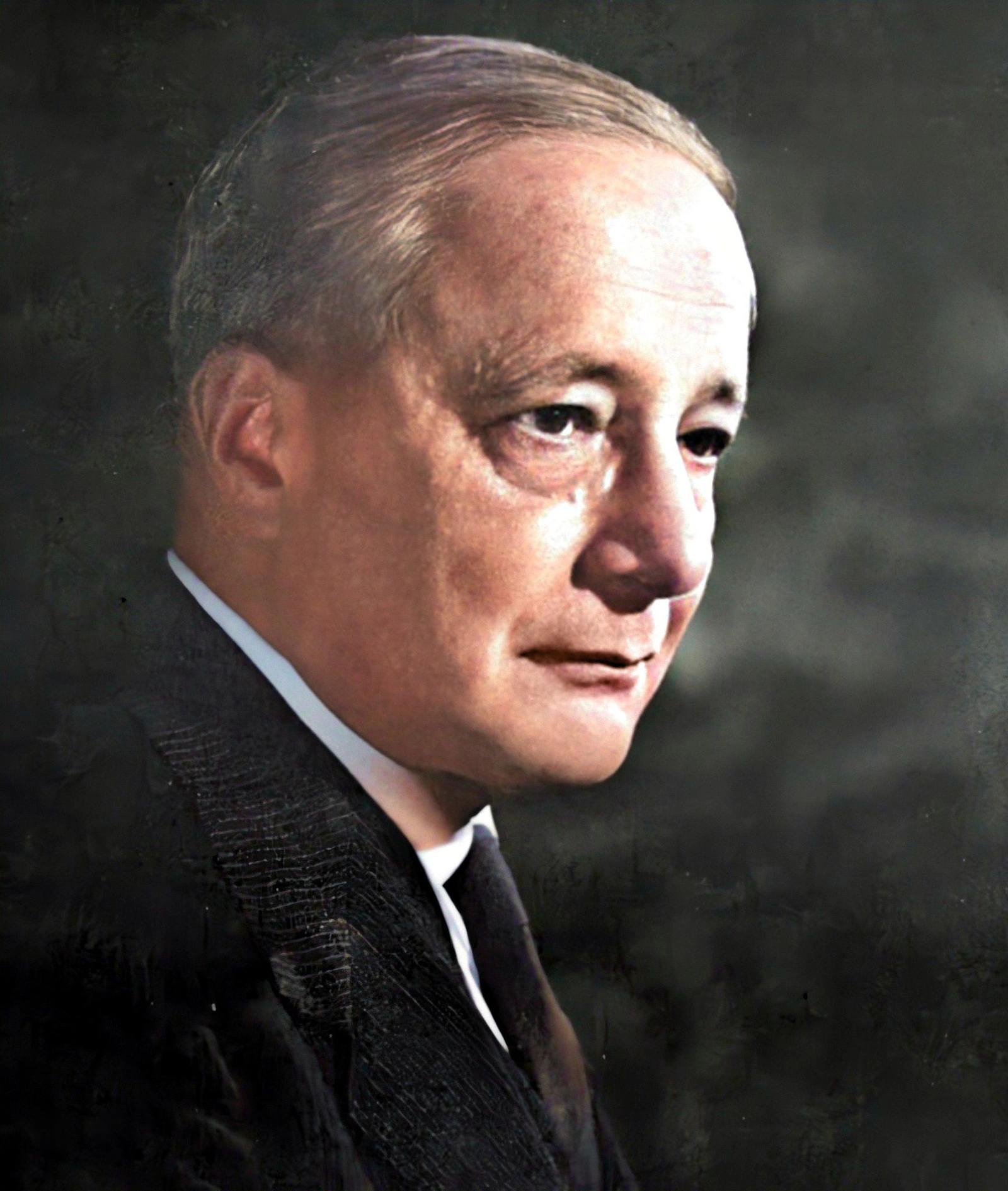
| 18 Quotes | |
| Born as | Pollacsek Mihály |
| Occup. | Scientist |
| From | Hungary |
| Born | March 11, 1891 Budapest, Hungary |
| Died | February 22, 1976 Northampton, England |
| Aged | 84 years |
| Cite | |
Citation Formats
APA Style (7th ed.)
Michael polanyi biography, facts and quotes. (2026, February 11). FixQuotes. https://fixquotes.com/authors/michael-polanyi/
Chicago Style
"Michael Polanyi biography, facts and quotes." FixQuotes. February 11, 2026. https://fixquotes.com/authors/michael-polanyi/.
MLA Style (9th ed.)
"Michael Polanyi biography, facts and quotes." FixQuotes, 11 Feb. 2026, https://fixquotes.com/authors/michael-polanyi/. Accessed 26 Mar. 2026.
Early Life and Background
Michael Polanyi was born Pollacsek Mihaly on 1891-03-11 in Budapest, then a fast-modernizing capital of the Austro-Hungarian Empire where liberal professions, Jewish assimilation, and nationalist anxieties coexisted uneasily. His family belonged to the educated middle class that treated science and public service as routes into European modernity; the name change to Polanyi reflected that social translation as much as any private conviction.The shocks of the early 20th century shaped his inner life early: the First World War, the collapse of empire, and the political whiplash of the Hungarian revolutions forced him to weigh loyalty against conscience and cosmopolitan inquiry against ideological certainties. That experience left him with a lifelong sensitivity to how institutions can both nurture and coerce thought - and how intellectual freedom, once lost, is difficult to recover.
Education and Formative Influences
Polanyi trained first as a physician in Budapest, completing medical studies during a period when laboratory science was remaking medicine, then moved decisively into physical chemistry as the center of European science shifted across Berlin and the German universities; his formation drew on the exacting habits of measurement and mathematical modeling, but also on the salon-like culture of Central European debate where philosophy, politics, and science were not kept in separate rooms. The war years and the interwar crises sharpened his skepticism toward utopian planning, while his early research culture taught him that discovery depends on tradition, apprenticeship, and judgment as much as on formal method.Career, Major Works, and Turning Points
In the 1920s Polanyi built an international reputation in physical chemistry in Berlin, contributing to adsorption and reaction-rate theory and helping extend a molecular understanding of surfaces and kinetics; the Nazi seizure of power in 1933 forced a decisive turn, pushing him to Britain, where he worked at the University of Manchester and reestablished his laboratory life while watching totalitarian politics press on the very idea of independent inquiry. During and after the Second World War his public writing widened from science to the social preconditions of science and the failures of centralized control, culminating in his major philosophical works - "Personal Knowledge" (1958) and "The Tacit Dimension" (1966) - and his later appointment as a professor of social studies at Manchester, where he argued that scientific progress is a moral and civic achievement, not merely a technical one.Philosophy, Style, and Themes
Polanyi wrote as a scientist turned moral psychologist of knowing: precise, example-driven, and suspicious of any account of reason that pretends the knower can be erased. Against the mid-century cult of impersonal objectivity, he insisted that discovery is fiduciary - grounded in commitments, trained perception, and trust in a community that can criticize without crushing originality. His most influential move was to describe knowledge as structured by skills and indwelling: we attend from subsidiary clues to a focal meaning, and the integration cannot be fully articulated without losing what it knows.This is why his signature claim lands not as mysticism but as a disciplined description of practice: “I shall suggest, on the contrary, that all communication relies, to a noticeable extent on evoking knowledge that we cannot tell, and that all our knowledge of mental processes, like feelings or conscious intellectual activities, is based on a knowledge which we cannot tell”. Tacit knowledge, for him, is not a gap to be eliminated by better algorithms but the living core of competence, from diagnosing illness to proving a theorem. He extended the argument to culture and language, warning that our questions are never neutral tools: “So long as we use a certain language, all questions that we can ask will have to be formulated in it and will thereby confirm the theory of the universe which is implied in the vocabulary and structure of the language”. The political sting of his philosophy came from what exile taught him - that freedom of inquiry needs more than rights on paper: “Moreover, only a strong and united scientific opinion imposing the intrinsic value of scientific progress on society at large can elicit the support of scientific inquiry by the general public”.
Legacy and Influence
Polanyi died on 1976-02-22, having helped remake 20th-century debates about science, authority, and freedom by showing that knowledge is personal without being private and communal without being collectivist. His work shaped philosophy of science (especially critiques of strict positivism), influenced thinkers from Thomas Kuhn to later accounts of expertise and practice, and became foundational for discussions of tacit knowledge in education, management, and technology. In an era still tempted by both technocracy and propaganda, Polanyi endures as a guide to the moral ecology of discovery: the fragile interplay of skill, commitment, and a community willing to pursue truth without pretending that truth is made by rules alone.Our collection contains 18 quotes written by Michael, under the main topics: Ethics & Morality - Truth - Deep - Knowledge - Reason & Logic.
Other people related to Michael: John Charles Polanyi (Scientist), Melvin Calvin (Scientist)
Michael Polanyi Famous Works
- 1966 The Tacit Dimension (Book)
- 1958 Personal Knowledge (Book)
- 1946 Science, Faith and Society (Book)
Source / external links