
Michael Porter Biography Quotes 21 Report mistakes
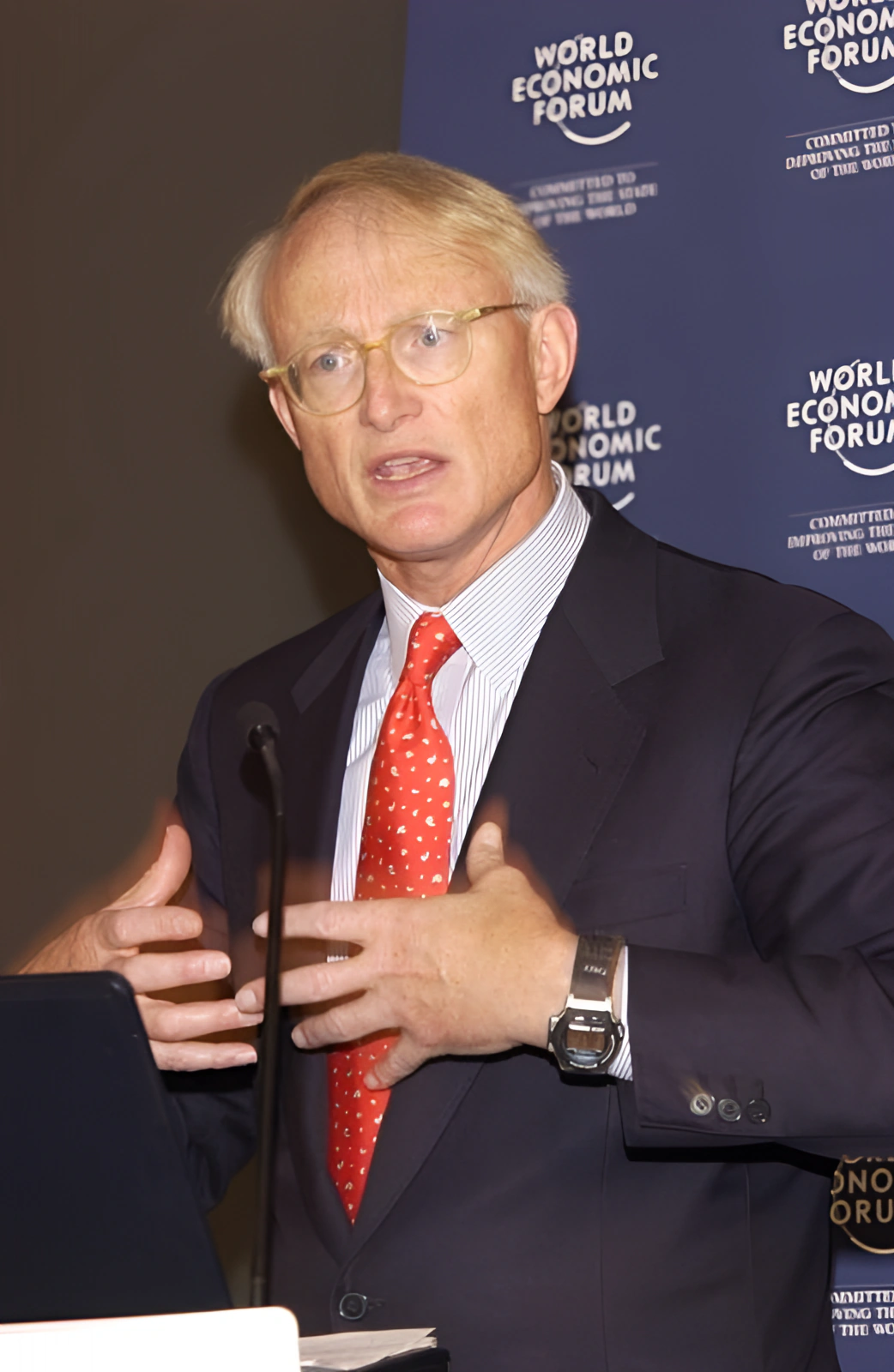
| 21 Quotes | |
| Occup. | Educator |
| From | USA |
| Born | May 23, 1947 |
| Age | 78 years |
| Cite | |
Citation Formats
APA Style (7th ed.)
Michael porter biography, facts and quotes. (2026, February 11). FixQuotes. https://fixquotes.com/authors/michael-porter/
Chicago Style
"Michael Porter biography, facts and quotes." FixQuotes. February 11, 2026. https://fixquotes.com/authors/michael-porter/.
MLA Style (9th ed.)
"Michael Porter biography, facts and quotes." FixQuotes, 11 Feb. 2026, https://fixquotes.com/authors/michael-porter/. Accessed 27 Mar. 2026.
Early Life and Background
Michael Eugene Porter was born on May 23, 1947, in Ann Arbor, Michigan, into a postwar America newly confident in managerial science, corporate scale, and the promise of professional expertise. The decades that framed his childhood and adolescence were defined by the rise of U.S. conglomerates, Cold War competition, and the expanding reach of business schools as institutions that claimed they could codify success.From early on Porter showed the dual sensibility that would later define him: an engineer-like appetite for systems and a humanist interest in why some organizations, industries, and places thrive while others stagnate. He came of age as antitrust debates, Japanese manufacturing prowess, and new quantitative methods were reshaping how executives and policymakers spoke about competition. That surrounding talk of "efficiency" and "growth" formed a backdrop Porter would eventually challenge by insisting that advantage is not merely about doing more, but about choosing differently.
Education and Formative Influences
Porter studied aerospace and mechanical engineering at Princeton University (BSE, 1969), then shifted toward economics and business at Harvard Business School (MBA with high distinction, 1971) and Harvard University (PhD in business economics, 1973). The engineering training gave him a bias toward structure, constraints, and trade-offs; Harvard's intellectual milieu gave him access to industrial organization economics and the emerging belief that rigorous frameworks could guide real-world decisions. His early scholarly formation occurred as economists debated market power and as strategists tried to separate durable advantage from the managerial fads of the 1960s and 1970s.Career, Major Works, and Turning Points
Porter joined Harvard Business School faculty in the 1970s and became a central figure in modern strategy, shaping both scholarship and executive practice. His breakthrough book, Competitive Strategy (1980), translated industrial organization concepts into tools managers could use, most famously the "five forces" framework for industry attractiveness and rivalry; it was followed by Competitive Advantage (1985), which refined the "value chain" as a way to diagnose sources of cost and differentiation. The Competitive Advantage of Nations (1990) expanded his lens from firms to countries, proposing the "diamond" model for national and regional competitiveness, and later work pushed into clusters and economic development. A major turning point came as he increasingly applied strategy to social outcomes, from redefining health care delivery to arguing for "shared value" with Mark Kramer, placing corporate advantage in dialogue with societal needs rather than in opposition to them.Philosophy, Style, and Themes
Porter's thought is anchored in a clear psychological insistence on discipline: the belief that leadership is, at bottom, the courage to disappoint, to resist imitation, and to accept constraint. His most quoted line captures this internal ethic of renunciation - “The essence of strategy is choosing what not to do”. In Porter's writing, the idea is not moral asceticism but economic clarity: trade-offs protect uniqueness, and uniqueness protects performance. He repeatedly warns that organizations without a coherent theory of how they will win become opportunistic and scattered, confusing motion with progress and tactics with choice.His style is diagnostic and architectural. Porter separates operational excellence from competitive positioning because he thinks managers are temperamentally drawn to measurable improvements and dramatic initiatives, even when those moves erase distinctiveness. “There's a fundamental distinction between strategy and operational effectiveness”. Yet he is not anti-improvement; he treats constancy of purpose as the container that makes learning compounding rather than chaotic: “The thing is, continuity of strategic direction and continuous improvement in how you do things are absolutely consistent with each other. In fact, they're mutually reinforcing”. Across industries, nations, and nonprofits, his recurring theme is that prosperity is built when choices align goals, activities, and the environment - a theory that appealed to executives precisely because it explained both success and self-inflicted failure.
Legacy and Influence
Porter's enduring influence lies in how thoroughly his frameworks became the shared language of boardrooms, classrooms, consulting firms, and public policy, even among critics who argue he underweights uncertainty or power dynamics. Five forces, the value chain, and the cluster concept remain default starting points for diagnosing competition, designing organizations, and thinking about regional development. As an educator and institution builder at Harvard, he helped professionalize strategy as a field with rigorous concepts rather than charismatic slogans, and his later work on health care and shared value extended his core proposition - that performance depends on fit, trade-offs, and systems - into domains where the stakes are measured not only in profit, but in lives and livelihoods.Our collection contains 21 quotes written by Michael, under the main topics: Change - Vision & Strategy - Business - Decision-Making - Technology.
Source / external links