
Michael Schumacher Biography Quotes 5 Report mistakes
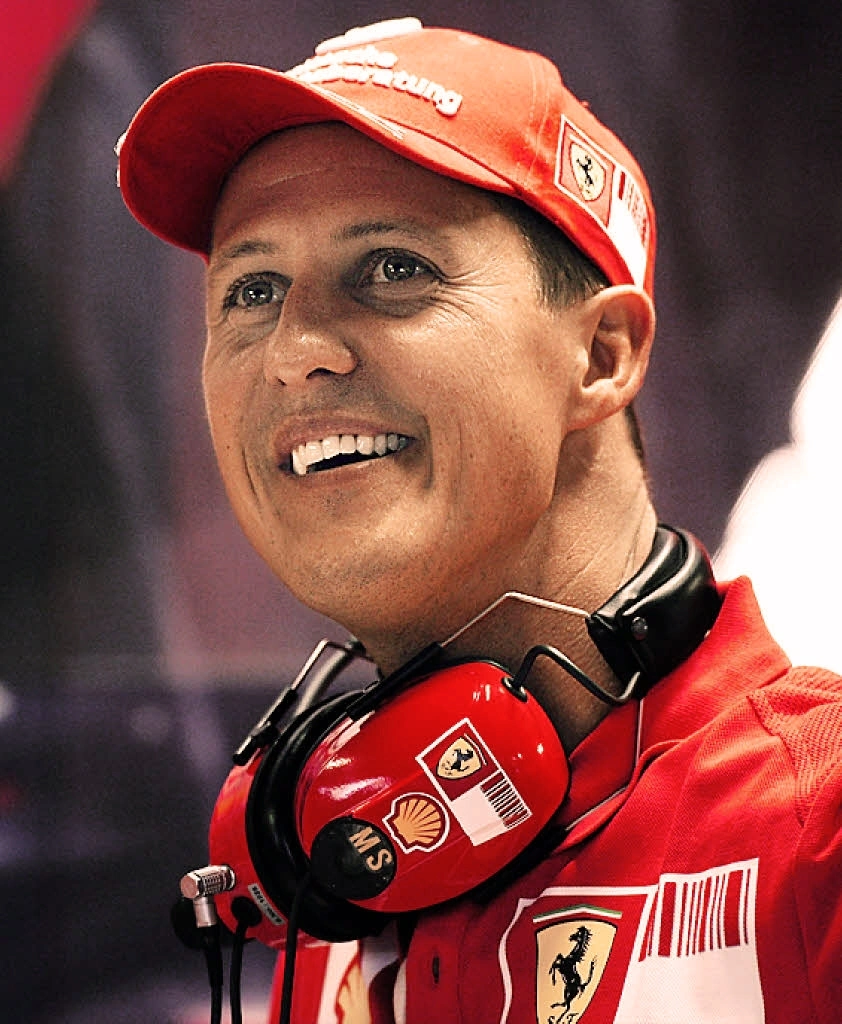
| 5 Quotes | |
| Occup. | Celebrity |
| From | Germany |
| Born | January 3, 1969 |
| Age | 57 years |
| Cite | |
Citation Formats
APA Style (7th ed.)
Michael schumacher biography, facts and quotes. (2026, February 11). FixQuotes. https://fixquotes.com/authors/michael-schumacher/
Chicago Style
"Michael Schumacher biography, facts and quotes." FixQuotes. February 11, 2026. https://fixquotes.com/authors/michael-schumacher/.
MLA Style (9th ed.)
"Michael Schumacher biography, facts and quotes." FixQuotes, 11 Feb. 2026, https://fixquotes.com/authors/michael-schumacher/. Accessed 5 Mar. 2026.
Early Life
Michael Schumacher was born on January 3, 1969, in Huerth-Hermuelheim, West Germany. Raised in nearby Kerpen, he grew up around the local karting track his father, Rolf Schumacher, helped manage, while his mother, Elisabeth, worked at the circuit. The family environment fostered his early interest in racing, and he began karting at a very young age. He progressed quickly through local and national competitions and became a standout in European karting, collecting major titles and attention from talent spotters. The competitive spirit and relentless work ethic that later defined his Formula One career were shaped during these formative years amid the tight-knit karting community around Kerpen.From Junior Formulas to the Doorstep of Formula One
After success in karting, Schumacher moved into single-seater racing. He won Germany's Formula Koenig championship and then established himself in German Formula 3, taking the title in 1990. Around the same time he joined the Mercedes-backed junior program in sports cars, competing with the Sauber-Mercedes team alongside peers such as Karl Wendlinger and Heinz-Harald Frentzen. The program, guided by figures including Jochen Neerpasch and Peter Sauber, polished his technical understanding and discipline. Schumacher's strong showings at the Macau Grand Prix and in endurance racing underscored his adaptability and raw speed, making his ascent to Formula One appear inevitable.Breakthrough in Formula One
Schumacher made an immediate impression on his Formula One debut at the 1991 Belgian Grand Prix with Eddie Jordan's team, qualifying remarkably well at Spa-Francorchamps before retiring from the race with a mechanical failure. His performance drew the attention of Benetton, and he moved there under team boss Flavio Briatore. At Benetton he formed crucial relationships with technical leaders Ross Brawn and Rory Byrne, who would become pillars of his career. Schumacher won his first Grand Prix at Spa in 1992 and soon emerged as a title contender.The 1994 season brought his first world championship but was overshadowed by tragedy and controversy. The death of Ayrton Senna at Imola cast a long shadow over the sport. Schumacher won seven of the first eight races, but penalties and a late-season collision with Damon Hill at Adelaide fueled intense debate. He secured the title and then claimed a second, commanding championship in 1995. By then he had become the benchmark driver of his generation, displaying a blend of speed, racecraft, and unrelenting preparation that redefined professional standards.
Rebuilding Ferrari
In 1996 Schumacher made a defining move to Ferrari, a storied team then struggling for consistency. Led by Jean Todt, Ferrari committed to a long-term rebuild centered on Schumacher, with Brawn and Byrne later joining to unify the technical structure. Schumacher's win in torrential conditions at the 1996 Spanish Grand Prix symbolized the team's resurgence. The road to championships was not straightforward: he fought Jacques Villeneuve for the 1997 crown and was disqualified from the season's standings after a clash in the final race; in 1998 he battled Mika Hakkinen and McLaren in a classic duel that went to the wire; and in 1999 a midseason crash at Silverstone left him with a broken leg, halting his campaign while teammate Eddie Irvine carried Ferrari's hopes.The breakthrough came in 2000, when Schumacher and Ferrari won both the drivers' and constructors' titles, ending the team's long drought. A period of historic dominance followed. With Rubens Barrichello as teammate, and with the consistent guidance of Todt, Brawn, Byrne, and Ferrari president Luca di Montezemolo, Schumacher won five consecutive drivers' championships from 2000 to 2004. His relentless fitness regime, extensive testing, and ruthless consistency set new benchmarks. He excelled in the wet, delivered relentless qualifying and race pace, and led a team culture built on trust and meticulous detail. Controversies, including team orders in 2002, sparked debate about competitive ethics, but his record-breaking success reshaped Formula One's competitive landscape.
Challenges, Rivalries, and the First Retirement
Rule changes and tire competition hindered Ferrari in 2005. In 2006 Schumacher mounted a late-season comeback against Fernando Alonso but lost critical points with an engine failure at Suzuka. In what was intended as his farewell season, he delivered a final reminder of his class with an outstanding drive through the field in the 2006 Brazilian Grand Prix. He then retired, remaining with Ferrari in an advisory capacity and mentoring younger drivers such as Felipe Massa.Several of Schumacher's rivals helped define his era: Damon Hill and Jacques Villeneuve during the Benetton years; Mika Hakkinen and David Coulthard during the early Ferrari battles; and later Fernando Alonso, Kimi Raikkonen, and Juan Pablo Montoya. His close professional ties with Todt, Brawn, and Byrne were central to his achievements, while his long-time manager Willi Weber helped guide his career commercially. Press officer and later representative Sabine Kehm became an important figure in communicating about his life beyond the cockpit.
Return with Mercedes
In 2009 Schumacher considered a temporary comeback to substitute for the injured Felipe Massa, but a neck injury prevented it. He returned full-time in 2010 with the reborn Mercedes team led by Ross Brawn, partnering Nico Rosberg and supported by Mercedes motorsport chief Norbert Haug. While podiums were scarce in the tightly contested field, Schumacher remained formidable on pace and racecraft. In 2012 he set the fastest qualifying time at Monaco (serving a grid penalty from the previous event) and scored a podium in Valencia, underscoring flashes of the old brilliance. He retired for a second time at the end of the 2012 season, having contributed to the foundations of a team that would later become dominant.Personal Life and Philanthropy
Schumacher married Corinna Betsch in 1995. Their family life in Switzerland remained deliberately private. Their daughter Gina became an accomplished equestrian, while their son Mick followed his father into motorsport, rising through the junior ranks to reach Formula One. Beyond racing, Schumacher supported charitable causes, including road safety initiatives and educational programs as a UNESCO ambassador. In later years, his family established the Keep Fighting Foundation to channel the competitive spirit and positive values associated with his career into broader social projects.Skiing Accident and Privacy
On December 29, 2013, Schumacher sustained a severe head injury in a skiing accident in the French Alps near Meribel. He underwent emergency treatment in Grenoble and was placed in a medically induced coma before being transferred to Lausanne for further care in 2014. Later he returned to family care in Switzerland. Under the stewardship of Corinna Schumacher and with communications handled by Sabine Kehm, the family has maintained strict privacy around his medical condition, sharing only limited updates. Close friends and colleagues, including Jean Todt, have spoken respectfully about their ongoing support for the family, aligning with its wish for discretion.Legacy
Michael Schumacher's legacy is among the most substantial in motorsport history. A seven-time Formula One world champion (1994, 1995, 2000, 2004), he transformed Ferrari into a modern powerhouse and set records for wins, podiums, and fastest laps that stood for years. His 91 Grand Prix victories were the benchmark until surpassed in the following decade, but statistics alone do not capture his impact. He professionalized the role of the driver as an athlete and a development leader, elevating standards in fitness, testing methodology, and team collaboration. His wet-weather mastery, relentless pace over a race distance, and strategic awareness under pressure became reference points for subsequent generations.Equally influential were the relationships that enabled his success. Jean Todt's leadership, Ross Brawn's race strategies, Rory Byrne's car designs, and Rubens Barrichello's teamwork coalesced around Schumacher's driving and feedback. Rivalries with Ayrton Senna, Damon Hill, Jacques Villeneuve, Mika Hakkinen, and Fernando Alonso defined key chapters of his career and enriched the narrative of modern Formula One. Within his family, the support of Corinna Schumacher and the shared path of Ralf Schumacher, himself a multiple Grand Prix winner, shaped a racing dynasty extending to the next generation through Mick.
Across decades, Schumacher combined talent with discipline, technical acuity with courage, and individual brilliance with an ability to galvanize teams. His influence persists in the standards teams apply to preparation and execution, in the aspirations of drivers who grew up watching him, and in the enduring respect of peers and fans worldwide.
Our collection contains 5 quotes written by Michael, under the main topics: Victory - Sports - Parenting - Teamwork - Husband & Wife.
Other people related to Michael: Jean Alesi (Celebrity), Sebastian Vettel (Celebrity), Nelson Piquet (Celebrity)
Source / external links