
Michelle Wie Biography Quotes 14 Report mistakes
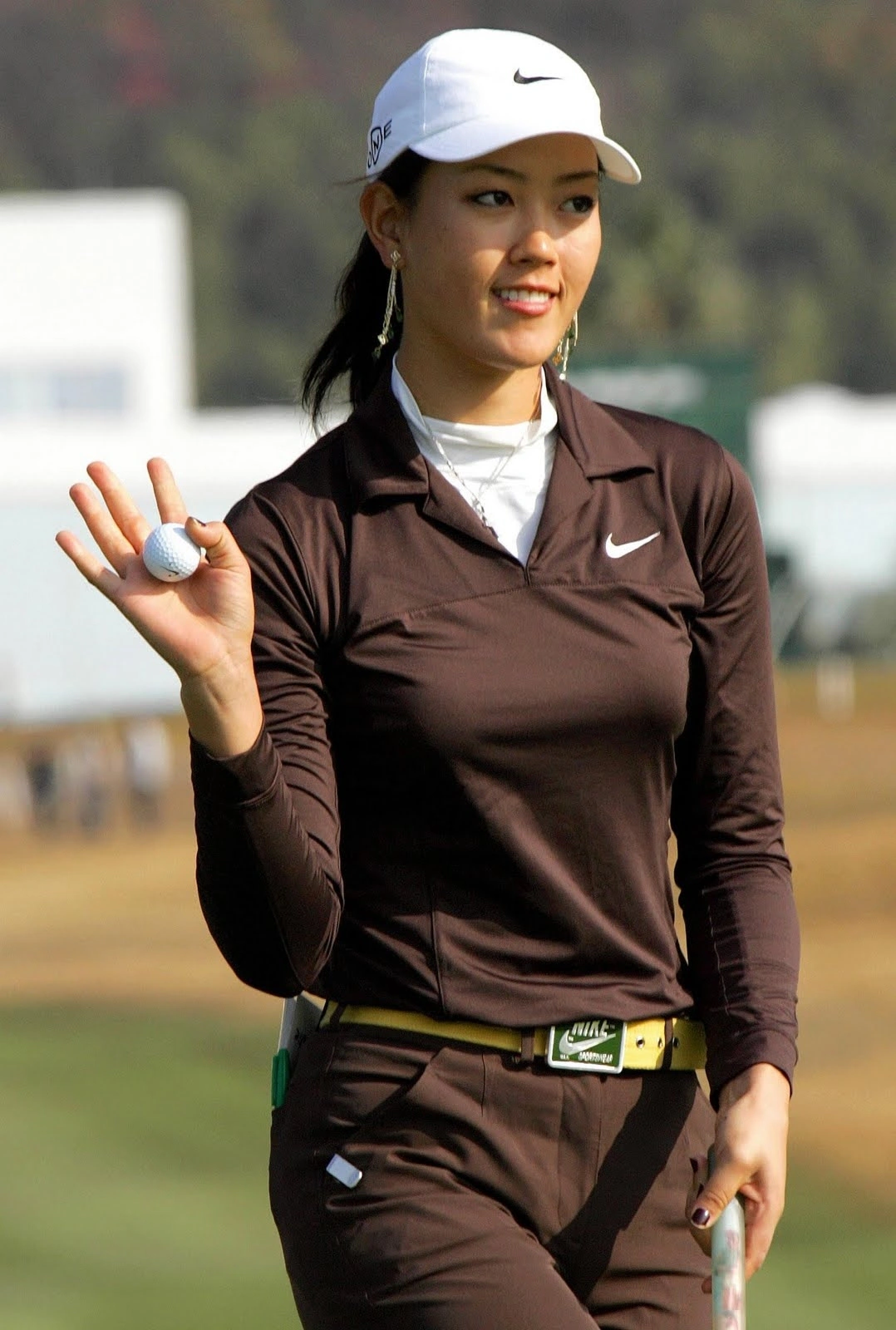
| 14 Quotes | |
| Occup. | Athlete |
| From | USA |
| Born | October 11, 1989 |
| Age | 36 years |
| Cite | |
Citation Formats
APA Style (7th ed.)
Michelle wie biography, facts and quotes. (2026, February 11). FixQuotes. https://fixquotes.com/authors/michelle-wie/
Chicago Style
"Michelle Wie biography, facts and quotes." FixQuotes. February 11, 2026. https://fixquotes.com/authors/michelle-wie/.
MLA Style (9th ed.)
"Michelle Wie biography, facts and quotes." FixQuotes, 11 Feb. 2026, https://fixquotes.com/authors/michelle-wie/. Accessed 13 Feb. 2026.
Early Life and Background
Michelle Sung Wie was born on October 11, 1989, in Honolulu, Hawaii, to South Korean parents who had emigrated to the United States. Her father, B.K. Wie, worked in academia, and her mother, Bo Wie, was an accomplished amateur golfer - a household combination of high expectations and measurable performance. In the multicultural, achievement-oriented milieu of late-20th-century Hawaii, her early life was shaped by both island informality and a distinctly immigrant ethic: preparation, self-control, and the quiet pressure to justify opportunity with results.Golf arrived not as a pastime but as a language of belonging. She began swinging clubs as a toddler and quickly became a local prodigy, tall for her age and already capable of generating unusual clubhead speed. From the start, her public story was inseparable from the question of scale: how a child with a powerful, technically advanced swing would fare against older, stronger competition - and what it would mean for a girl to test herself in arenas traditionally coded male.
Education and Formative Influences
Wie attended Punahou School, the storied Honolulu institution known for combining rigorous academics with elite athletics. She trained in an era when Tiger Woods had already globalized golf stardom, when swing mechanics and sports science were becoming mainstream, and when televised tournaments made adolescence newly marketable. She later enrolled at Stanford University (beginning in 2007), balancing collegiate life with professional obligations, and she drew inspiration from models of sustained excellence - notably Annika Sorenstam, whose steadiness and repeatability offered an antidote to the volatility of hype.Career, Major Works, and Turning Points
Wie entered national prominence in the early 2000s by qualifying for and competing in PGA Tour events and other mens tournaments while still a teenager, a daring experiment that made her a cultural symbol as much as an athlete. She turned professional in 2005, then endured years of interrupted momentum amid injuries, swing changes, and the burden of expectation. The long arc bent toward vindication: she won her first LPGA title at the 2014 Lotte Championship in Hawaii and later that year captured her defining major, the 2014 U.S. Womens Open at Pinehurst No. 2, a victory built less on raw power than on composure and timely shotmaking. She added another LPGA win in 2018, and in 2019 she married Jonnie West and later became a mother, gradually stepping away from full-time competition while remaining visible through broadcasting and public golf culture.Philosophy, Style, and Themes
Wie's inner life can be read through a recurring tension between appetite and restraint. She liked the confrontation of scoreboards, yet she also understood the dangers of rushing adulthood in public. Her early comments about turning pro showed a rare, almost managerial self-protection: "Ty Tryon made a lot of money after turning pro, but he might not have been ready. I don't want to make a lot of money for a couple of months and then not be ready". That sentence is less about another golfer than about her own fear of being consumed by the machinery around her - endorsements, novelty, and the pressure to be a headline before being a finished player.On the course, Wie's style married length with a willingness to suffer through variables rather than complain about them. The mature competitor in her acknowledged that performance is often a negotiation with weather, nerves, and body: "I have played in rain before. I have played in wind before. I have played in cold before, but not all put together. They were the hardest conditions I ever played in". Psychologically, she tended to normalize adversity - not romanticizing it, but cataloging it, as if naming the stressors reduced their power. She also carried an early, stubborn singularity that explained both her fame and her isolation: "I don't like going to the mall. I'm not really like the other girls. I just like to go out on the golf course and play. Golf is fun and feels really good". In an era that marketed young female athletes through lifestyle narratives, she insisted on craft, repetition, and the private satisfactions of ball flight.
Legacy and Influence
Wie's legacy is not only her U.S. Womens Open title but the way she expanded what mainstream audiences imagined possible for womens golf - and for adolescent athletes navigating celebrity. She helped normalize the idea that a female golfer could be discussed in terms of power, distance, and competitive audacity without apology, even as her own path showed the costs of being treated as an experiment. For a generation that followed - from LPGA stars trained in the gym to juniors raised in a global, media-saturated pipeline - Wie stands as a cautionary tale about hype and a proof of concept about resilience: the player who absorbed years of noise, remade herself, and eventually won the tournament that made her more than a prediction.Our collection contains 14 quotes written by Michelle, under the main topics: Witty One-Liners - Sarcastic - Victory - Sports - Goal Setting.
Source / external links