
Mickey Mantle Biography Quotes 25 Report mistakes
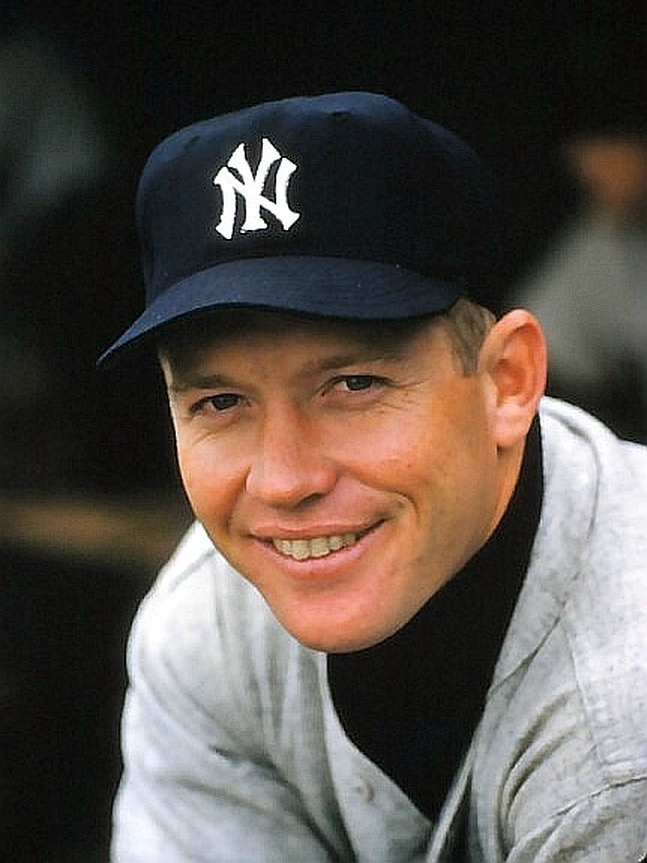
| 25 Quotes | |
| Occup. | Athlete |
| From | USA |
| Born | October 20, 1931 |
| Died | August 13, 1995 |
| Aged | 63 years |
| Cite | |
Citation Formats
APA Style (7th ed.)
Mickey mantle biography, facts and quotes. (2026, February 11). FixQuotes. https://fixquotes.com/authors/mickey-mantle/
Chicago Style
"Mickey Mantle biography, facts and quotes." FixQuotes. February 11, 2026. https://fixquotes.com/authors/mickey-mantle/.
MLA Style (9th ed.)
"Mickey Mantle biography, facts and quotes." FixQuotes, 11 Feb. 2026, https://fixquotes.com/authors/mickey-mantle/. Accessed 26 Mar. 2026.
Early Life
Mickey Charles Mantle was born on October 20, 1931, in Spavinaw, Oklahoma, and grew up in the mining town of Commerce. His father, Elvin "Mutt" Mantle, a lead and zinc miner and avid baseball fan, named him after Hall of Fame catcher Mickey Cochrane and taught him to switch-hit, drilling him day after day until he could drive the ball from both sides with equal force. As a teenager Mantle survived a dangerous bout of osteomyelitis, an infection that threatened his leg and nearly ended his athletic prospects; new treatments and relentless determination helped him recover. The combination of rural toughness, family tutelage, and raw athleticism produced the "Commerce Comet", a nickname that captured the speed and power that became his signature.Signing and Minor Leagues
Mantle was discovered by Yankees scout Tom Greenwade in 1948 and signed the following year. He flashed extraordinary power with the Independence Yankees and the Joplin Miners, pairing thunderous hitting with occasionally erratic defense. In 1951 he impressed in spring training and broke camp with the New York Yankees wearing number 6, a sign of the club's high expectations. Early struggles led to a midseason return to the minors with the Kansas City Blues, where he regained confidence, then came back to New York and donned number 7, the number that would become synonymous with his legend.Rookie Season and Early Setback
Mantle's first World Series in 1951 produced a defining moment: chasing a fly ball hit by Willie Mays, he pulled up when Joe DiMaggio called him off and caught his spike on a Yankee Stadium drainage cover, injuring his right knee. The trauma would haunt him for years, but it did not derail his ascent. Under manager Casey Stengel and alongside veterans like Yogi Berra, Phil Rizzuto, and Whitey Ford, Mantle matured into the Yankees' next great center fielder as DiMaggio retired.Ascent to Greatness
From 1952 through the late 1950s, Mantle blended tape-measure power with blazing speed, intimidating pitchers from both sides of the plate and patrolling center field with long, loping strides. He became the engine of a dynasty that routinely captured American League pennants. In 1956 he produced one of the most celebrated seasons in baseball history, winning the Triple Crown by leading the league in batting average, home runs, and runs batted in, and earning the first of his three Most Valuable Player awards. In the 1956 World Series, his timely power supported Don Larsen's perfect game, a Fall Classic milestone etched forever into Bronx lore. Mantle claimed a second straight MVP in 1957 and remained a perennial All-Star, the sport's premier switch-hitter and the face of the Yankees.Power and Spectacle
Mantle's strength became legend. A colossal blast in Washington in 1953, measured by a team publicist at an estimated 565 feet, helped popularize the phrase "tape-measure home run". In New York's golden age of center fielders, he was often compared to Willie Mays and Duke Snider, fueling a citywide debate over skill, style, and clutch performance. Mantle's combination of patience, on-base ability, and thunder made him one of the era's most feared hitters even as chronic leg pain mounted.The 1961 Chase and Later Years
In 1961 Mantle and teammate Roger Maris captivated the country by pursuing Babe Ruth's single-season home run record. The two friends, prodded by the New York spotlight and by constant questions, pushed each other through the summer until injuries and illness sidelined Mantle late in the season. Maris eventually broke the record, but Mantle's 1961 performance remained one of his finest, and he captured a third MVP in 1962. As his knees deteriorated, he shifted from center field to the corners and eventually to first base, adapting his role while still providing patience and power. Guided at different times by Stengel and Ralph Houk, and playing alongside figures such as Elston Howard, Bill Skowron, and later Tom Tresh, Mantle remained a focal point until his final game in 1968.Championship Pedigree
Mantle's Yankees appeared in 12 World Series during his career and won seven championships, a testament to the sustained dominance of those Bronx teams. He set the enduring record for most home runs in World Series play, reflecting both his power and his October longevity. Even when slowed by injury, he found ways to impact big games, drawing walks, scoring runs, and changing how pitchers approached the heart of the order.Personality, Friends, and Public Life
Known to fans as "The Mick", Mantle mixed Oklahoma humility with New York celebrity. He ran with teammates like Whitey Ford and close friend Billy Martin, and his playful, sometimes hard-living reputation followed him through the nightlife and off-days of the 1950s Yankees. Yet coaches and teammates also praised his competitive fire: Yogi Berra marveled at his bat speed, while Casey Stengel alternately needled and celebrated him, recognizing his singular ability to decide games from either batter's box.Family, Loss, and Resilience
Mantle married Merlyn Johnson in 1951, and they raised four sons: Mickey Jr., David, Billy, and Danny. The family shared his triumphs and also the burdens of a difficult lineage: his father, Mutt, died young of Hodgkin's disease in 1952, and Mantle lived with the fear of inherited illness. The early loss of his father profoundly shaped him, driving both his ambition and a sense of urgency about his career.Retirement and Honors
Mantle announced his retirement in 1969, and the Yankees promptly retired number 7 that same year on a celebratory day in the Bronx. In 1974 he entered the National Baseball Hall of Fame, recognized as one of the greatest switch-hitters and center fielders in the game's history. He remained a public figure, working in broadcasting, making appearances, and later attaching his name to a Manhattan restaurant, where fans and former rivals dropped by to revisit memories of pennant races and World Series nights.Health Struggles and Final Years
Alcohol took a toll on Mantle after baseball, and in the 1990s he sought help, including treatment at a rehabilitation center. Liver disease followed, and he underwent a transplant in 1995. In emotional public remarks, he urged young people not to repeat his mistakes, a candid reckoning that deepened public empathy for a hero who had spent his life under extraordinary scrutiny. Mantle died on August 13, 1995, in Dallas, Texas, mourned by generations who had grown up with his feats.Legacy
Mickey Mantle finished with 536 home runs, a lifetime batting average just under .300, three MVP awards, a Triple Crown, and a fistful of championship rings. More than the numbers, he defined a standard for switch-hitting excellence and October performance, his World Series power unmatched. His plaque in Monument Park and his presence in baseball's collective memory testify to a career that joined rural roots with urban stardom, resilience with vulnerability. To teammates like Roger Maris, Yogi Berra, and Whitey Ford, he was a leader and a friend; to fans, he was the embodiment of Yankee greatness; to the sport, he remains the benchmark for how talent, work, and sheer competitive heart can electrify a ballpark and leave a legacy that endures.Our collection contains 25 quotes written by Mickey, under the main topics: Witty One-Liners - Motivational - Sports - Knowledge - Training & Practice.
Other people related to Mickey: Dave Anderson (Writer), Enos Slaughter (Athlete)