
Miguel de Cervantes Biography Quotes 51 Report mistakes
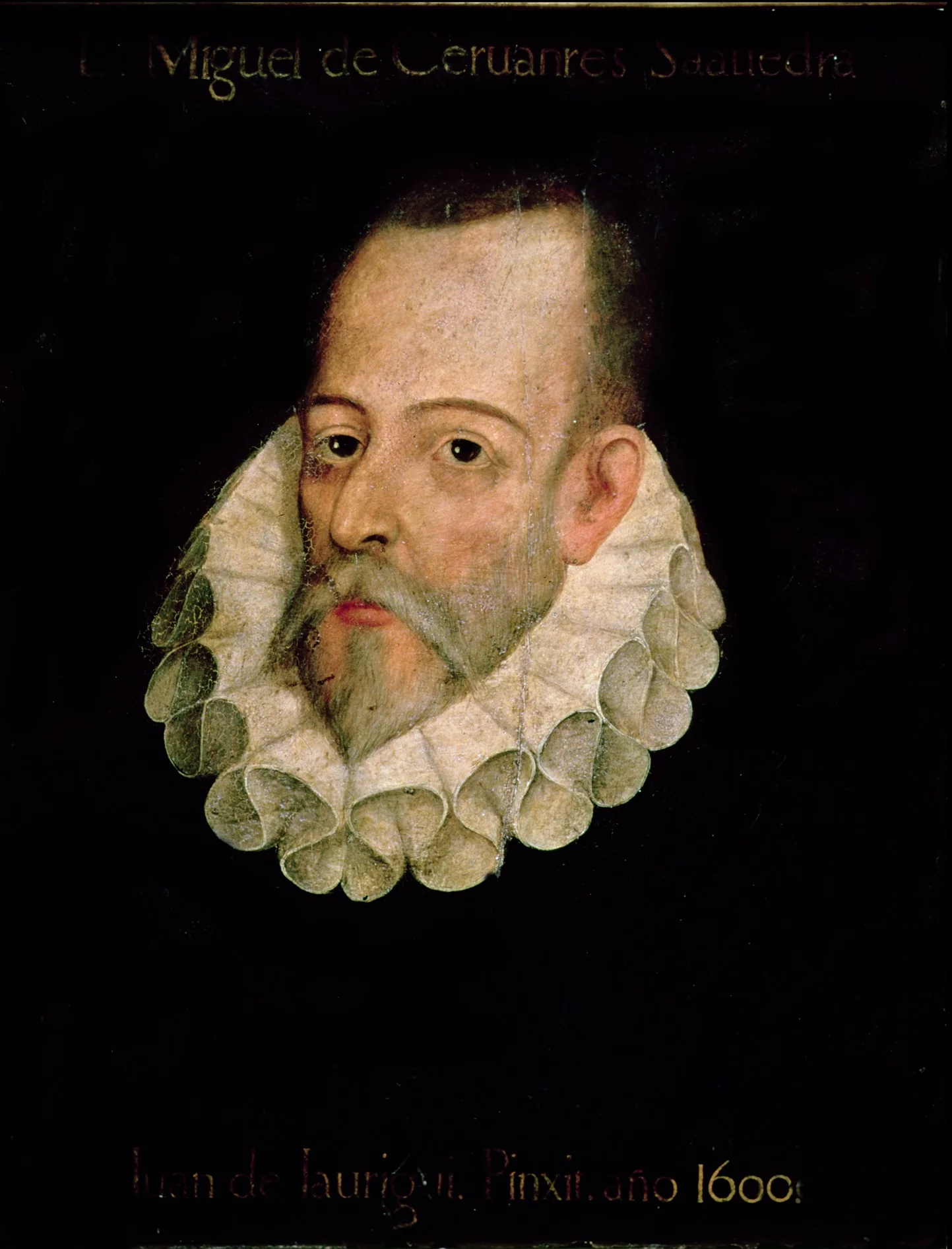
Attr: Juan Martínez de Jáuregui y Aguilar
| 51 Quotes | |
| Occup. | Novelist |
| From | Spain |
| Born | September 29, 1547 |
| Died | April 23, 1616 |
| Aged | 68 years |
| Cite | |
Citation Formats
APA Style (7th ed.)
Miguel de cervantes biography, facts and quotes. (2026, February 2). FixQuotes. https://fixquotes.com/authors/miguel-de-cervantes/
Chicago Style
"Miguel de Cervantes biography, facts and quotes." FixQuotes. February 2, 2026. https://fixquotes.com/authors/miguel-de-cervantes/.
MLA Style (9th ed.)
"Miguel de Cervantes biography, facts and quotes." FixQuotes, 2 Feb. 2026, https://fixquotes.com/authors/miguel-de-cervantes/. Accessed 24 Mar. 2026.
Early Life and Background
Miguel de Cervantes Saavedra was born on 29 September 1547 in Alcala de Henares, in the Kingdom of Castile, into a Spain at once triumphant and strained - imperial in reach, yet anxious in faith and finance. His father, Rodrigo de Cervantes, worked as a surgeon-barber, a precarious occupation that kept the family moving through central and southern Spain in search of livelihood. That itinerant childhood exposed Cervantes to taverns and law courts, piety and petty crime, courtly rhetoric and street talk - a social range that later became the lifeblood of his fiction.The era formed him through contradiction. Under the Habsburgs, Spain projected power across the Mediterranean and the Atlantic even as debt, censorship, and rigid honor codes tightened everyday life. Cervantes grew up amid the aftershocks of religious uniformity and the spectacle of public punishment, learning how official narratives were enforced - and how ordinary people joked, bargained, and endured beneath them. From the beginning, his imagination was tuned to the distance between what authority claimed and what experience delivered.
Education and Formative Influences
No complete record fixes his schooling, but he likely received a humanist education shaped by Renaissance rhetoric, Latin models, and Italianate poetry; in Madrid, he is often linked to the teacher Juan Lopez de Hoyos, who published juvenile verses by Cervantes in 1569. Soon after, Cervantes left for Italy, entering the orbit of Spanish power abroad and the cultural prestige of Rome, Naples, and the Mediterranean ports. Italy gave him living contact with Ariosto, pastoral and chivalric traditions, and the theatrical and novella forms that would later be absorbed, parodied, and remade in his own prose.Career, Major Works, and Turning Points
In 1571 Cervantes fought at Lepanto aboard the galley Marquesa, where he was grievously wounded in the left hand - a permanent mark of service he later framed as a badge of honor. Captured by Barbary corsairs in 1575, he endured five years of captivity in Algiers, attempting multiple escapes before his ransom in 1580; the experience sharpened his sense of improvisation under terror and the moral theater of survival. Back in Spain he struggled in the literary marketplace, writing plays and the pastoral novel La Galatea (1585), while earning a living as a purchasing agent for the Armada and later as a tax collector - work that led to disputes, debt, and at least one imprisonment. Out of these pressures emerged his definitive breakthrough: Don Quixote, Part I (1605), a sensation that transformed European prose; Part II followed in 1615, answering an unauthorized sequel and deepening the novel into a meditation on authorship, identity, and fame. In his final years he published Novelas ejemplares (1613), Viaje del Parnaso (1614), and Ocho comedias y ocho entremeses (1615), and he died in Madrid on 23 April 1616, leaving the romance Persiles y Sigismunda published posthumously.Philosophy, Style, and Themes
Cervantes wrote from the inside of disillusionment without surrendering to it. His work is saturated with the ethics of endurance: characters learn that bravery is a practiced mean, not a pose, and that the self can be rebuilt after humiliation. In Don Quixote, courage is both noble and comic, and his moral psychology often turns on disciplined balance: “Valor lies just halfway between rashness and cowardice”. That sentence captures the Cervantine tension between ideal and reality - a fascination with aspiration tempered by a veteran's knowledge of consequences, gained at Lepanto and refined in captivity where flamboyant heroics could get men killed.His style is a controlled collision of voices: courtly registers against peasant proverbs, lofty romances against account-book facts, the narrator against his sources, the book against itself. He treats truth as a social substance tested by rumor, power, and desire, yet stubbornly resistant to manipulation: “Truth may be stretched, but cannot be broken, and always gets above falsehood, as does oil above water”. That faith is not naive; it is earned in a world of forged documents, inflated honor, and institutional cruelty. Cervantes also makes room for paradox as a psychological refuge: “Too much sanity may be madness and the maddest of all, to see life as it is and not as it should be”. Don Quixote's "madness" becomes a critique of a society that mistakes cynicism for wisdom, while Sancho's earthy skepticism becomes a counterweight that keeps the dream human. Across the Exemplary Novels and the interludes, Cervantes repeatedly tests whether identity is chosen, imposed, or negotiated - and whether storytelling is consolation, deception, or a means of moral attention.
Legacy and Influence
Cervantes is widely regarded as a founder of the modern novel because he fused episodic adventure with psychological development, self-reflexive narration, and a socially comprehensive cast, turning prose fiction into an instrument for analyzing consciousness and community. Don Quixote became a global archetype - the dreamer at war with the world, and the world revealed as its own kind of fantasy - influencing Fielding, Sterne, Flaubert, Dostoevsky, Kafka, and countless others, while generating an afterlife in painting, opera, film, and political metaphor. His enduring achievement is not merely parody of chivalry but a new realism large enough to hold irony and tenderness at once, showing how people survive by fictions they half-believe, and how literature can expose those fictions without stripping away dignity.Our collection contains 51 quotes written by Miguel, under the main topics: Witty One-Liners - Motivational - Ethics & Morality - Truth - Wisdom.
Miguel de Cervantes Famous Works
- 1617 The Trials of Persiles and Sigismunda (Novel)
- 1613 The Exemplary Novels (Novella)
- 1605 Don Quixote (Novel)
- 1585 The Siege of Numantia (Play)
Source / external links