
Miguel de Unamuno Biography Quotes 30 Report mistakes
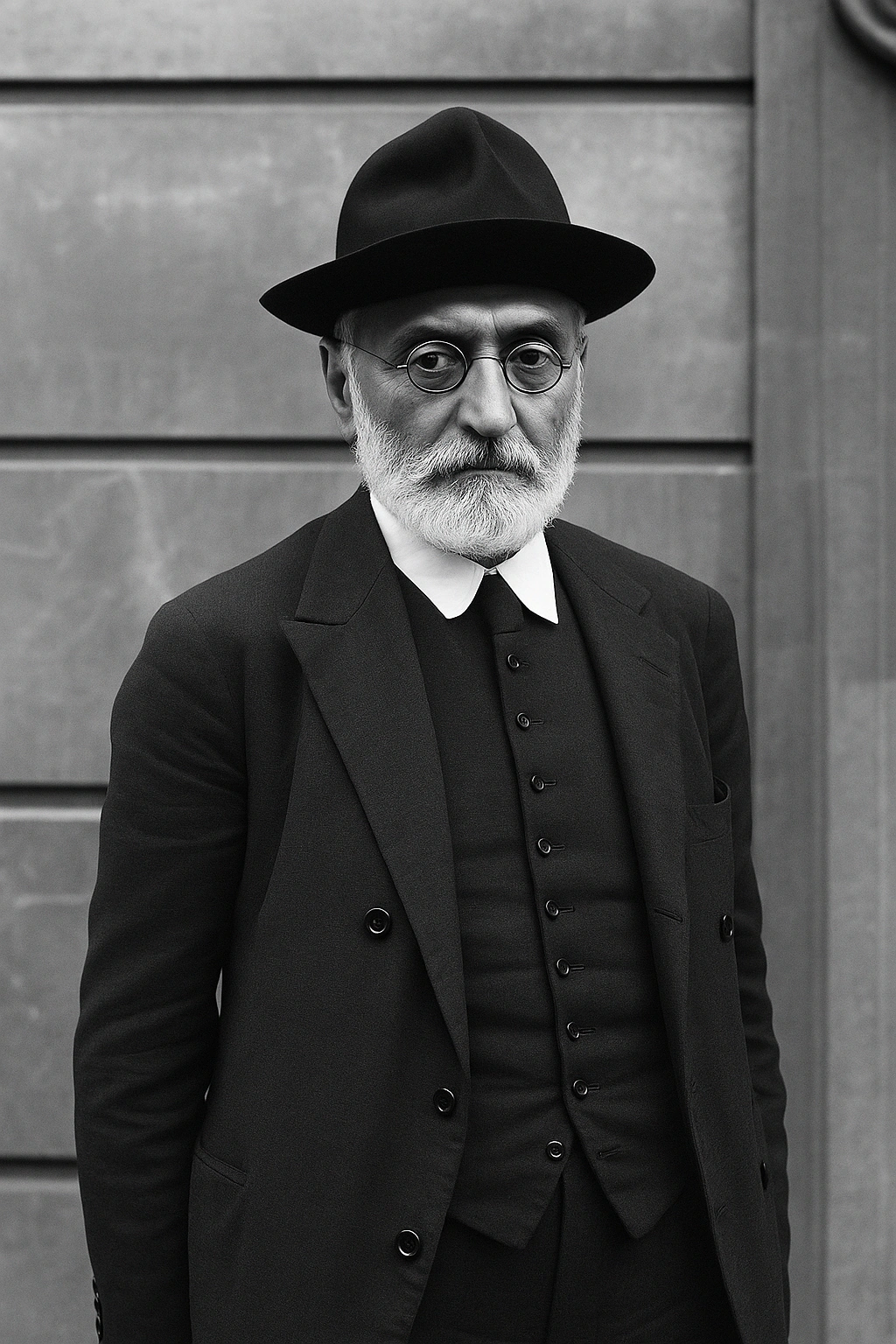
| 30 Quotes | |
| Born as | Miguel de Unamuno y Jugo |
| Occup. | Educator |
| From | Spain |
| Born | September 29, 1864 Bilbao, Spain |
| Died | December 31, 1936 Salamanca, Spain |
| Aged | 72 years |
| Cite | |
Citation Formats
APA Style (7th ed.)
Miguel de unamuno biography, facts and quotes. (2026, February 11). FixQuotes. https://fixquotes.com/authors/miguel-de-unamuno/
Chicago Style
"Miguel de Unamuno biography, facts and quotes." FixQuotes. February 11, 2026. https://fixquotes.com/authors/miguel-de-unamuno/.
MLA Style (9th ed.)
"Miguel de Unamuno biography, facts and quotes." FixQuotes, 11 Feb. 2026, https://fixquotes.com/authors/miguel-de-unamuno/. Accessed 21 Mar. 2026.
Early Life and Background
Miguel de Unamuno y Jugo was born on 1864-09-29 in Bilbao, in Spain's Basque Country, into a merchant family marked by the civic rhythms of a port city and the anxieties of a nation losing coherence. His childhood was interrupted by the Third Carlist War; the siege of Bilbao (1874) left him with an early sense that ideas are not abstractions but forces that mobilize crowds, divide families, and harden faith into slogans. The Basque street, the parish, and the political barricade became his first laboratory for studying belief as lived behavior.Bilbao also gave him a lifelong tension between local identity and national destiny. He moved easily between Basque particularity and a hungry Spanish universalism, later defending the cultural dignity of regional languages while insisting that Spain's crisis was spiritual before it was administrative. That double allegiance - to a concrete homeland and to an imagined Spain - shaped the private Unamuno: combative, tender toward ordinary people, and suspicious of any certainty that arrived too smoothly.
Education and Formative Influences
He studied philosophy and letters in Madrid, earning a doctorate (1891) with work focused on Basque origins and language, then returned to the north as an academic. In Madrid he absorbed German idealism, positivism, and the era's faith in "scientific" solutions, yet he also encountered the limits of systems when applied to a mind predisposed to scruple and paradox. The catastrophe of 1898 - Spain's loss of its last major colonies - turned his generation inward; Unamuno joined the thinkers later called the Generation of '98, not as a mere literary label but as a shared diagnosis that Spain's illness was moral and intellectual, curable only by fearless self-examination.Career, Major Works, and Turning Points
Unamuno built his public life in Salamanca, where he became professor of Greek and then rector of the University of Salamanca (first appointed 1900), turning the rectorate into a pulpit for civic conscience. His essays and books - En torno al casticismo (1895), Del sentimiento tragico de la vida (1913), and La agonia del cristianismo (1925) - established him as Spain's most nerve-exposed moral psychologist, while his novels and "nivolas" such as Niebla (1914) and Abel Sanchez (1917) dramatized identity as combat rather than essence. He was dismissed as rector (1914), exiled by Primo de Rivera to Fuerteventura (1924), escaped to France, and returned after the fall of the dictatorship (1930), briefly again a republican symbol. In 1936 he first welcomed the military uprising as an antidote to chaos, then recoiled from its violence; his confrontation at Salamanca with General Millan-Astray - the famous rebuke culminating in "You will conquer, but you will not convince" - ended in house arrest. He died on 1936-12-31 in Salamanca, a solitary figure in a Spain already tearing itself apart.Philosophy, Style, and Themes
Unamuno's inner life was a long civil war between reason and the hunger for immortality. He did not write to resolve the conflict but to keep it honest, turning doubt into a discipline and anguish into method. “Faith which does not doubt is dead faith”. That line is not a slogan of skepticism but a portrait of his own nerves: belief, for him, had to include the wound of uncertainty or it became mere obedience. His best-known philosophical claim - the "tragic sense of life" - insists that the self is made where longing collides with finitude, and that the most serious thought begins when consolation fails. “Suffering is the substance of life and the root of personality, for it is only suffering that makes us persons”. In Unamuno's psychology, pain is not decorative gloom; it is the pressure that individuates, the force that prevents the person from dissolving into public formulas.His style matched that ethic: urgent, dialogic, fond of contradiction, capable of tenderness and insult in the same paragraph. He distrusted the prestige of tidy explanations and watched motives with a novelist's suspicion: “What we believe to be the motives of our conduct are usually but the pretexts for it”. This is the engine behind Niebla's metafictional argument between author and character, behind Abel Sanchez's anatomy of envy, and behind his political interventions, where he treated ideologies as masks for deeper appetites. As an educator, he taught not a curriculum but an attitude - to read as if your soul were at stake, and to argue as if clarity were a moral act.
Legacy and Influence
Unamuno endures as a defining voice of modern Spain: a writer who made the classroom, the newspaper, and the public square extensions of philosophical inquiry, and who paid for independence with repeated expulsion and isolation. He influenced Spanish existential reflection before "existentialism" became a school, leaving marks on later thinkers and writers drawn to his fusion of metaphysics and lived conscience, from Ortega y Gasset (in argument as much as affinity) to poets and novelists wrestling with identity, faith, and civic responsibility. His final years fixed him as a warning and a standard: the intellectual who can misjudge history in motion, then refuse complicity once he sees the cost - and who insists, even under confinement, that persuasion matters more than victory.Our collection contains 30 quotes written by Miguel, under the main topics: Witty One-Liners - Truth - Wisdom - Art - Love.
Other people related to Miguel: Jose Bergaman (Writer), Antonio Machado (Poet)
Frequently Asked Questions
- Miguel de Unamuno religion: Catholic, but heterodox and marked by doubt
- Miguel de Unamuno poems: El Cristo de Velázquez; Rosario de sonetos líricos; Poesías; Romancero del destierro
- Miguel de Unamuno children: Nine children (with Concepción Lizárraga)
- Miguel de Unamuno famous works: Niebla (Mist); San Manuel Bueno, mártir; Del sentimiento trágico de la vida; La tía Tula; Abel Sánchez
- Miguel de Unamuno: books: Niebla (Mist); San Manuel Bueno, mártir; La tía Tula; Abel Sánchez; Amor y pedagogía; Paz en la guerra; Del sentimiento trágico de la vida; La agonía del cristianismo
- How old was Miguel de Unamuno? He became 72 years old
Source / external links