
Mihaly Csikszentmihalyi Biography Quotes 3 Report mistakes
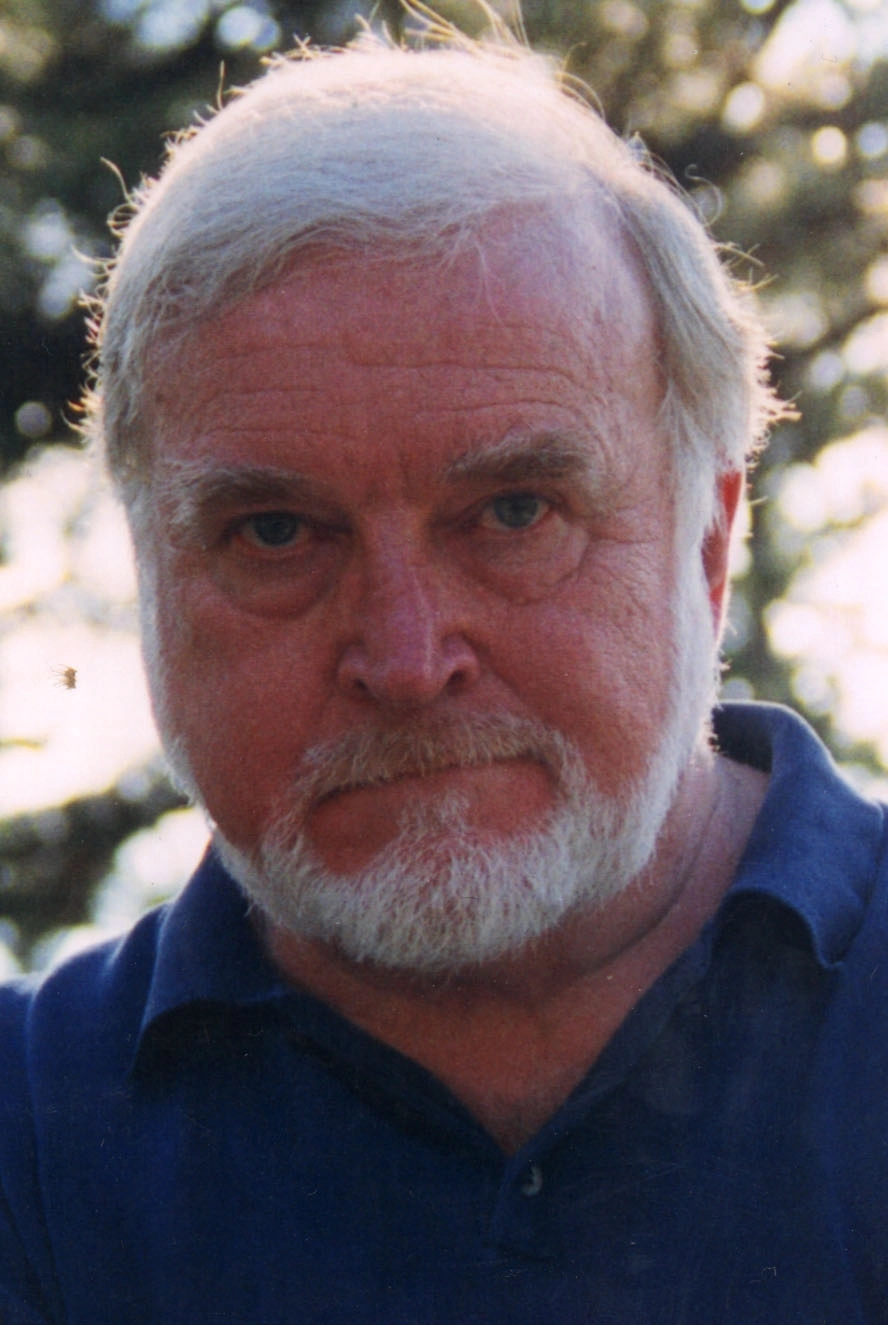
| 3 Quotes | |
| Occup. | Psychologist |
| From | Hungary |
| Born | September 29, 1934 Fiume, Italy |
| Age | 91 years |
| Cite | |
Citation Formats
APA Style (7th ed.)
Mihaly csikszentmihalyi biography, facts and quotes. (2026, February 11). FixQuotes. https://fixquotes.com/authors/mihaly-csikszentmihalyi/
Chicago Style
"Mihaly Csikszentmihalyi biography, facts and quotes." FixQuotes. February 11, 2026. https://fixquotes.com/authors/mihaly-csikszentmihalyi/.
MLA Style (9th ed.)
"Mihaly Csikszentmihalyi biography, facts and quotes." FixQuotes, 11 Feb. 2026, https://fixquotes.com/authors/mihaly-csikszentmihalyi/. Accessed 12 Feb. 2026.
Early Life and Background
Mihaly Csikszentmihalyi was born on September 29, 1934, in Fiume, then part of the Kingdom of Italy and today known as Rijeka, Croatia. He was the son of Hungarian parents and grew up amid the upheavals of World War II and its aftermath, experiences that left a lasting impression on his understanding of uncertainty, resilience, and the ways people search for meaning. His family moved across a changing Europe, and his father worked in diplomatic service. As a young man, Csikszentmihalyi developed a fascination with how people keep their poise and engagement even when external circumstances are dire. During this period he attended a public lecture in Zurich by the psychiatrist Carl Jung, a moment he later described as decisive in turning his curiosity toward psychology. The talk crystallized for him the idea that inner states could be studied systematically and that ordinary experience could be a source of profound insight.Education and Emigration
Drawn to the United States by the intellectual climate of mid-twentieth-century academia, Csikszentmihalyi emigrated and enrolled at the University of Chicago. There he encountered the scholar Jacob W. Getzels, whose interest in problem finding and creativity in art and education shaped Csikszentmihalyi's trajectory. Under Getzels's mentorship, he pursued graduate studies in psychology and began the empirical work that would become his hallmark: careful, experience-near investigation of how people feel and function in daily life. With Getzels he later authored The Creative Vision: A Longitudinal Study of Problem Finding in Art, a study that framed creativity not as a spontaneous flash but as a disciplined engagement with ill-defined problems.University of Chicago Years
Csikszentmihalyi joined the faculty at the University of Chicago and helped build an influential program in personality and social psychology. He cultivated a research culture that valued both rigorous method and attention to lived experience. Chicago became the laboratory for his best-known concept, flow, and also the place where he trained and collaborated with scholars who would carry the work into education, adolescence, management, and the arts. During these years he supervised projects on creativity, leisure, and well-being, and he developed close working relationships with colleagues and students who helped refine his theories and extend them to new populations.Flow Theory and Core Contributions
Flow, the idea most closely associated with Csikszentmihalyi's name, describes a distinctive state of deep absorption in an activity, during which people feel a balance between challenge and skill, clear goals, immediate feedback, a merging of action and awareness, a loss of self-consciousness, and an altered sense of time. He emphasized that flow is autotelic: people do the activity for its own sake, not for an external reward. This insight offered a bridge between everyday experience and the question of a life well-lived. He argued that flow channels psychic energy, organizes consciousness, and fosters growth when challenges rise in step with skills. Beyond Boredom and Anxiety and Flow: The Psychology of Optimal Experience set out the theory using interviews, systematic studies, and vivid examples from art, sport, work, and play.Methods and Empirical Program
To study subjective experience in real time, Csikszentmihalyi helped pioneer the Experience Sampling Method with Reed Larson. Participants carried signaling devices and recorded their thoughts, feelings, and activities when prompted throughout the day. The method yielded an unprecedented portrait of when and where people feel most engaged, providing empirical anchors for claims about flow at work, in school, and at leisure. Collaborations with Kevin Rathunde extended these studies to adolescents and family life, while work with Susan A. Jackson examined performance and optimal experience in sport. With Jeanne Nakamura he elaborated the concept of the autotelic personality and the developmental pathways that enable individuals to find challenges that match their skills. A parallel line of inquiry with Eugene Rochberg-Halton, summarized in The Meaning of Things, explored how objects and domestic settings become symbols that organize the self and everyday life.Creativity and Culture
In Creativity: Flow and the Psychology of Discovery and Invention, Csikszentmihalyi profiled dozens of eminent scientists, artists, and innovators to propose a systems model of creativity. He argued that creative achievement arises from the interaction of three elements: the individual, the domain of knowledge or practice, and the field of gatekeepers who evaluate and legitimize novelty. This framework connected private experience with cultural evolution, showing how attention, motivation, and community standards together shape what counts as creative. The Evolving Self elaborated how complexity in consciousness can grow when individuals repeatedly invest attention in meaningful challenges, thereby increasing both differentiation and integration in the person.Positive Psychology and Public Influence
In the late 1990s, Csikszentmihalyi joined Martin Seligman in articulating the aims of positive psychology, an orientation that sought to complement the disease model by studying strengths, virtues, and optimal functioning. Together they co-authored a widely read introduction in American Psychologist that helped define the field. In parallel, he collaborated with Howard Gardner and William Damon on the Good Work Project, exploring how professionals can sustain excellence, engage their skills meaningfully, and uphold ethical standards under pressure. His book Good Business translated flow research into lessons for leaders and organizations, arguing that workplaces can be designed to cultivate engagement and purpose without sacrificing performance.Writings
Csikszentmihalyi's body of work is both scholarly and accessible. Beyond Boredom and Anxiety (1975) and Flow (1990) laid the conceptual foundation. The Evolving Self (1993) traced implications for personal growth. Creativity (1996) and Finding Flow (1997) brought his ideas to broad audiences seeking guidance in work and daily life. With Susan A. Jackson he presented applications in Flow in Sports. With Isabella Selega Csikszentmihalyi he edited Optimal Experience: Psychological Studies of Flow in Consciousness, collecting empirical studies that consolidated the research program. His collaboration with Eugene Rochberg-Halton produced The Meaning of Things, a study of material culture and the self. Throughout, his writing insisted that happiness cannot be pursued directly; it ensues from structured attention, meaningful goals, and sustained challenge.Collaborators, Students, and Family
The network around Csikszentmihalyi was central to his impact. Jacob W. Getzels shaped his earliest thinking about creativity and problem finding. Reed Larson, Kevin Rathunde, and Jeanne Nakamura advanced the empirical and developmental strands of flow. Susan A. Jackson brought the framework to elite and everyday athletics. Eugene Rochberg-Halton helped connect psychological experience with sociocultural meaning, and work with Howard Gardner and William Damon framed the ethics of excellence in contemporary professions. In the broader movement of positive psychology he worked alongside Martin Seligman to set an agenda for the science of well-being. His wife, Isabella Selega Csikszentmihalyi, was a close intellectual partner and co-editor, and their family provided both grounding and inspiration. Their sons, Mark Csikszentmihalyi and Christopher Csikszentmihalyi, pursued distinguished careers of their own, in scholarship and in art and technology, underscoring the family's shared commitment to inquiry and creative practice.Later Career at Claremont and Legacy
In the early 2000s Csikszentmihalyi moved to Claremont Graduate University as a Distinguished Professor of Psychology and Management and co-founded the Quality of Life Research Center with Jeanne Nakamura. The center became a hub for research on engagement, purpose, and human strengths, bridging psychology, education, design, and organizational studies. He continued to lecture internationally, advise researchers, and consult with educators and leaders on how to create environments that foster deep involvement and learning. He died on October 20, 2021, leaving a corpus that joined careful method to humane purpose. His lasting legacy is a vocabulary and set of tools for cultivating attention, structuring challenges, and designing institutions that help people live with meaning, mastery, and joy.Our collection contains 3 quotes written by Mihaly, under the main topics: Learning - Happiness - Self-Improvement.
Other people related to Mihaly: Howard Gardner (Psychologist)
Source / external links