
Mike Tomlin Biography Quotes 11 Report mistakes
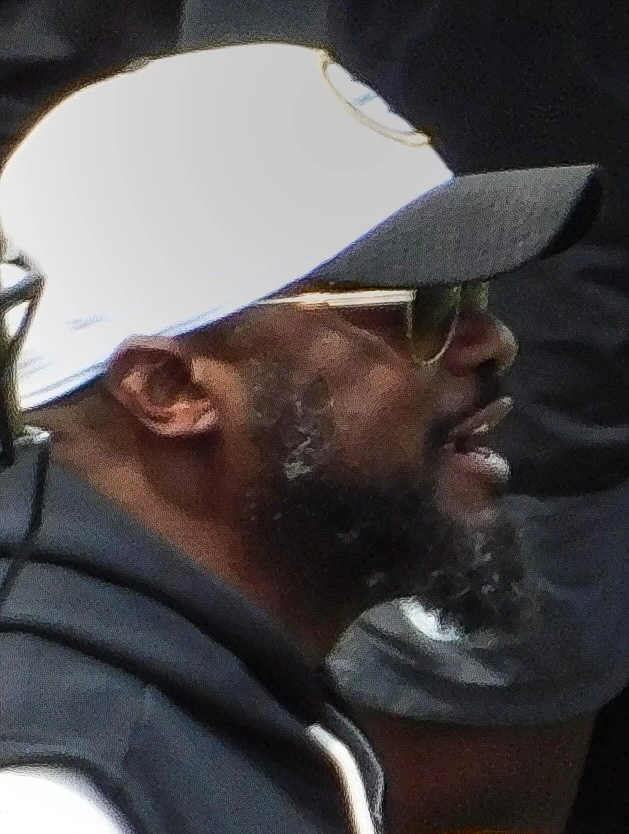
Attr: Cramerwiki, CC0 1.0
| 11 Quotes | |
| Born as | Michael Pettaway Tomlin |
| Occup. | Coach |
| From | USA |
| Spouse | Kiya Tomlin |
| Born | March 15, 1972 Hampton, Virginia, USA |
| Age | 53 years |
| Cite | |
Citation Formats
APA Style (7th ed.)
Mike tomlin biography, facts and quotes. (2026, February 11). FixQuotes. https://fixquotes.com/authors/mike-tomlin/
Chicago Style
"Mike Tomlin biography, facts and quotes." FixQuotes. February 11, 2026. https://fixquotes.com/authors/mike-tomlin/.
MLA Style (9th ed.)
"Mike Tomlin biography, facts and quotes." FixQuotes, 11 Feb. 2026, https://fixquotes.com/authors/mike-tomlin/. Accessed 5 Mar. 2026.
Early Life and Background
Michael Pettaway Tomlin was born March 15, 1972, in Hampton, Virginia, and grew up across the water in Newport News in the Tidewater region, where military bases, shipyards, and historically Black neighborhoods shaped a practical, work-first civic culture. His father, Ed Tomlin, played wide receiver at Wisconsin and in the NFL, a proximity to elite football that was less glamorous than instructional - proof that careers were earned through repetition and durability rather than talk.Tomlin was largely raised by his mother, Julia, and he has often carried the stamp of a household where expectations had to be explicit because resources and time were finite. He played at Denbigh High School, where the daily grind of practice, class, and community demanded self-management. The Tidewater pipeline produced speed and swagger, but it also produced coaches who prized details; Tomlin absorbed both, becoming a young man for whom confidence was acceptable only when anchored to preparation.
Education and Formative Influences
At William and Mary, Tomlin played wide receiver from 1990 to 1994 and stayed to earn his degree in sociology (1995), a discipline that sharpened his eye for group dynamics - status, motivation, and the quiet forces that shape behavior inside a locker room. He was not a future star on the field, which mattered: his authority would come from teaching, not celebrity. The early 1990s were a period when college football was professionalizing its methods, and Tomlin learned to treat film, language, and accountability as tools that could align 18-to-22-year-olds into a coherent unit.Career, Major Works, and Turning Points
Tomlin began coaching as a graduate assistant at William and Mary (1995), then moved through the NCAA ranks at Cincinnati (1996), Arkansas State (1997-1998), and Memphis (1999-2000), building a resume based on secondary play and player development. The NFL arrived with the Tampa Bay Buccaneers (2001-2005) under Tony Dungy and later Jon Gruden, where Tomlin coached defensive backs in a scheme culture obsessed with leverage and communication. In 2006 he became defensive coordinator of the Minnesota Vikings, and a year later the Pittsburgh Steelers hired him as head coach, making him one of the NFL's youngest head coaches at 34. The defining early result was Super Bowl XLIII, won after the 2008 season, and the defining arc was consistency: year after year of winning seasons in a league designed for turnover, including another Super Bowl appearance after the 2010 season. Turning points often arrived as tests of emotional control - managing the transitions from the Ben Roethlisberger era to newer quarterbacks, navigating star-driven volatility, and repeatedly rebuilding the defense into a unit that could close games in January weather.Philosophy, Style, and Themes
Tomlin's public voice is famous for compressed, quotable certainty, but underneath is a governance style built on standards and emotional temperature. “The standard is the standard”. That line is less a slogan than a psychological contract: it removes wiggle room, making effort and detail non-negotiable regardless of opponent, record, or injury list. It also protects a team from the exhausting drama of constant reinvention - players know what practice should look like on a Tuesday in September and a Thursday in December, and that predictability becomes a stabilizer when the season turns chaotic.He couples that standard with an anti-fear ethic aimed at high-pressure decision-making. “We're not going to live in our fears”. In Tomlin's world, fear shows up as conservative play-calling, as tentative roster decisions, and as players shrinking in defining moments; he tries to train it out through repetition and ownership. The demand for agency is explicit: “Winners want the ball”. That is not only about late-game drives; it is a leadership test - who seeks responsibility when outcomes are uncertain. His style blends mentorship with hard edges, keeping relationships real but not indulgent, and it reflects a coach who understands that belief is manufactured through work, not speeches.
Legacy and Influence
Tomlin's legacy rests on rare stability and an updated model of authority: demanding without being performative, player-aware without being player-run. In Pittsburgh, a franchise defined by institutional continuity, he extended the idea that culture can be as durable as scheme, winning across roster eras and rule changes while remaining identifiably "Steelers" in physicality and resilience. He has also become a reference point in NFL leadership for how a Black head coach can command a storied room with calm control and intellectual clarity, influencing younger coaches who borrow his language of standards, accountability, and fearlessness. His enduring impact is the proof that modern locker rooms still respond to old truths - preparation, responsibility, and the steady refusal to bargain with the moment.Our collection contains 11 quotes written by Mike, under the main topics: Witty One-Liners - Leadership - Victory - Sports - Work Ethic.
Other people related to Mike: Pat Williams (Athlete), Franco Harris (Athlete)
Source / external links