
Mike Tyson Biography Quotes 52 Report mistakes
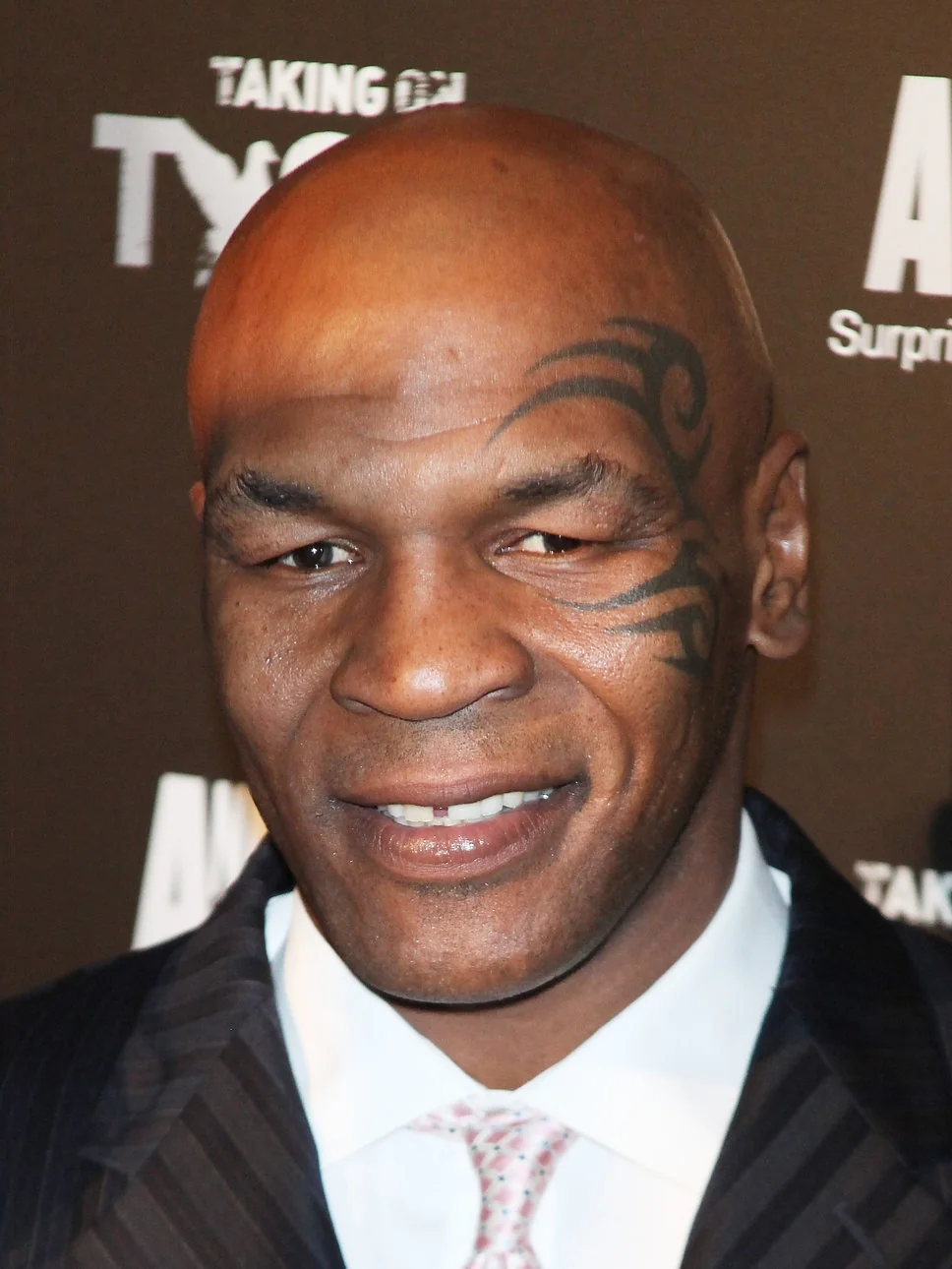
| 52 Quotes | |
| Born as | Michael Gerard Tyson |
| Occup. | Athlete |
| From | USA |
| Born | June 30, 1966 New York City, U.S. |
| Age | 59 years |
| Cite | |
Citation Formats
APA Style (7th ed.)
Mike tyson biography, facts and quotes. (2026, February 2). FixQuotes. https://fixquotes.com/authors/mike-tyson/
Chicago Style
"Mike Tyson biography, facts and quotes." FixQuotes. February 2, 2026. https://fixquotes.com/authors/mike-tyson/.
MLA Style (9th ed.)
"Mike Tyson biography, facts and quotes." FixQuotes, 2 Feb. 2026, https://fixquotes.com/authors/mike-tyson/. Accessed 25 Mar. 2026.
Early Life and Background
Michael Gerard Tyson was born on June 30, 1966, in Brooklyn, New York, and grew up largely in Brownsville, a neighborhood marked in the 1970s by poverty, street crews, and a hard public code of respect. His father was absent; his mother, Lorna Mae Smith, struggled to stabilize a household that moved frequently. Tyson was small, bullied, and angry, learning early that fear could be flipped into protection if you could fight harder than the world expected.A tender countercurrent ran through that harshness: pigeons. Tyson has described them as companions and a refuge, and the story he often returns to is of a boy whose gentleness was punished until it turned volcanic. The mixture - softness and sudden violence - became a lifelong pattern: a need to belong, a need to be seen, and a readiness to destroy whatever threatened either.
Education and Formative Influences
Tyson cycled through reform settings and in 1979 entered the Tryon School for Boys, where counselor Bobby Stewart noticed his unusual speed, coordination, and appetite for learning the craft of fighting. Stewart introduced him to Cus D'Amato, the legendary trainer in Catskill, New York, who became Tyson's legal guardian and built him into a prodigy through discipline, film study, and constant psychological conditioning. D'Amato's gym was both family and laboratory: Tyson absorbed the peek-a-boo defensive system, the emphasis on head movement and explosive counters, and a worldview in which fear was not denied but mastered - then weaponized.Career, Major Works, and Turning Points
Tyson turned professional in 1985 and tore through the heavyweight division with rare concision, winning the WBC title in 1986 by stopping Trevor Berbick and becoming the youngest heavyweight champion in history; he soon unified the WBA and IBF belts, turning bouts into brief, brutal events. After D'Amato's death in 1985, Tyson's circle fractured; success accelerated temptations and volatility, and the narrative shifted from controlled menace to public unraveling. The 1990 upset loss to James "Buster" Douglas in Tokyo exposed fragility behind the aura. In 1992 Tyson was convicted of rape and imprisoned, returning to win a title again in 1996 but increasingly defined by chaos - the 1997 ear-bite disqualification against Evander Holyfield, financial collapse, and an uneven late career that ended after losses to Lennox Lewis (2002) and Kevin McBride (2005). In the 2010s he reemerged as a candid public storyteller, notably through the one-man show "Undisputed Truth" and subsequent media work, reframing the same life as cautionary autobiography.Philosophy, Style, and Themes
Inside the ring, Tyson was an argument about inevitability: short for a heavyweight, he turned that supposed disadvantage into geometry, using slipping angles, left hooks to the body, and overhand rights launched from a crouch. His best nights were less brawls than executions, driven by a belief that intimidation could end a contest before the bell. That mentality surfaces in his most quoted realism about violence and planning: “Everyone has a plan 'till they get punched in the mouth”. It is not only trash talk but a worldview shaped by Brownsville and D'Amato alike - that intellect matters, but contact with pain is the ultimate test of truth.Yet his inner life was never only predatory. Tyson has repeatedly described himself as a man trying to outgrow his worst self, and his public self-analysis often pivots from domination to endurance: “As long as we persevere and endure, we can get anything we want”. That sentence sits beside his confessional remorse about the Holyfield incident - “I ain't the same person I was when I bit that guy's ear off”. - mapping a psyche split between impulse and the longing to be redeemed by time, sobriety, faith, and self-knowledge. The same fighter who marketed terror also sought permission to be human, oscillating between shame, nostalgia for lost mentors, and the ache of being an icon built from a traumatized child.
Legacy and Influence
Tyson endures as one of boxing's most recognizable heavyweights and one of its most complicated symbols: a champion forged by brilliant training, then destabilized by fame, legal catastrophe, and self-sabotage. He influenced generations of fighters with his compact power style and with the modern template of the athlete as global spectacle - highlight-reel violence, tabloid notoriety, and later, public reinvention through narrative control. His legacy is therefore double: a technical benchmark for ferocity and efficiency, and a cautionary biography about what happens when a sport that monetizes rage fails to protect the person generating it.Our collection contains 52 quotes written by Mike, under the main topics: Witty One-Liners - Motivational - Wisdom - Justice - Never Give Up.
Other people related to Mike: Don King (Celebrity), Sonny Liston (Athlete), Donnie Yen (Actor), Larry Holmes (Athlete)
Source / external links