
Mikhail Kutuzov Biography Quotes 1 Report mistakes
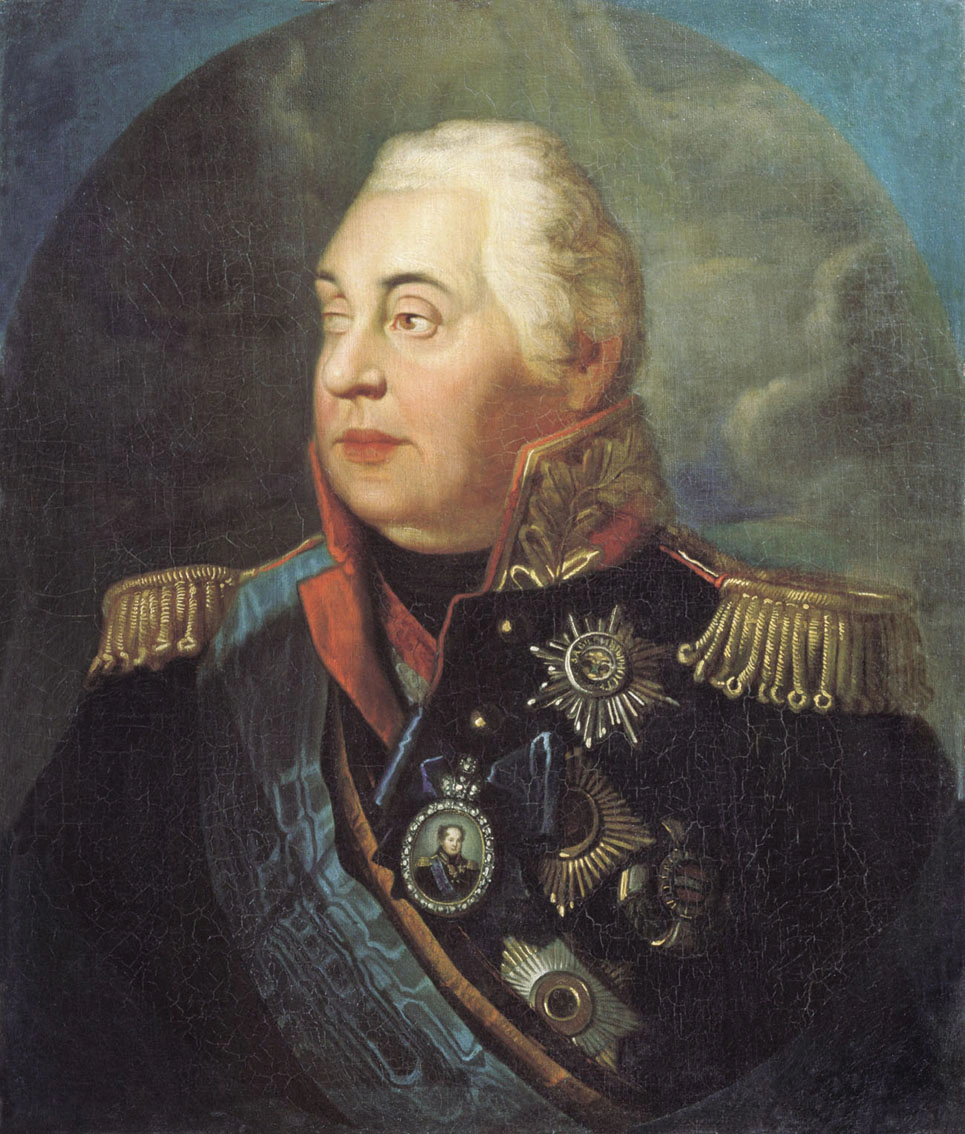
Attr: Gatchina museum-preserve
| 1 Quotes | |
| Born as | Mikhail Illarionovich Kutuzov |
| Known as | Prince Kutuzov of Smolensk |
| Occup. | Soldier |
| From | Russia |
| Born | September 16, 1745 Saint Petersburg, Russia |
| Died | April 28, 1813 Borodino, Russia |
| Cause | Natural causes |
| Aged | 67 years |
| Cite | |
Citation Formats
APA Style (7th ed.)
Mikhail kutuzov biography, facts and quotes. (2026, February 11). FixQuotes. https://fixquotes.com/authors/mikhail-kutuzov/
Chicago Style
"Mikhail Kutuzov biography, facts and quotes." FixQuotes. February 11, 2026. https://fixquotes.com/authors/mikhail-kutuzov/.
MLA Style (9th ed.)
"Mikhail Kutuzov biography, facts and quotes." FixQuotes, 11 Feb. 2026, https://fixquotes.com/authors/mikhail-kutuzov/. Accessed 12 Feb. 2026.
Early Life and Background
Mikhail Illarionovich Kutuzov was born on 16 September 1745 into the service nobility of the Russian Empire, a world in which rank, patronage, and war were the straightest roads to distinction. His father, Illarion Matveevich Kutuzov, was an engineer officer whose career embodied Petrine Russia's ideal of the technically trained servant of the state. The Russia Kutuzov entered was expanding south and west, building a professional army while remaining socially rigid - a tension that shaped ambitious officers who learned to navigate both the parade ground and court politics.St Petersburg offered Kutuzov both opportunity and danger: brilliance could be rewarded, but independence could end a career. From early on he displayed an ability to read rooms as well as terrain, a talent that later made him valuable to sovereigns who demanded obedience yet relied on commanders capable of improvisation. His physical courage was never in doubt, but his deeper gift was the slow accumulation of authority - the kind earned by surviving others' failures and by seeming, at the right moments, to yield.
Education and Formative Influences
Kutuzov was educated for service at the Artillery and Engineering School in St Petersburg, where mathematics, fortification, and staff work formed a new Russian officer culture. He entered the army young and came under the influence of Alexander Suvorov during the Russo-Turkish wars, absorbing a practical tradition that prized initiative, morale, and endurance over pedantic maneuver. Two severe head wounds - one in 1774 in Crimea and another in 1788 at Ochakov - left him partially disfigured and, more importantly, acquainted him with pain, limitation, and the value of time; the scars became part of his authority, while the convalescences deepened a habit of reflective patience rare in a profession that rewarded swagger.Career, Major Works, and Turning Points
Kutuzov rose through the Russo-Turkish campaigns, serving with distinction in the storming of Izmail (1790) and later holding diplomatic and administrative posts that honed his political instincts, including duties in the Ottoman sphere and governorships in the borderlands. Under Alexander I he was repeatedly elevated and sidelined, a pattern that revealed both the emperor's distrust of independent grandees and Kutuzov's own ability to survive court tempests. His defining command came in 1812, when Napoleon invaded Russia; appointed commander-in-chief amid national panic, Kutuzov fought the bloody battle of Borodino (7 September), then made the agonizing decision to abandon Moscow to preserve the army. He pursued a strategy of attrition, shadowing the retreating Grande Armee, pressing at moments of weakness without gambling on a single annihilating battle. Worn down by age and illness, he died on 28 April 1813 at Bunzlau (Boleslawiec) in Silesia, not living to see the coalition's final victory but having redirected the war's trajectory.Philosophy, Style, and Themes
Kutuzov's inner life was shaped by a lifetime of proximity to death and to autocratic power. He learned that in Russia, the commander must fight two wars at once: one against the enemy and one against impatience at home. His public manner could seem indolent, even evasive, yet it masked a disciplined attention to logistics, morale, and the psychology of both soldiers and sovereigns. He distrusted tidy plans when friction - weather, distance, hunger, rumor - would inevitably unmake them, and he treated war less as a chess problem than as a living organism whose strength could be exhausted.In 1812 that outlook hardened into a grim clarity about Napoleon and about Russia's strategic depth. "Napoleon is a torrent which as yet we are unable to stem. Moscow will be the sponge that will suck him dry". The sentence reveals a mind willing to sacrifice symbols to save substance, and a leader who understood that national survival might require a wound to national pride. It also hints at his private burden: he accepted hatred in the moment - the loss of Moscow, the smoke, the accusations of cowardice - as the price of a future judgment. Kutuzov's style was therefore less heroic than parental: to endure, to conserve, to let the enemy's momentum spend itself, and to strike when the torrent became a trickle.
Legacy and Influence
Kutuzov became a central figure in Russia's memory of 1812, celebrated not simply as a tactician but as the embodiment of strategic patience and national endurance. His reputation has oscillated between criticism for not destroying Napoleon outright and admiration for understanding that the Russian army, not Moscow, was the decisive asset. In literature and public commemoration, especially through later portrayals that emphasized humility before historical forces, he stands as the commander who resisted the seductions of brilliance and chose the harder virtue of restraint. His enduring influence lies in the idea that victory can be achieved by controlling tempo, preserving institutions, and letting geography and time become allies - a philosophy born from wounds, politics, and a sober reading of empire.Our collection contains 1 quotes written by Mikhail, under the main topics: War.
Source / external links