
Mitt Romney Biography Quotes 47 Report mistakes
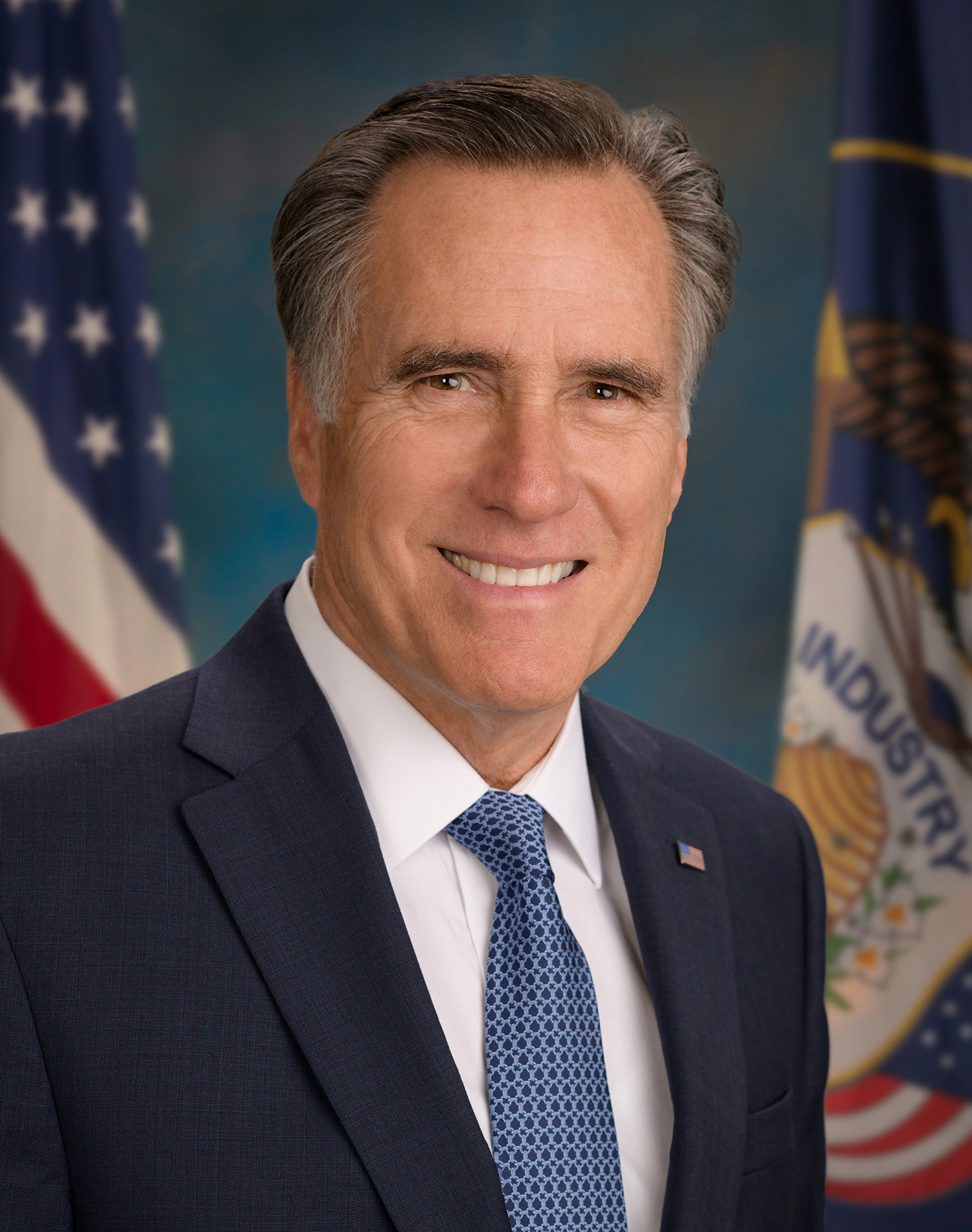
| 47 Quotes | |
| Born as | Willard Mitt Romney |
| Occup. | Politician |
| From | USA |
| Born | March 12, 1947 Detroit, Michigan, United States |
| Age | 78 years |
| Cite | |
Citation Formats
APA Style (7th ed.)
Mitt romney biography, facts and quotes. (2026, February 11). FixQuotes. https://fixquotes.com/authors/mitt-romney/
Chicago Style
"Mitt Romney biography, facts and quotes." FixQuotes. February 11, 2026. https://fixquotes.com/authors/mitt-romney/.
MLA Style (9th ed.)
"Mitt Romney biography, facts and quotes." FixQuotes, 11 Feb. 2026, https://fixquotes.com/authors/mitt-romney/. Accessed 12 Feb. 2026.
Early Life and Family
Willard Mitt Romney was born on March 12, 1947, in Detroit, Michigan, to George W. Romney and Lenore Romney. His father, an auto executive who led American Motors before entering public service, served as governor of Michigan and later as U.S. secretary of Housing and Urban Development. His mother was active in civic life and ran for the U.S. Senate. Raised in a family devoted to the Church of Jesus Christ of Latter-day Saints and to public service, Romney grew up in Bloomfield Hills, Michigan, absorbing a blend of business discipline and civic responsibility that would shape his career.Education and Missionary Service
Romney attended Cranbrook School, spent a year at Stanford University, and then undertook a two-and-a-half-year mission in France for his church. The experience honed his language skills and resilience. He completed his undergraduate degree at Brigham Young University, graduating with high honors, and then earned a joint JD/MBA at Harvard University. Those years gave him a strong analytical foundation and introduced him to management consulting and the case-method approach that would influence his problem-solving style.Business Career
After graduate school, Romney joined the Boston Consulting Group and later moved to Bain & Company, where he worked closely with the firm's founder, Bill Bain. In 1984 he helped launch Bain Capital, building it into a prominent private equity and venture capital firm. Romney became known for rigorous data-driven evaluations of companies, steering investments and restructurings that aimed to improve competitiveness. Notable early successes included backing Staples, working with founder Tom Stemberg to expand a new office-supply retail model. He returned to Bain & Company in the early 1990s to lead a turnaround as chief executive, stabilizing the consultancy's finances and culture. His private-sector record would become both an asset, cited for managerial effectiveness, and a source of political scrutiny because restructuring often carried painful consequences for workers and communities.Olympic Leadership
In 1999, after a scandal rocked the Salt Lake Organizing Committee for the 2002 Winter Olympic Games, Romney was recruited to restore credibility and solvency. He overhauled governance, tightened ethics and procurement standards, raised funds, and managed complex logistics with local and national partners. The Games concluded successfully and under budget, reinforcing his reputation as a crisis manager capable of navigating high-stakes, high-visibility challenges.Governor of Massachusetts
Riding that reputation, Romney won election as governor of Massachusetts in 2002. Working with a Democratic-led legislature and lieutenant governor Kerry Healey, he closed budget gaps, reorganized agencies, and emphasized education and competitiveness. His most consequential initiative was a 2006 health care reform that expanded coverage through an individual mandate, insurance exchanges, and subsidies, achieved through negotiation with lawmakers and business leaders. The plan would later influence national debates about health policy. His term also intersected with the state supreme court ruling that legalized same-sex marriage; he opposed the decision and pursued a constitutional amendment, reflecting his party's stance at the time. He did not seek a second term, positioning himself for a national campaign.Presidential Campaigns
Romney sought the Republican presidential nomination in 2008, promoting managerial competence and conservative fiscal policy. After a strong but ultimately unsuccessful run, he endorsed the nominee, John McCain. In 2012 he secured the Republican nomination and chose Paul Ryan as his running mate, presenting a platform focused on economic growth and entitlement reform. The campaign against President Barack Obama and Vice President Joe Biden was hard-fought, featuring notable debate performances but also setbacks, including the widely publicized "47 percent" video. Obama won re-election, but Romney emerged as a leading figure in market-oriented policy debates within his party.Return to Public Life and the U.S. Senate
In the years that followed, Romney supported Republican candidates and wrote about national policy, publishing No Apology in 2010. He became one of the party's most prominent critics of Donald Trump during the 2016 cycle, while still engaging with the incoming administration on key issues. In 2018 he ran for the U.S. Senate from Utah, succeeding Orrin Hatch, and took office in 2019, serving alongside Mike Lee. In the Senate he emphasized fiscal prudence, national security, public lands stewardship, and pragmatic problem-solving. He supported bipartisan measures, including major infrastructure legislation, and advanced proposals such as a streamlined child benefit to reduce poverty and support families.
Independence and Impeachment Votes
Romney's willingness to break with his party on matters of conscience defined his Senate tenure. In 2020 he became the first senator in U.S. history to vote to convict a president of his own party in an impeachment trial. In 2021, after the attack on the U.S. Capitol, he again voted to convict Donald Trump, joining a small group of Republicans such as Susan Collins and Lisa Murkowski who prioritized institutional norms and accountability. Those votes cemented his reputation for independence and drew both praise and criticism across the political spectrum.Personal Life and Beliefs
Romney married Ann Davies in 1969. They raised five sons, Tagg, Matt, Josh, Ben, and Craig, and built a large and close-knit extended family. Ann Romney's diagnosis with multiple sclerosis in the late 1990s led her to champion research and therapies, and the couple has been active in philanthropic efforts. A lifelong member of the Church of Jesus Christ of Latter-day Saints, Romney served in lay leadership roles, including bishop and stake president, reflecting his community-centered values.Legacy
Romney's life traces a path from a storied political family through elite education and high finance to crisis leadership and elected office. His stewardship of the 2002 Winter Games and enactment of Massachusetts health reform stand as central achievements, while his presidential campaigns showcased both his managerial strengths and the challenges of national politics. In the Senate he cultivated a brand of conservative pragmatism guided by constitutional duty, often at odds with the populist turn in his party. In 2023 he announced he would not seek re-election, urging a new generation to lead. Through it all, the influence of George and Lenore Romney, the partnership of Ann Romney, and the alliances and rivalries with figures such as John McCain, Paul Ryan, Barack Obama, Joe Biden, and Donald Trump have framed the arc of a career defined by preparation, persistence, and an enduring faith in institutions.Our collection contains 47 quotes written by Mitt, under the main topics: Motivational - Ethics & Morality - Justice - Sarcastic - Leadership.
Other people related to Mitt: Tom Tancredo (Politician), Bob Schieffer (Journalist), Newt Gingrich (Politician), Rick Santorum (Politician), Paul Cellucci (Politician), Tim Pawlenty (Politician), Mike Huckabee (Politician), Jim Lehrer (Journalist), Virgil Goode (Politician), Jon Huntsman, Jr. (Politician)