
Moliere Biography Quotes 46 Report mistakes
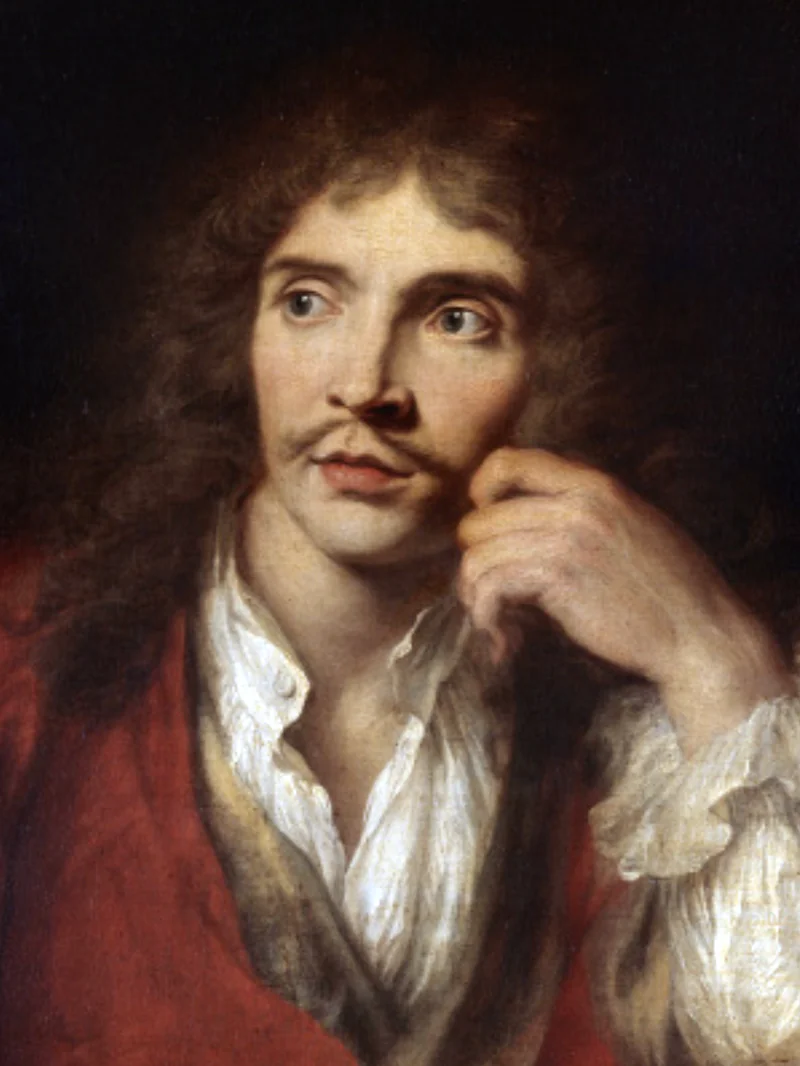
| 46 Quotes | |
| Born as | Jean-Baptiste Poquelin |
| Occup. | Playwright |
| From | France |
| Born | January 15, 1622 Paris, France |
| Died | February 17, 1673 Paris, France |
| Aged | 51 years |
| Cite | |
Citation Formats
APA Style (7th ed.)
Moliere biography, facts and quotes. (2026, February 11). FixQuotes. https://fixquotes.com/authors/moliere/
Chicago Style
"Moliere biography, facts and quotes." FixQuotes. February 11, 2026. https://fixquotes.com/authors/moliere/.
MLA Style (9th ed.)
"Moliere biography, facts and quotes." FixQuotes, 11 Feb. 2026, https://fixquotes.com/authors/moliere/. Accessed 4 Mar. 2026.
Early Life and Background
Jean-Baptiste Poquelin, later known as Moliere, was born in Paris on 1622-01-15, into the busy, status-conscious world of the merchant bourgeoisie. His father, Jean Poquelin, held the office of tapissier et valet de chambre du roi (upholsterer and royal valet), a post that conferred proximity to the court and the promise of security. From childhood, Poquelin absorbed the theater of appearances that ruled Paris - the etiquette of rank, the bargaining of marriages, the pieties displayed for advantage - material that would become the raw clay of his comedies.His mother, Marie Cresse, died when he was young, an early rupture that likely sharpened his attention to the masks people adopt to manage loss and desire. Paris in the 1630s and 1640s was a capital of spectacle and anxiety: the growing central authority of the monarchy, the policing of morals by religious factions, and the friction between worldly pleasure and public virtue. Moliere would later treat that friction not as an abstract debate but as a daily psychology, visible in dinner tables, salons, and sickbeds.
Education and Formative Influences
He studied at the College de Clermont (the Jesuit college later known as Louis-le-Grand), where he received rigorous training in Latin rhetoric and classical comedy, especially Plautus and Terence, as well as exposure to the cultivated speech of elites who could afford to treat language as a weapon and a toy. He also likely studied law briefly, but the stage pulled harder than stability. The decisive influence was the living theater around him: commedia dell'arte techniques, Parisian farce, and the sharp social observation of salon culture - all of which taught him that comedy could be both popular and intellectually surgical.Career, Major Works, and Turning Points
In 1643 he co-founded the Illustre Theatre with Madeleine Bejart, took the name Moliere, and quickly learned the economics of art when the venture failed and he was jailed for debt. The setback pushed him into years of provincial touring (mid-1640s to 1658), where necessity honed his craft: he acted, managed, rewrote, and studied audiences town by town. Returning to Paris, he won the protection of Louis XIV and established his troupe at the Palais-Royal, producing a run of defining comedies: Les Precieuses ridicules (1659), L'Ecole des femmes (1662), Tartuffe (1664-1669, after censorship), Dom Juan (1665), Le Misanthrope (1666), L'Avare (1668), and Le Malade imaginaire (1673). His public turning point was Tartuffe: attacked by devout factions for exposing religious hypocrisy, defended by royal authority, and refined through bans into a broader indictment of credulity. His private turning point was physical: chronic illness shadowed his late years, culminating in his collapse after performing Le Malade imaginaire; he died on 1673-02-17, his body a final reminder of the mortal stakes beneath his laughter.Philosophy, Style, and Themes
Moliere's comedy rests on an unsparing but human scale: he is less interested in condemning vice than in charting how self-love mutates into blindness. His characters want to be admired, saved, desired, or certain - and they build fictions sturdy enough to live inside. That psychological ethic appears in his insistence on self-scrutiny: “One ought to look a good deal at oneself before thinking of condemning others”. The line fits the arc of figures like Orgon in Tartuffe and Argan in Le Malade imaginaire, who outsource judgment to authorities and then call their surrender virtue. Moliere stages the mind in flight from responsibility, then uses laughter to force a return.His style fuses classical structure with the speed of farce: tight scenes, escalating misunderstandings, verbal duels, and the bodily comedy of coughs, feigned swoons, and slammed doors. Yet beneath the machinery is a moral realism skeptical of grand talk. “I live on good soup, not on fine words”. That blunt appetite is not crude; it is diagnostic. He shows how rhetoric can anesthetize - how doctors, devotees, and dandies hide interest behind jargon - and he counters them with the stubborn facts of the body and the household budget. Even his wit about mortality is plainspoken, a refusal of melodrama: “We die only once, and for such a long time”. The joke lands like a memento mori, turning fashionable posturing into a brief, fragile performance.
Legacy and Influence
Moliere helped define French classical comedy while widening its target from stock vices to social systems - medicine as theater, devotion as leverage, marriage as contract, language as disguise. His plays became repertory pillars for the Comedie-Francaise, and "tartuffe" entered the lexicon as shorthand for sanctimonious fraud. Across Europe, his blend of character comedy and institutional critique shaped Restoration and Enlightenment theater, and modern directors continue to mine his scenes for their contemporary nervousness: the fear of being duped, the craving to belong, the temptation to let ideology do one's thinking. In his best work, laughter is not escape but recognition, a public mirror held close enough to sting.Our collection contains 46 quotes written by Moliere, under the main topics: Witty One-Liners - Ethics & Morality - Wisdom - Friendship - Love.
Other people related to Moliere: Jean Racine (Dramatist), Carlo Goldoni (Playwright), William Wycherley (Dramatist), Cyrano de Bergerac (Playwright), Patrick Marber (Writer), Jim Dale (Musician), Ninon de Lenclos (Celebrity), Nicolas Boileau (Poet)
Moliere Famous Works
- 1673 The Imaginary Invalid (Play)
- 1672 The Learned Ladies (Play)
- 1671 Scapin the Schemer (Play)
- 1670 The Bourgeois Gentleman (Play)
- 1668 George Dandin, or The Abashed Husband (Play)
- 1668 The Miser (Play)
- 1668 Amphitryon (Play)
- 1667 The Sicilian, or Love the Painter (Play)
- 1666 The Doctor in Spite of Himself (Play)
- 1666 The Misanthrope (Play)
- 1665 Don Juan (or The Feast of Stone) (Play)
- 1664 Tartuffe (or The Impostor) (Play)
- 1664 The Forced Marriage (Play)
- 1664 The Princess of Elis (Play)
- 1662 The School for Wives (Play)
- 1661 The School for Husbands (Play)
- 1661 The Bores (Play)
- 1659 The Pretentious Young Ladies (Play)
- 1656 The Lovesick One (Play)
- 1655 The Bungler (Play)
Source / external links