
Monica Lewinsky Biography Quotes 28 Report mistakes
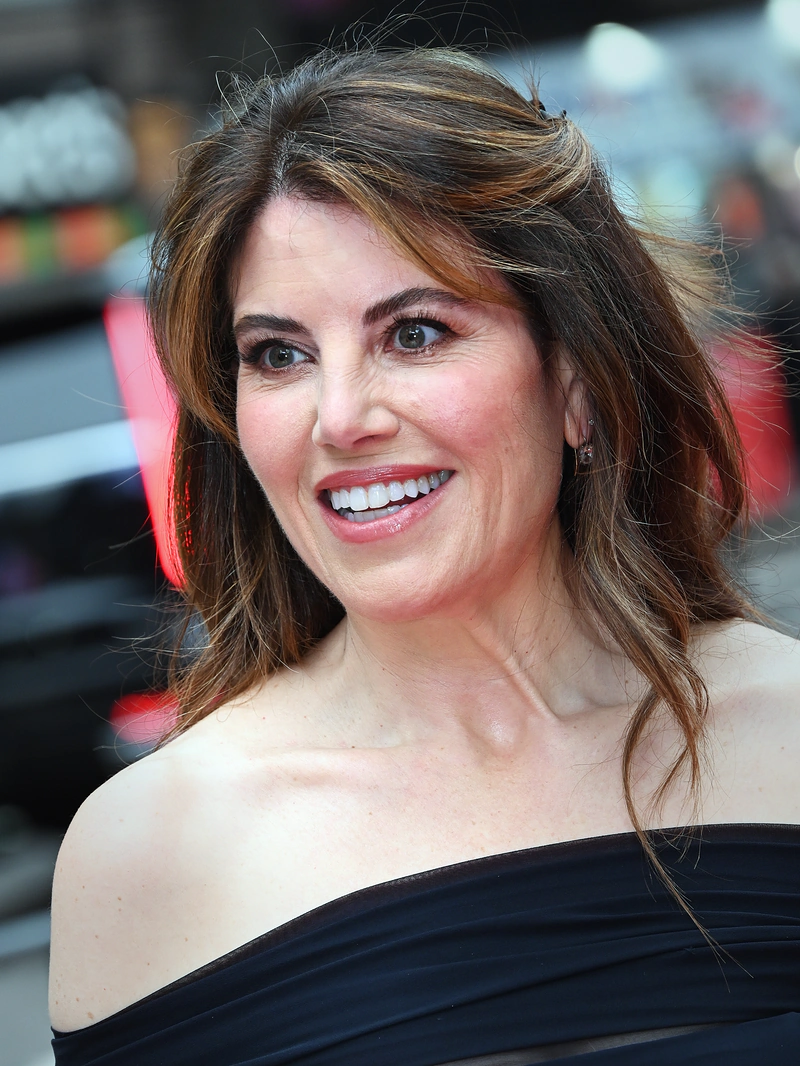
| 28 Quotes | |
| Born as | Monica Samille Lewinsky |
| Known as | Monica S. Lewinsky |
| Occup. | Celebrity |
| From | USA |
| Born | July 23, 1973 San Francisco, California, USA |
| Age | 52 years |
| Cite | |
Citation Formats
APA Style (7th ed.)
Monica lewinsky biography, facts and quotes. (2026, February 11). FixQuotes. https://fixquotes.com/authors/monica-lewinsky/
Chicago Style
"Monica Lewinsky biography, facts and quotes." FixQuotes. February 11, 2026. https://fixquotes.com/authors/monica-lewinsky/.
MLA Style (9th ed.)
"Monica Lewinsky biography, facts and quotes." FixQuotes, 11 Feb. 2026, https://fixquotes.com/authors/monica-lewinsky/. Accessed 5 Mar. 2026.
Early Life and Background
Monica Samille Lewinsky was born July 23, 1973, in San Francisco, California, into an affluent, highly visible slice of American professional life that prized credentials, discretion, and social polish. Her father, Bernard Lewinsky, built a career as a physician; her mother, Marcia Lewis, worked as an author and journalist. The household straddled public-facing ambition and private rules, a combination that later made the national exposure of her most intimate choices feel not merely embarrassing but existential - as if the scaffolding of identity had been ripped away in front of millions.Raised largely in the Los Angeles area, Lewinsky came of age during the 1980s and early 1990s, when tabloid culture was expanding and cable news was learning to monetize scandal. Long before the internet matured into social media, the machinery that would later define her life was already being assembled: talk radio outrage, 24-hour punditry, and a growing appetite for personal humiliation as entertainment. That cultural drift mattered. It meant that when her story broke, it would not be processed as a private misjudgment but as a morality play about women, power, and sex in public life.
Education and Formative Influences
Lewinsky attended schools in Southern California and studied at Lewis and Clark College in Portland, Oregon, graduating in 1995 with a degree in psychology - a field that, in retrospect, foreshadowed her later ability to read the emotional economies of shame and attention. After college she pursued government-related work in Washington, D.C., drawn to proximity to national affairs and the prestige of institutional life. The mid-1990s capital she entered was a city of internships, networks, and ambition, where young staffers learned quickly that status could be won through access - and lost through a single error in judgment.Career, Major Works, and Turning Points
In 1995 Lewinsky began a White House internship and later took a paid position in the Office of Legislative Affairs; by 1996 she had been transferred to the Pentagon. Her personal relationship with President Bill Clinton, beginning in 1995, became the detonator for a constitutional crisis when it emerged publicly in January 1998 amid the Starr investigation, Paula Jones litigation, and a media stampede. The years that followed were defined by legal peril, negotiated immunity, grand-jury testimony, and an almost unprecedented level of public sexual scrutiny directed at a private citizen. When the political story ended - Clinton was impeached in 1998 and acquitted by the Senate in 1999 - Lewinsky remained, in the public imagination, a symbol rather than a person. She attempted conventional reinvention through media appearances, fashion and product ventures, and intermittent retreat from view, but the more consequential turn came later: she reframed her life not as a cautionary punch line but as an argument about the human costs of public shaming.Philosophy, Style, and Themes
Lewinsky's public voice, when she reclaimed it, was shaped by the tension between self-protection and self-correction. She learned early that publicity could be both a weapon and a lifeline, and that the safest silence could still be interpreted as guilt. Her recognition of media power is less theoretical than bruised and procedural - a survivor's calculus about what exposure costs. “And understandably so, that when you're in legal jeopardy, you really cannot put yourself in a position to open yourself up to the media”. That sentence captures a psychological posture forged under surveillance: speak and be distorted, stay quiet and be defined by others.A second, persistent theme is agency - not in the simplistic sense of exoneration, but in the insistence that her story cannot be reduced to caricature. “It was a mutual relationship”. The plainness of the claim is part of its provocation; it pushes back against a culture that wanted a one-dimensional morality tale, either predator and prey or temptress and victim. Yet her later work also acknowledges the asymmetry of power and the way institutions protect themselves by sacrificing individuals. The emotional center of her narrative is not politics but loyalty and fear: “I was worried about my mom more than I was worried about the president. And then I was worried about the president, and then I was worried about myself”. The ordering is revealing. It suggests a person whose instincts ran toward caretaking and attachment even while the ground gave way beneath her, a pattern that helps explain both the intimacy she sought and the devastation of its aftermath.
Legacy and Influence
Lewinsky's enduring impact lies in how her life became a template for the modern politics of humiliation - and how she later contested that template. In the 2010s she reemerged as an anti-bullying and anti-public-shaming advocate, most notably through widely viewed talks and essays that argued for empathy, due process in the court of public opinion, and a clearer-eyed understanding of how quickly crowds turn people into content. Her name remains welded to a defining scandal of the late 20th century, but her longer legacy is more contemporary: she helped articulate the psychic toll of virality before the term existed, and she insisted that a person can outlive a narrative even when that narrative once felt like a life sentence.Our collection contains 28 quotes written by Monica, under the main topics: Witty One-Liners - Truth - Justice - Sarcastic - Movie.
Other people related to Monica: Kenneth Starr (Lawyer), Paula Jones (Celebrity), Sidney Blumenthal (Journalist), Ken Starr (Lawyer), Andrew Morton (Writer), Nicholson Baker (Novelist)