
Morarji Desai Biography Quotes 17 Report mistakes
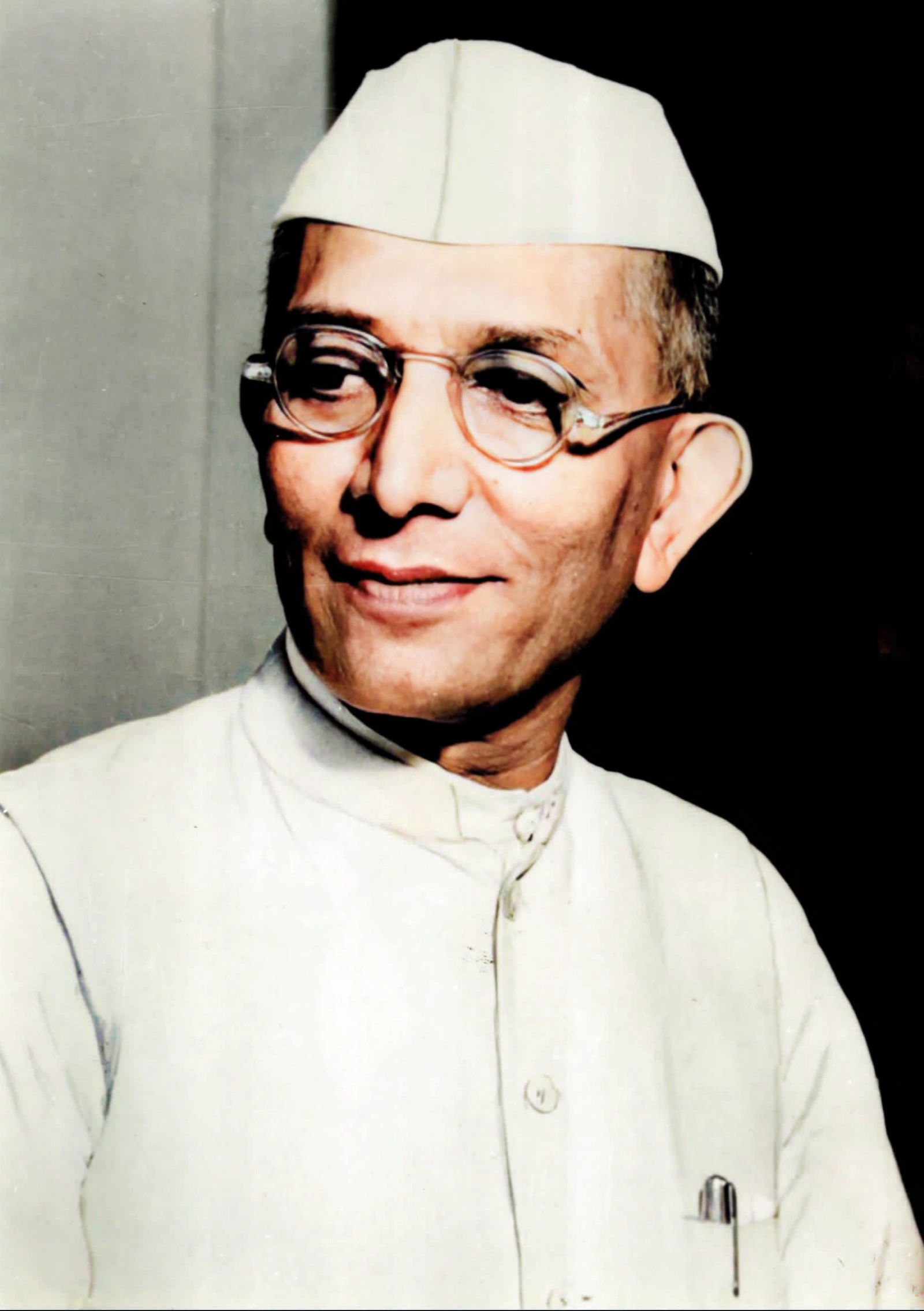
| 17 Quotes | |
| Born as | Morarji Ranchhodji Desai |
| Known as | Morarji |
| Occup. | Politician |
| From | India |
| Spouse | Gujraben Desai (1911-1981) |
| Born | February 29, 1896 Bhadeli, Gujarat, India |
| Died | April 10, 1995 Mumbai, Maharashtra, India |
| Aged | 99 years |
| Cite | |
Citation Formats
APA Style (7th ed.)
Morarji desai biography, facts and quotes. (2026, February 28). FixQuotes. https://fixquotes.com/authors/morarji-desai/
Chicago Style
"Morarji Desai biography, facts and quotes." FixQuotes. February 28, 2026. https://fixquotes.com/authors/morarji-desai/.
MLA Style (9th ed.)
"Morarji Desai biography, facts and quotes." FixQuotes, 28 Feb. 2026, https://fixquotes.com/authors/morarji-desai/. Accessed 4 Mar. 2026.
Early Life and Background
Morarji Ranchhodji Desai was born on 1896-02-29 in Bhadeli village near Valsad in the Bombay Presidency (now Gujarat), into an Anavil Brahmin family shaped by austere Vaishnav norms, village hierarchies, and the practical ethics of small-town administration. His childhood unfolded under late-colonial pressures: the railways and courts were expanding, nationalist ideas were spreading through Gujarat, and a new class of Indian officials was being trained to run the machinery of empire even as many began to reject its legitimacy.From early on Desai cultivated a hard, self-denying discipline that became both armor and compass. He was known as principled to the point of severity, wary of luxury, and attentive to personal conduct as a political act. That temperament would later make him a formidable administrator and a difficult colleague - a man who believed that public life was, first of all, a test of private rectitude.
Education and Formative Influences
Desai studied in Gujarat and trained for government service, entering the Bombay State civil administration in the 1910s. He absorbed the procedural rigor of the Raj - files, budgets, rules - while the Gandhian current nearby in Ahmedabad was redefining politics as moral self-rule. The pull of Gandhi and the wider freedom movement eventually proved stronger than the security of office, and Desai resigned from government service to join the Indian National Congress, accepting arrest and disruption as the price of political conscience.Career, Major Works, and Turning Points
As a Congress organizer in Gujarat, Desai rose through the party and the post-independence state, becoming a key figure in Bombay State and then Maharashtra, serving as Chief Minister of Bombay State (1952-1956) and later as Union Finance Minister in the 1960s. His reputation for fiscal stringency and personal austerity hardened in office, but so did controversy, notably around the 1956 Samyukta Maharashtra movement and the police firing in Bombay that left deep scars in public memory. After Indira Gandhi's ascent, he became a leading internal critic, resigning and helping form the Congress (O) faction, then joining the Janata coalition. The great turning point came after the Emergency (1975-1977): the opposition's victory made Desai India's first non-Congress Prime Minister (1977-1979). His government attempted to restore civil liberties and curb executive excess, but ideological cross-currents and factional feuds brought it down; he resigned in 1979 and lived out a long retirement until his death on 1995-04-10, honored with the Bharat Ratna.Philosophy, Style, and Themes
Desai's inner life was ruled by a belief that ethics were not ornamental but causal - that the character of a leader seeped into the character of the state. His public style mirrored this: plain speech, suspicion of showmanship, and an insistence on rules that could feel like righteousness turned into policy. Even his economic and administrative instincts - balanced budgets, mistrust of waste, faith in incremental reform - were expressions of a deeper conviction that self-control was the prerequisite for freedom.That moral psychology was also universalist, extending beyond party and nation toward a single standard of harm and duty. “One can't be kind to one person and cruel to another”. The line captures how he read politics through the lens of personal consistency: compromise might be necessary, but cruelty could not be compartmentalized. His commitment to non-violence and vegetarianism was framed not as piety but as an attempt to align means and ends: “If we do not want to be pained by anybody, we must not pain anybody; and how can man consider himself humane if he wants to live at the cost of others?” Yet he was not naive about human rationalization, warning that “man's intelligence is such that it can be utilised to defend any-thing he does, whether right or wrong”. That skepticism about self-justification helps explain both his personal rigidity and his distrust of unchecked executive power: the mind can excuse the very abuses it privately recognizes.
Legacy and Influence
Desai's enduring significance lies less in the lifespan of his ministry than in what it represented: the first democratic alternation of power at the center, achieved after a period of suspended liberties, and a precedent that governments are removable without overthrowing the republic. He left a model - admired and contested - of the puritan administrator in mass politics: incorruptible, frugal, and convinced that the nation's health depends on self-restraint. In Indian political memory he remains a symbol of anti-authoritarian recovery after the Emergency and a reminder that moral certainty can be both a source of courage and a limit on coalition governance.Our collection contains 17 quotes written by Morarji, under the main topics: Ethics & Morality - Wisdom - Truth - Meaning of Life - Life.
Source / external links