
Morrie Schwartz Biography Quotes 18 Report mistakes
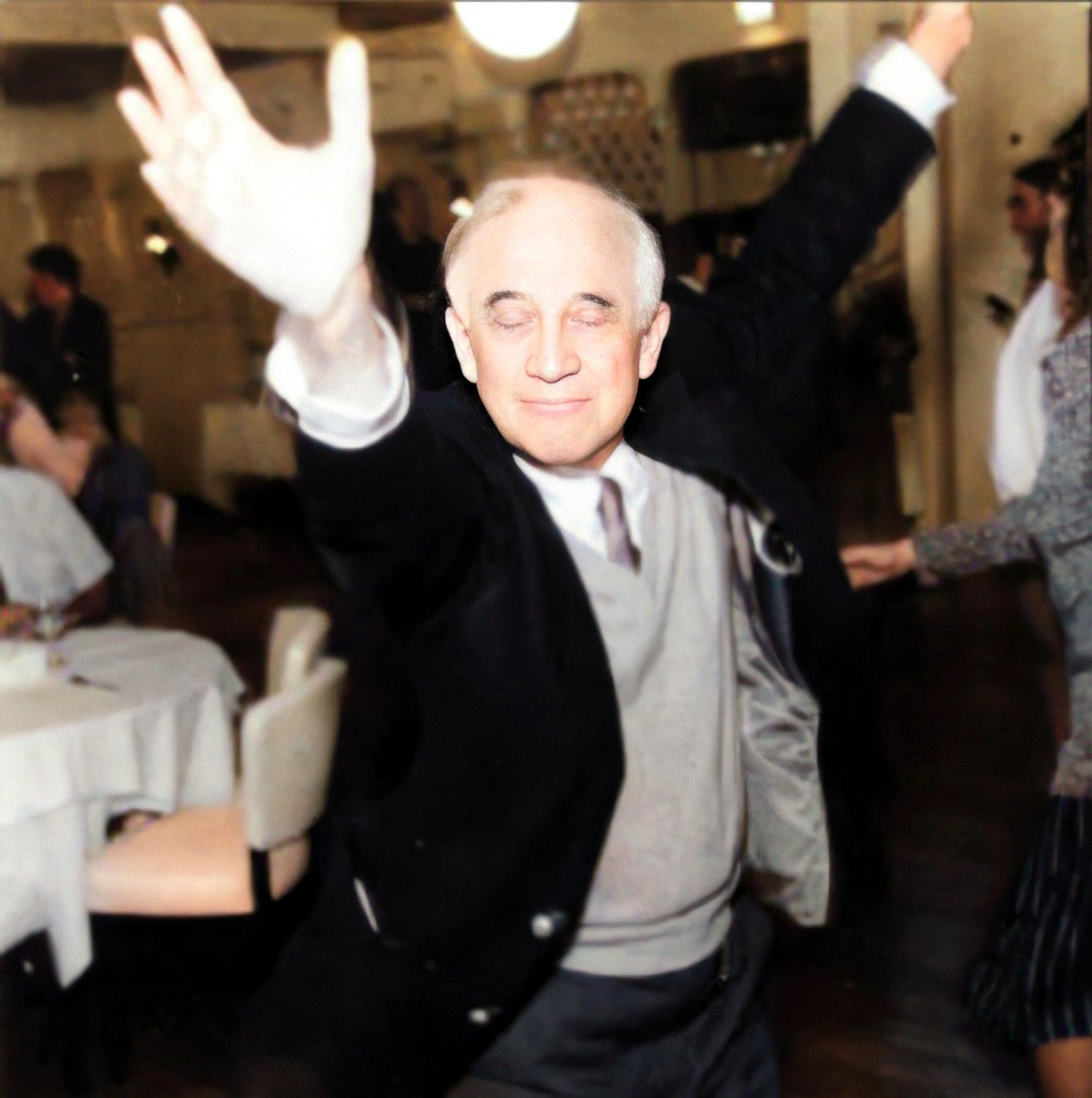
| 18 Quotes | |
| Born as | Morris S. Schwartz |
| Occup. | Educator |
| From | USA |
| Born | December 20, 1916 New York City, New York, USA |
| Died | November 4, 1995 Newton, Massachusetts, USA |
| Cause | Amyotrophic lateral sclerosis (ALS) |
| Aged | 78 years |
| Cite | |
Citation Formats
APA Style (7th ed.)
Morrie schwartz biography, facts and quotes. (2026, February 11). FixQuotes. https://fixquotes.com/authors/morrie-schwartz/
Chicago Style
"Morrie Schwartz biography, facts and quotes." FixQuotes. February 11, 2026. https://fixquotes.com/authors/morrie-schwartz/.
MLA Style (9th ed.)
"Morrie Schwartz biography, facts and quotes." FixQuotes, 11 Feb. 2026, https://fixquotes.com/authors/morrie-schwartz/. Accessed 12 Feb. 2026.
Early Life and Background
Morris S. Schwartz, later known publicly as Morrie Schwartz, was born on December 20, 1916, in the United States, into an immigrant, working-class world shaped by scarcity, grief, and the pressure to endure. His family life was marked by instability and loss that pushed him early toward self-reliance while also sensitizing him to the quiet injuries people carry - loneliness, shame, and the feeling of being unseen. Those early tensions became the emotional engine of his later vocation: he would spend his life asking how ordinary people can remain tender in a culture that rewards hardness.As a young man he watched America pass through the Great Depression and into the moral mobilization of World War II, eras that elevated discipline and productivity while often leaving inner life unspoken. The social bargain of the mid-century - work, family, respectability - promised security, but Morrie noticed how easily it could curdle into emotional isolation. This double vision, gratitude for stability and suspicion of its spiritual costs, stayed with him and later gave his teaching its peculiar power: he spoke like someone who had lived both hunger and comfort and trusted neither as a final answer.
Education and Formative Influences
Schwartz pursued higher education in the human sciences and trained as a sociologist, drawn to questions of community, social roles, and the ways cultural norms enter the body as anxiety or numbness. Academic life gave him language for what he had intuited since childhood - that private suffering is often socially manufactured - and introduced him to traditions that treated biography, ritual, and meaning as legitimate objects of study. He absorbed the postwar expansion of American universities, the rise of therapeutic culture, and the ferment of the 1960s, but he remained skeptical of abstraction that floated above lived experience.Career, Major Works, and Turning Points
Morrie Schwartz became a university educator and a beloved teacher, known less for a single canonical text than for an approach to mentoring that blurred the line between classroom and life. He taught sociology and emphasized relationships, ethics, and the emotional consequences of modern individualism, encouraging students to interrogate status-seeking and to take responsibility for their values. In later life he was diagnosed with amyotrophic lateral sclerosis (ALS), a progressive neurodegenerative disease that steadily stole his bodily independence while sharpening his voice; that period became the defining turning point. His conversations with former student Mitch Albom, conducted as his health declined, were shaped into the book "Tuesdays with Morrie" (published after his death), which carried Schwartz's intimate teaching to a mass audience and made him, posthumously, a moral witness of late-20th-century America.Philosophy, Style, and Themes
Schwartz's philosophy centered on mortality as an instrument of clarity rather than despair. He insisted that endings are not a special catastrophe but the basic condition of existence, and he used that fact to strip away the theatrics of ambition. "Everything that gets born dies". In his hands the sentence was not bleak; it was a diagnostic tool, a way to see which pursuits are distractions from the finite hours available for connection. His pedagogy was conversational, patient, and unashamedly personal - he taught by modeling vulnerability, turning his weakening body into a kind of curriculum about attention, gratitude, and the dignity of dependence.Against the American mythology of self-sufficiency, Schwartz argued for chosen values and practiced love as a discipline. He urged students to resist social scripts that equate worth with dominance or busyness, and he spoke as someone who had watched people accumulate prestige while starving emotionally. "The most important thing in life is to learn how to give out love, and to let it come in". This was not sentimentality but a radical reordering of priorities, intensified by illness: if the body will fail, what remains is the quality of one's relationships. He also pressed for moral autonomy, the courage to select one's big commitments deliberately rather than by inheritance or peer pressure. "The little things, I can obey. But the big things - how we think, what we value - those you must choose yourself. You can't let anyone - or any society - determine those for you". Legacy and Influence
Schwartz died on November 4, 1995, but his influence grew in the years after, carried by "Tuesdays with Morrie" into classrooms, support groups, hospice programs, and the wider literature of public moral reflection. In an era increasingly mediated by speed and performance, he offered a counterexample: an educator who treated attention as sacred and dependency as human rather than humiliating. His legacy rests on a simple, difficult proposition - that meaning is not found by conquering life but by consenting to its limits and meeting others there with honesty - and his name endures as shorthand for a certain kind of teaching, the kind that changes how a student lives rather than merely what a student knows.
Our collection contains 18 quotes written by Morrie, under the main topics: Friendship - Love - Mortality - Meaning of Life - Learning.
Frequently Asked Questions
- What did Morrie Schwartz teach: Sociology
- Morrie Schwartz mother name: Dora Schwartz
- Morrie Schwartz biography: Morrie Schwartz was an American educator and sociology professor known for his inspirational life lessons and as the subject of the book 'Tuesdays with Morrie'.
- How did Morrie Schwartz die: Amyotrophic lateral sclerosis (ALS)
- Morrie Schwartz family: Wife Charlotte; sons Rob and Jon.
- Morrie Schwartz immediate family: Wife Charlotte; sons Rob and Jon.
- Morrie Schwartz wife: Charlotte Schwartz
- Morrie Schwartz profession: Sociology professor
- How old was Morrie Schwartz? He became 78 years old
Source / external links