
Morris Graves Biography Quotes 2 Report mistakes
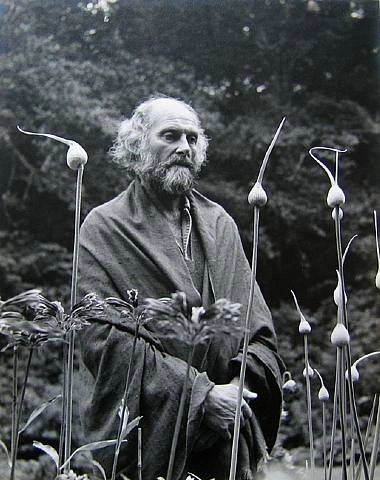
| 2 Quotes | |
| Born as | Morris Cole Graves |
| Occup. | Artist |
| From | USA |
| Born | August 28, 1910 Fox Valley, Oregon |
| Died | May 5, 2001 Loleta, California |
| Aged | 90 years |
| Cite | |
Citation Formats
APA Style (7th ed.)
Morris graves biography, facts and quotes. (2026, February 19). FixQuotes. https://fixquotes.com/authors/morris-graves/
Chicago Style
"Morris Graves biography, facts and quotes." FixQuotes. February 19, 2026. https://fixquotes.com/authors/morris-graves/.
MLA Style (9th ed.)
"Morris Graves biography, facts and quotes." FixQuotes, 19 Feb. 2026, https://fixquotes.com/authors/morris-graves/. Accessed 26 Mar. 2026.
Early Life
Morris Cole Graves was born in 1910 in Oregon and grew up in the Pacific Northwest, a landscape whose forests, shorelines, and migratory birds shaped his imagination from an early age. Largely self-taught, he found his way into art not through formal academies, but through intense personal study and long hours observing nature. As a young man he took work that allowed him to travel across the Pacific, and brief encounters with Japan and China deepened his interest in East Asian painting, calligraphy, and Buddhist thought. Those early experiences set the course for a career in which spiritual inquiry, restraint, and careful attention to living forms would remain central.Formative Years and Influences
By the 1930s Graves was active in Seattle, where the newly founded Seattle Art Museum became an important resource. The museum's director, Richard E. Fuller, was an early supporter, and exposure to its Asian collections reinforced Graves's attraction to ink painting and a contemplative aesthetic. He became associated with a circle that would soon be called the Northwest School, alongside Mark Tobey, Kenneth Callahan, and Guy Anderson. While their work varied, they shared an interest in fusing modern art with spiritual ideas and in integrating elements of East Asian art into a distinctly Northwestern sensibility. For Graves, birds, chalices, flowers, and luminous eyes became recurring motifs, rendered with spare, calligraphic lines and subtle tonal fields in watercolor, gouache, and tempera.Recognition and the Northwest School
Graves's reputation grew steadily through regional exhibitions and critical attention. In 1942 curator Dorothy C. Miller selected him for the Museum of Modern Art's Americans series, which introduced a national audience to artists outside New York's center. That inclusion brought both opportunity and scrutiny, and his work began to be collected by major institutions. In New York, Marian Willard championed him at the Willard Gallery, where his exhibitions found an audience attuned to the poetry and quiet intensity of his images. The Life magazine feature on the Mystic Painters of the Pacific Northwest in the early 1950s placed Graves, Tobey, Callahan, and Anderson together in the national imagination, emphasizing the spiritual and regional dimensions of their art even as each artist pursued a distinct path.War Years and Ethical Commitments
World War II tested Graves's convictions. A committed pacifist, he resisted military service, a stance that brought him into conflict with authorities and contributed to periods of withdrawal. The war years deepened the ethical concerns already present in his work: the fragility of life, the desire for harmony, and the sense that art might be an instrument for inner navigation. During and after the war he refined a symbolic vocabulary that balanced vulnerability and resilience, often using delicate materials and muted palettes to underscore the ephemerality of his subjects.Experiment and Travel
In the midcentury Graves continued to evolve. He explored sculpture and assemblage, crafting poetic objects sometimes referred to as instruments or vessels that extended the metaphorical reach of his paintings. Postwar travel, including time in Japan, affirmed his admiration for Zen and for the disciplined spontaneity of ink practice. Rather than imitate, he absorbed principles of economy, asymmetry, and mindfulness, translating them into a modern idiom that remained unmistakably his own.Retreats, Studios, and Working Life
Graves sought quiet places from which to work. In rural settings north of Seattle he built austere retreats, shaping environments that combined studio, garden, and sanctuary. Later he settled in northern California, creating another secluded compound near Loleta, where he designed a landscape of water, trees, and paths that echoed the contemplative spaces he valued. He worked in intense bursts, often at night, preparing grounds with exacting care and moving quickly when images arrived. While he avoided the bustle of art centers, he remained in dialogue with trusted allies, including Marian Willard in New York and figures in Seattle's art world such as Richard E. Fuller and, later, advocate Betty Bowen, who helped sustain regional support for his work.Collections and Exhibitions
Graves's paintings and works on paper entered the collections of major museums, including the Museum of Modern Art, the Whitney Museum of American Art, the San Francisco Museum of Modern Art, and the Seattle Art Museum. Exhibitions across the country confirmed his standing as a singular modernist voice. Critics often described his art in terms of quietness, luminosity, and moral seriousness, noting how finely tuned surfaces and attenuated lines could carry an emotional charge equal to more overtly dramatic styles.Legacy
Graves died in 2001 in northern California, leaving a body of work that remains central to the understanding of the Northwest School and to broader narratives of American modernism. He showed that modern art could be both rigorously contemporary and deeply rooted in ethical and spiritual reflection. His synthesis of East Asian aesthetics with Western modernist form expanded the possibilities for postwar American painting, while his commitment to living close to nature anticipated later ecological sensibilities. The company he kept matters for understanding his achievement: peers like Mark Tobey, Guy Anderson, and Kenneth Callahan shaped and challenged him; curators and advocates such as Dorothy C. Miller, Richard E. Fuller, Marian Willard, and Betty Bowen created the frameworks that carried his work to wider audiences. Through the resonance of his birds, chalices, and quiet fields of light, Graves offered a model of art as a disciplined, compassionate way of seeing the world.Our collection contains 2 quotes written by Morris, under the main topics: Art.
Source / external links