
Moshe Dayan Biography Quotes 30 Report mistakes
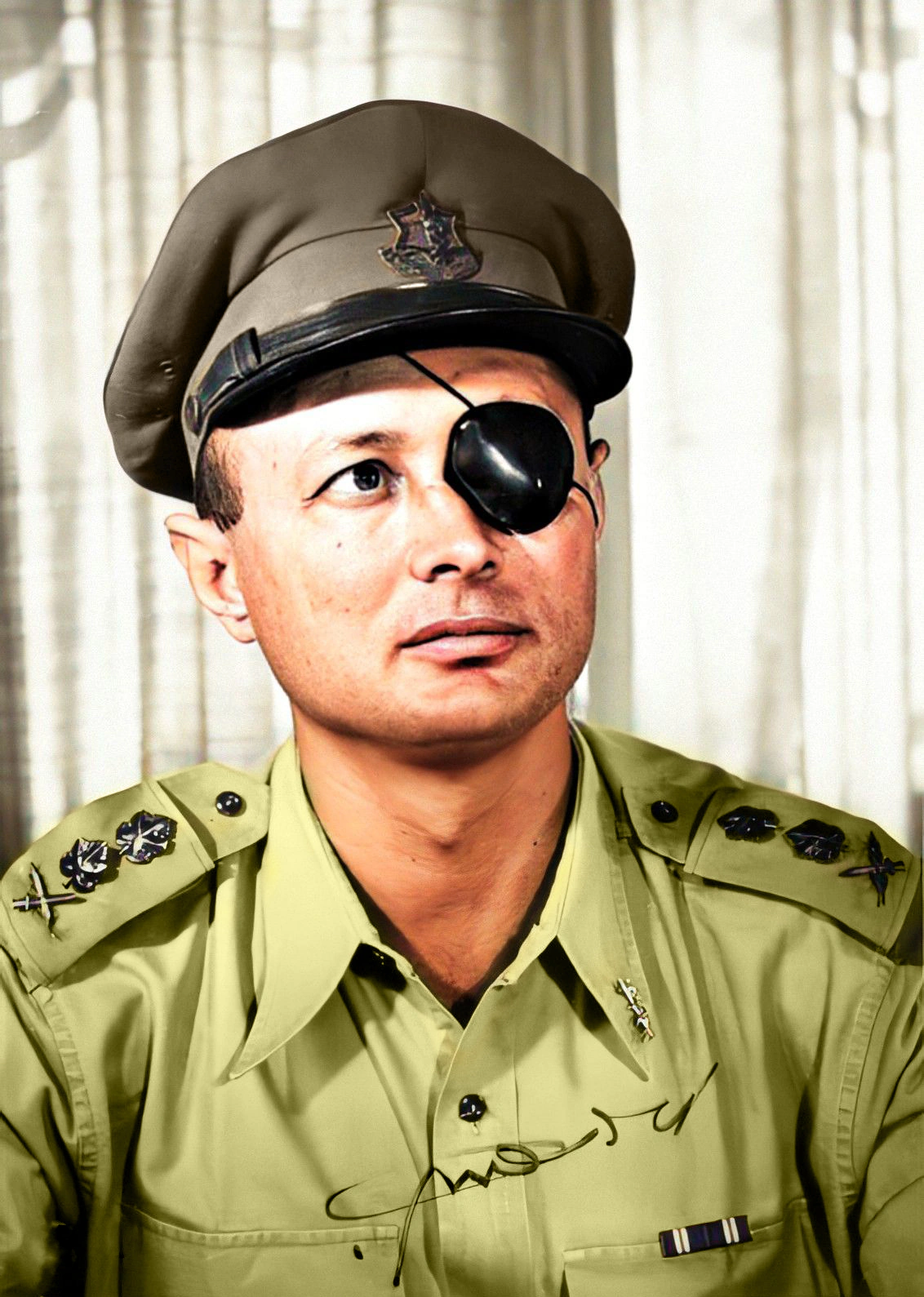
Attr: IDF Spokesperson's Unit
| 30 Quotes | |
| Occup. | Soldier |
| From | Israel |
| Spouse | Ruth Dayan |
| Born | May 20, 1915 Kibbutz Degania Alef, Ottoman Empire (now Israel) |
| Died | October 16, 1981 Tel Aviv, Israel |
| Cause | Heart attack |
| Aged | 66 years |
| Cite | |
Citation Formats
APA Style (7th ed.)
Moshe dayan biography, facts and quotes. (2026, February 11). FixQuotes. https://fixquotes.com/authors/moshe-dayan/
Chicago Style
"Moshe Dayan biography, facts and quotes." FixQuotes. February 11, 2026. https://fixquotes.com/authors/moshe-dayan/.
MLA Style (9th ed.)
"Moshe Dayan biography, facts and quotes." FixQuotes, 11 Feb. 2026, https://fixquotes.com/authors/moshe-dayan/. Accessed 27 Mar. 2026.
Early Life and Background
Moshe Dayan was born on May 20, 1915, in Degania Alef, among the first kibbutzim on the southern shore of the Sea of Galilee, a frontier society shaped by Ottoman collapse, British rule, and recurring local violence. His parents, Shmuel and Devorah Dayan, were pioneers of the Second Aliyah milieu, committed to Hebrew labor and collective agriculture, and their household reflected the Yishuvs ethic: self-reliance, armed watchfulness, and a belief that history could be remade by disciplined minorities.Raised largely in Nahalal, the first moshav in the Jezreel Valley, Dayan grew up with the daily intimacy of land work and the insecurity of contested space. The valley of his youth was not an abstraction but a map of patrol routes, fences, and negotiations, producing in him a hard, unsentimental view of sovereignty. The mixture of pragmatic farm management and constant readiness for attack became the psychological template he carried into politics - a sense that national existence would always be provisional unless defended.
Education and Formative Influences
Dayans formal schooling was limited; he absorbed more from the moshavs fieldwork, the Hebrew revival culture, and the underground military institutions of the Yishuv than from classrooms. In the 1930s he joined the Haganah and learned clandestine logistics, intelligence gathering, and the ethics of restraint under pressure - lessons sharpened by British surveillance and Arab revolt. During World War II he served with British-led forces in the region; in 1941, operating against Vichy units in Syria, a bullet and shrapnel cost him his left eye, and the black eyepatch that followed became both personal scar and public icon of a life organized around risk.Career, Major Works, and Turning Points
From the 1948 Arab-Israeli war onward, Dayan rose as a field commander and operational thinker: he led forces in key sectors, later commanding the Southern Command and shaping border doctrine during the era of fedayeen raids. As Israel Defense Forces chief of staff (1953-1958), he professionalized training and helped plan the 1956 Sinai Campaign, deepening Israels reliance on rapid maneuver and preemption. Entering party politics, he served as minister of agriculture and then, in the crisis atmosphere of 1967, became defense minister on the eve of the Six-Day War; his name fused with Israels sudden territorial expansion and the charged symbolism of Jerusalem. The Yom Kippur War of 1973 damaged his reputation and forced a reckoning with overconfidence and intelligence failure, yet he returned to power as foreign minister under Menachem Begin, playing a central role in the diplomacy that produced the 1978 Camp David Accords and the 1979 Egypt-Israel peace treaty. In later years he wrote and lectured, including memoiristic works such as Story of My Life, while also becoming known for controversial antiquities collecting, a private passion that echoed his desire to possess the past as tangible proof.Philosophy, Style, and Themes
Dayan combined a farmers concreteness with a raiders impatience, preferring decisive action, psychological advantage, and clear chains of command. He understood that Israels strategic position demanded both deterrence and political imagination - a duality that made him capable of ruthless military planning and, later, of negotiating with former foes. His most revealing maxim about statecraft was also a confession of his own method: “If you want to make peace, you don't talk to your friends. You talk to your enemies”. It captures a mind that distrusted comfort, sought leverage in direct contact, and treated ideology as secondary to outcomes.His public voice was spare, aphoristic, and often deliberately provocative, projecting calm amid existential tension. He framed freedom not as romantic liberation but as a prerequisite for inner endurance: “Freedom is the oxygen of the soul”. Yet this moral language sat beside a cold arithmetic of survival; he believed security required convincing adversaries that war would be unbearably costly, a logic that underpinned his advocacy of deterrence and quick, hard blows. Even in moments of triumph, he spoke in the clipped tone of a commander announcing facts as fate, as in the charged declaration, “The Old City of Jerusalem is in our hands”. - a sentence that reveals his feel for symbols, and also his instinct to seize and name turning points before others could.
Legacy and Influence
Dayan remains one of Israels most recognizable figures - the eyepatch, the gravelly brevity, the blend of audacity and fatalism - and one of its most debated. To admirers he embodied the sabra ethos: initiative, resilience, and clarity under fire; to critics he personified the hazards of militarized politics, strategic hubris, and moral shortcuts in an enduring conflict. His imprint is visible in Israels civil-military culture, in the mythology of 1967, in the trauma-driven reforms after 1973, and in the diplomatic turn that made peace with Egypt conceivable. He left behind not a tidy doctrine but a portrait of a state and generation that believed history could be forced open - and that learned, repeatedly, the price of doing so.Our collection contains 30 quotes written by Moshe, under the main topics: Witty One-Liners - Leadership - Freedom - Resilience - War.
Other people related to Moshe: Levi Eshkol (Statesman), Ezer Weizman (Statesman)
Source / external links