
Moustapha Akkad Biography Quotes 8 Report mistakes
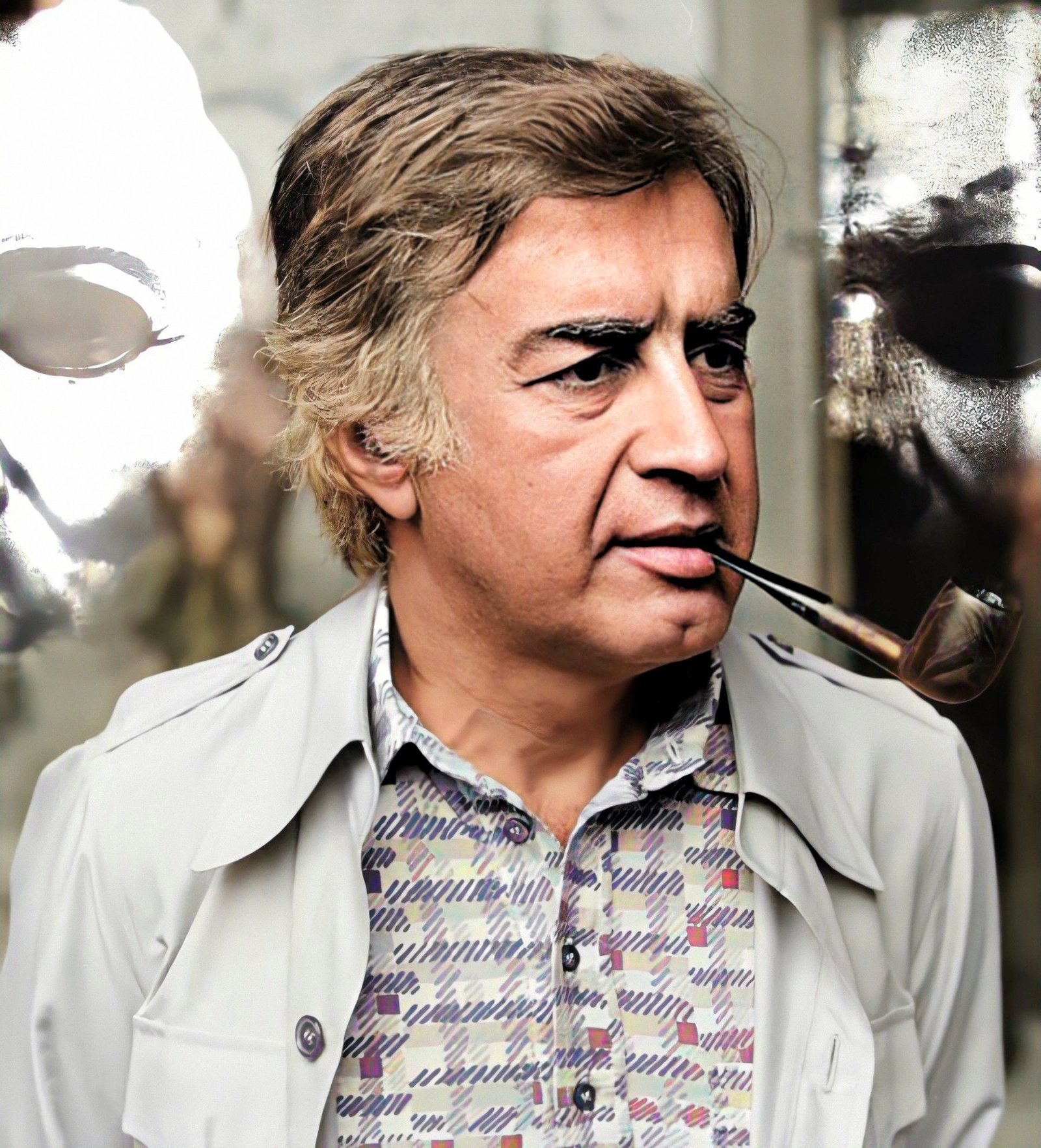
| 8 Quotes | |
| Born as | Moustapha Al Akkad |
| Occup. | Director |
| From | Syria |
| Born | April 19, 1909 Aleppo, Syria |
| Died | November 10, 2005 Amman, Jordan |
| Aged | 96 years |
| Cite | |
Citation Formats
APA Style (7th ed.)
Moustapha akkad biography, facts and quotes. (2026, February 11). FixQuotes. https://fixquotes.com/authors/moustapha-akkad/
Chicago Style
"Moustapha Akkad biography, facts and quotes." FixQuotes. February 11, 2026. https://fixquotes.com/authors/moustapha-akkad/.
MLA Style (9th ed.)
"Moustapha Akkad biography, facts and quotes." FixQuotes, 11 Feb. 2026, https://fixquotes.com/authors/moustapha-akkad/. Accessed 26 Mar. 2026.
Early Life and Background
Moustapha Akkad (born Moustapha Al Akkad; April 19, 1930 - November 10, 2005) was a Syrian-born director and producer whose career became a long argument against cultural caricature. He was born in Aleppo, then part of a Syria emerging from French Mandate rule into uneasy independence, a setting where public life was shaped by anticolonial politics, religious plurality, and the pressure to define modern Arab identity. That early atmosphere - proud, contested, and globally misunderstood - later informed his fixation on how stories travel across borders and how violence, when misread, is used to label entire peoples.Family expectations leaned practical, but Akkad was drawn to cinema as a form of persuasion rather than escape. He carried with him the dual consciousness of an Arab Muslim shaped by local tradition and an ambitious young man watching American cultural power radiate through screens and radio. The tension between those worlds - admiration and resistance, curiosity and defensiveness - became his inner engine: he would spend his life trying to make Western audiences see the Middle East not as an abstraction but as a human place with history, ethics, and ordinary lives.
Education and Formative Influences
After leaving Syria for the United States, Akkad studied film and television in California, absorbing Hollywood craft while learning its market logic and its blind spots. He moved through an industry that could finance spectacle but rarely respected Arab narratives except as exotic threat or backdrop, and he responded by treating research, consultation, and casting as moral as well as artistic choices. The era mattered: postwar American media was expanding globally, the Arab-Israeli conflict was hardening perceptions, and decolonization was remaking the map - conditions that made representation a political fact, not a seminar topic.Career, Major Works, and Turning Points
Akkad pursued two parallel tracks: commercial entertainment to keep his footing in the industry, and prestige historical epics to correct what he saw as a civilizational misunderstanding. As producer, he helped launch and sustain the "Halloween" franchise beginning in 1978, a pragmatic foothold that provided leverage and credibility. As director-producer, he mounted his defining passion projects: "The Message" (1976), depicting the rise of Islam with unusual care and consultation, and "Lion of the Desert" (1981), chronicling Libyan resistance leader Omar Mukhtar against Italian fascism. Financing and distribution were battles; so was reception, with political anxieties and censorship shaping where the films could be shown. In the end, his career reads like a negotiation between box-office realities and a missionary sense of cultural responsibility. He was killed in Amman, Jordan, in the 2005 hotel bombings, a death that cruelly echoed his lifelong insistence that violence is not an identity.Philosophy, Style, and Themes
Akkad believed cinema was a public square: emotionally immediate, historically sticky, and therefore ethically consequential. He framed his work around translation - not only of language but of moral context - trying to replace the shorthand of "East vs. West" with biographies, communities, and causes. That is why his epics favor panoramic staging, declarative speeches, and clear moral lines: he was less interested in ambiguity for its own sake than in creating a shared baseline of facts from which dialogue could begin.His own statements reveal a psychology shaped by minority vigilance and civic ambition. “I made the film to bring the story of Islam, the story of 700 million of people, to the West”. The number functions as both data and plea: he felt the weight of representing a vast constituency that he believed had been flattened by ignorance. Yet his universalism was not performative; it was the aesthetic core of his storytelling, as in his insistence that “If my films have a message, it's that humanity is a single family and we should try to help each other”. Even when he entered the horror marketplace, he treated audience appetite as a means, not an end, aligning craft with conviction: “I think that every movie should have some form of a message, and what makes a film good is not just the entertainment factor, but also the values and ideas that it presents”.
Legacy and Influence
Akkad left a dual legacy that few filmmakers manage: a permanent imprint on popular genre cinema through "Halloween", and a landmark attempt to narrate early Islamic history for mainstream Western audiences through "The Message". His larger influence lies in the template he modeled for diasporic filmmakers - use the industry as it exists, then bend it toward dignity, context, and cross-cultural literacy. In an age when geopolitical shocks repeatedly tempted audiences toward easy stereotypes, Akkad argued, through both image and example, that representation is not decoration but a form of responsibility, and that the hardest story to tell is often the one that insists the "other" is fully human.Our collection contains 8 quotes written by Moustapha, under the main topics: Kindness - War - Faith - Movie - Peace.
Source / external links