
Muhammad Ali Jinnah Biography Quotes 16 Report mistakes
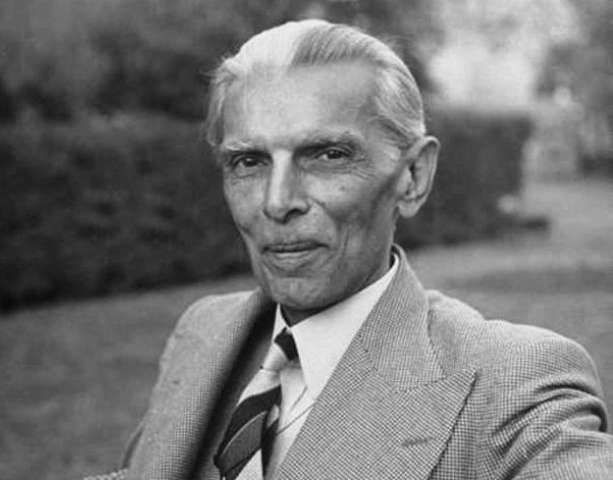
| 16 Quotes | |
| Born as | Mahomedali Jinnahbhai |
| Occup. | Politician |
| From | Pakistan |
| Born | December 25, 1876 Karachi, British India (now Pakistan) |
| Died | September 11, 1948 Karachi, Pakistan |
| Aged | 71 years |
| Cite | |
Citation Formats
APA Style (7th ed.)
Muhammad ali jinnah biography, facts and quotes. (2026, February 11). FixQuotes. https://fixquotes.com/authors/muhammad-ali-jinnah/
Chicago Style
"Muhammad Ali Jinnah biography, facts and quotes." FixQuotes. February 11, 2026. https://fixquotes.com/authors/muhammad-ali-jinnah/.
MLA Style (9th ed.)
"Muhammad Ali Jinnah biography, facts and quotes." FixQuotes, 11 Feb. 2026, https://fixquotes.com/authors/muhammad-ali-jinnah/. Accessed 5 Mar. 2026.
Early Life and Background
Muhammad Ali Jinnah was born Mahomedali Jinnahbhai on 1876-12-25 in Karachi, then a British Indian port city where Gujarati-speaking merchant networks met imperial law and finance. His father, Jinnahbhai Poonja, was a trader who moved the family between Karachi and Bombay in search of stability, while his mother, Mithibai, anchored a home shaped by Khoja Shiite Ismaili roots and the practical piety of a commercial community. From the start, Jinnah absorbed two languages of authority - the intimate codes of kinship and the public grammar of contracts, courts, and colonial power.The Karachi of Jinnah's childhood was cosmopolitan but stratified: Indians served empire in docks, railways, and offices while political decisions arrived from distant capitals. That tension between local aspiration and external control would later harden in him into a lifelong suspicion of majoritarian coercion, whether imperial or democratic. Even as a young man, he cultivated self-command: meticulous dress, controlled emotion, and a preference for argument over spectacle - traits that would become both armor and method in a career conducted on the edge of historical rupture.
Education and Formative Influences
After early schooling in Karachi and Bombay, Jinnah was sent to London in the 1890s, enrolling at Lincoln's Inn and being called to the Bar in 1896. Britain offered him not romance but tools: parliamentary procedure, constitutional precedent, and the ethic of the advocate who wins by precision. He admired liberal statesmen and the idea that minorities could be protected by law, yet he also saw how empire used legality to manage dissent. This mixture - faith in constitutionalism, skepticism toward unchecked power - formed the inner spine of his later politics.Career, Major Works, and Turning Points
Returning to Bombay, Jinnah rose as an exceptional barrister in the High Court, known for razor logic and an austere independence that resisted patronage. He entered politics through the Indian National Congress and, after 1913, the All-India Muslim League, initially seeking Hindu-Muslim cooperation and helping shape the 1916 Lucknow Pact. Disillusion deepened in the 1920s as mass agitation and majoritarian arithmetic threatened the safeguards he believed essential; his 1929 "Fourteen Points" crystallized demands for provincial autonomy and minority protections. By the late 1930s, after Congress ministries and the League's reorganization, he became the central strategist of Muslim political consolidation, steering the 1940 Lahore Resolution toward the demand for Pakistan. Partition in 1947 made him Pakistan's first Governor-General, but the triumph arrived with administrative collapse, communal violence, and refugee catastrophe; exhausted and ill, he died on 1948-09-11 in Karachi, leaving a state born faster than its institutions could mature.Philosophy, Style, and Themes
Jinnah's public philosophy was constitutional to the bone: he distrusted romance in politics and treated history as a brief to be argued, not a festival to be performed. His style - clipped sentences, exact definitions, relentless focus on procedure - reflected an inner life organized around control, perhaps intensified by private grief and physical frailty. The disciplined advocate in him became the disciplined nation-builder: “Think 100 times before you take a decision, But once that decision is taken, stand by it as one man”. In that maxim is a psychology of restraint followed by steely commitment, the temperament of a leader who preferred fewer promises but demanded obedience to the chosen line.Yet his constitutionalism was not value-neutral. He framed Pakistan as an ethical project as much as a territorial one, insisting that sovereignty was meant to protect a community's moral and cultural continuity: “Pakistan not only means freedom and independence but the Muslim Ideology which has to be preserved, which has come to us as a precious gift and treasure and which, we hope other will share with us”. Critics heard exclusion; admirers heard a minority's plea for security after decades of anxiety. At the same time, he repeatedly tied national strength to social reform, especially the public role of women, treating emancipation as statecraft rather than ornament: “No nation can rise to the height of glory unless your women are side by side with you”. The tension between his legalistic instincts and his civilizational rhetoric - between safeguards and destiny - defined his speeches, his negotiations, and the unresolved questions Pakistan inherited.
Legacy and Influence
Jinnah endures in Pakistan as Quaid-e-Azam, the founder whose portrait watches courts, classrooms, and cantonments, and whose words remain a repertoire for competing political visions. Internationally, he is studied as a case of minority nationalism pursued through law: a barrister who tried to win by argument what others sought by revolt. His legacy is inseparable from Partition's trauma, yet also from the institutional aspiration he insisted upon - disciplined administration, constitutional rights, and a state strong enough to protect the vulnerable. The debates that still circle him - secular versus Islamic readings, federalism versus centralization, inclusion versus identity - testify to his continuing power as both symbol and problem, a leader whose method was clarity even when history was chaos.Our collection contains 16 quotes written by Muhammad, under the main topics: Motivational - Wisdom - Never Give Up - Leadership - Freedom.
Other people related to Muhammad: Stafford Cripps (Politician), Muhammed Iqbal (Poet), Lord Halifax (Politician)