
Nadia Comaneci Biography Quotes 15 Report mistakes
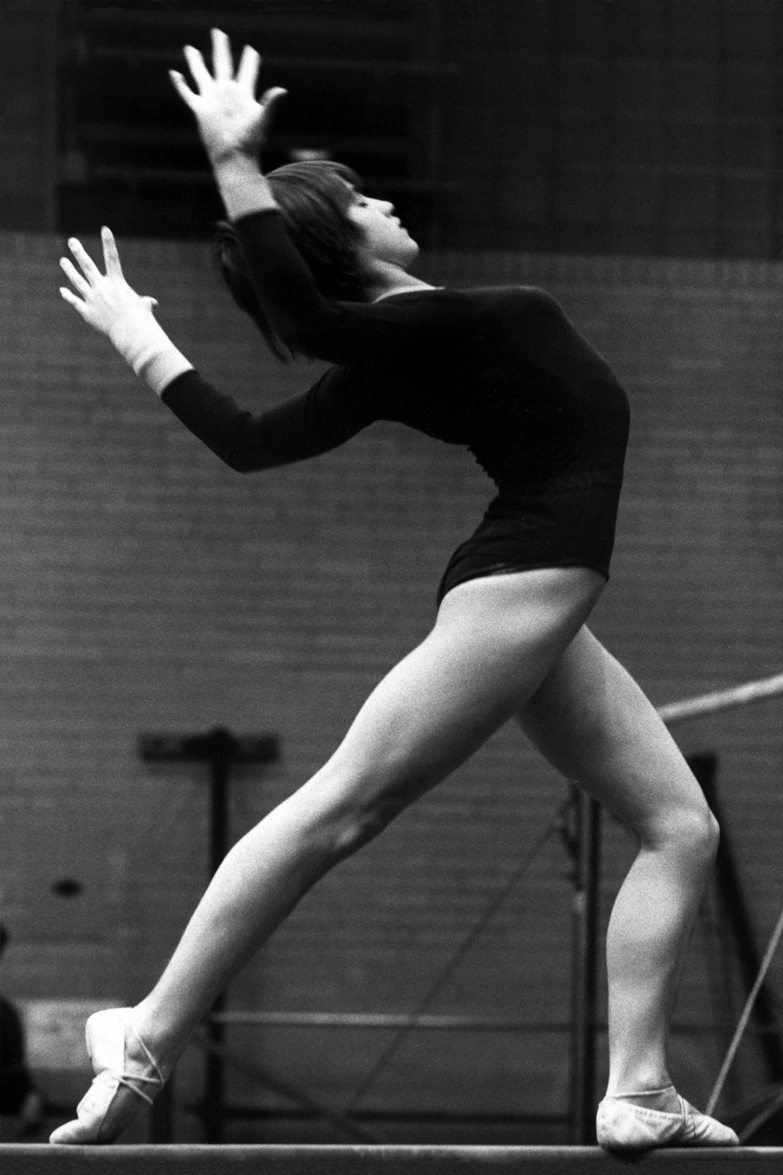
| 15 Quotes | |
| Occup. | Athlete |
| From | Romania |
| Born | November 12, 1961 |
| Age | 64 years |
| Cite | |
Citation Formats
APA Style (7th ed.)
Nadia comaneci biography, facts and quotes. (2026, February 11). FixQuotes. https://fixquotes.com/authors/nadia-comaneci/
Chicago Style
"Nadia Comaneci biography, facts and quotes." FixQuotes. February 11, 2026. https://fixquotes.com/authors/nadia-comaneci/.
MLA Style (9th ed.)
"Nadia Comaneci biography, facts and quotes." FixQuotes, 11 Feb. 2026, https://fixquotes.com/authors/nadia-comaneci/. Accessed 6 Mar. 2026.
Early Life and Background
Nadia Elena Comaneci was born on November 12, 1961, in Onesti, Bacau County, in eastern Romania, a small industrial town inside Nicolae Ceausescu's tightening communist system. Her childhood unfolded in a society that prized discipline, conformity, and the spectacle of national achievement - conditions that would later turn an unusually gifted girl into a state symbol of perfection.At home, the emotional climate mixed security with strictness, the kind that can sharpen a child's hunger to excel while also teaching her to conceal strain. “My parents were very loving, but disciplinarians”. That blend of affection and order helped form the guarded poise viewers would later read as calm, even when the routines demanded a private ferocity.
Education and Formative Influences
Comaneci entered gymnastics early in a country that treated sport as an unofficial foreign policy, and her talent was quickly channeled into Romania's rising program under coaches Bela and Marta Karolyi. By the late 1960s and early 1970s, Romanian women's gymnastics was building a new identity - lighter, faster, more daring - and Comaneci became its purest instrument, training in Onesti and then in the national system where school, childhood, and bodily risk were braided together.Career, Major Works, and Turning Points
Her international breakthrough came at the 1975 European Championships, and her global myth was forged at the 1976 Montreal Olympics, when, at 14, she earned the first recorded perfect 10 in Olympic gymnastics - a score so unprecedented the scoreboard famously displayed 1.00. She won three golds (uneven bars, balance beam, all-around), plus silver and bronze, and instantly became a Cold War icon, admired for grace while being managed as a national asset. She remained a central figure through the 1977-1979 cycle, weathering injuries and political pressures, and returned for the 1980 Moscow Olympics to win two more golds (beam, floor) and two silvers, proving longevity in a sport that devours adolescence. Retirement in 1984 did not free her from history: she lived under surveillance and restriction as Ceausescu's Romania hardened, culminating in her dramatic flight in November 1989, weeks before the regime collapsed.Philosophy, Style, and Themes
Comaneci's gymnastics married compact power to unusual aerial clarity - a style that made difficulty look inevitable rather than forced. Her calm face was not emptiness but strategy: in a system that rewarded flawless surfaces, composure became armor. The inner logic was bluntly practical, less romantic than people wanted it to be: “Hard work has made it easy. That is my secret. That is why I win”. The line captures a psychology of control, where repetition transforms terror into routine, and routine becomes a kind of freedom.Yet her story is also about fear - not as weakness, but as fuel. “I don't run away from a challenge because I am afraid. Instead, I run toward it because the only way to escape fear is to trample it beneath your feet”. Coming from an athlete shaped by both applause and constraint, it reads like a survival method: move forward so fast that doubt cannot catch you. Later, after emigration and reinvention, her public voice softened into an ethic of chosen community, suggesting a life-long attempt to replace imposed environments with self-made ones: “You should also appreciate the goodness around you, and surround yourself with positive people”. In that shift is the biography's quiet arc - from being managed to managing herself.
Legacy and Influence
Comaneci's perfect 10 changed the sport's imagination and its economics, accelerating the push toward higher difficulty and making the young female gymnast a global archetype. In the United States she built a new life, married American gymnast Bart Conner, remained active through coaching, commentary, and the Laureus and Special Olympics ecosystems, and helped translate elite gymnastics into philanthropy and media. Her enduring influence lies not only in records but in a template: excellence forged under pressure, beauty made from repetition, and a public serenity that, once understood, reveals the cost of appearing effortless.Our collection contains 15 quotes written by Nadia, under the main topics: Motivational - Friendship - Freedom - Sports - Parenting.
Other people related to Nadia: Mary Lou Retton (Athlete)
Source / external links