
Nafisa Joseph Biography Quotes 13 Report mistakes
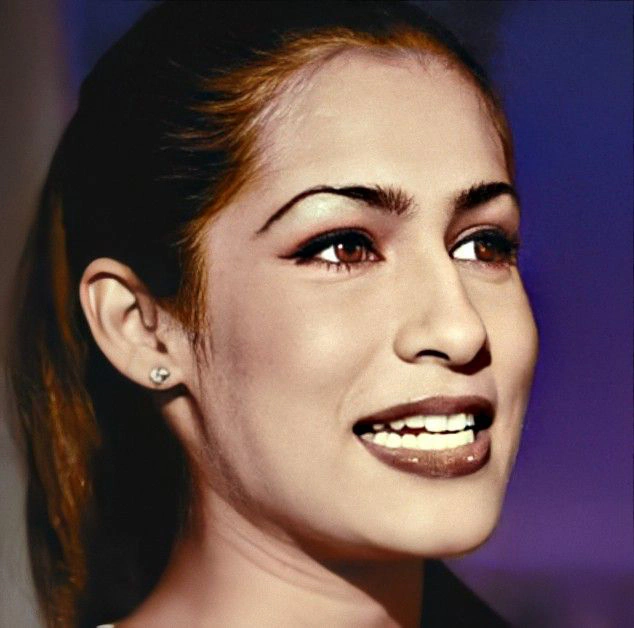
| 13 Quotes | |
| Occup. | Model |
| From | India |
| Born | March 28, 1978 Bangalore, Karnataka, India |
| Died | July 29, 2004 Mumbai, Maharashtra, India |
| Aged | 26 years |
| Cite | |
Citation Formats
APA Style (7th ed.)
Nafisa joseph biography, facts and quotes. (2026, February 11). FixQuotes. https://fixquotes.com/authors/nafisa-joseph/
Chicago Style
"Nafisa Joseph biography, facts and quotes." FixQuotes. February 11, 2026. https://fixquotes.com/authors/nafisa-joseph/.
MLA Style (9th ed.)
"Nafisa Joseph biography, facts and quotes." FixQuotes, 11 Feb. 2026, https://fixquotes.com/authors/nafisa-joseph/. Accessed 6 Mar. 2026.
Early Life and Background
Nafisa Joseph was born on March 28, 1978, in India, coming of age in the newly liberalizing 1990s when fashion, music television, and advertising began to reshape urban aspirations. She carried a striking screen presence - poised, athletic, and quick with wit - that made her feel older than her years, yet friends and colleagues often described an inner restlessness beneath the polish: a young woman learning, in real time, how to be both seen and safe in a public-facing career.Her rise was inseparable from the era's changing idea of celebrity. Modeling had moved from print to event culture - ramps, launches, award shows - and a new class of media personalities blurred lines between model, host, and actor. Joseph fit that hybrid perfectly: glamorous enough for couture, informal enough for youth TV, and disciplined enough to handle the pace. Privately, she appears to have guarded her emotions, a trait that protected her in a competitive industry but also fed a sense of isolation when personal life collided with public attention.
Education and Formative Influences
Details of her formal schooling are not as widely documented as her public work, but her formative education was clearly the industry itself: the etiquette of backstages, the stamina of long shoots, the precision of live television, and the moral vocabulary of late-20th-century Indian self-improvement culture. Joseph repeatedly signaled an attraction to steadiness and ethical focus, drawing inspiration from figures and texts associated with restraint and clarity - a revealing choice for someone whose livelihood depended on constant visibility.Career, Major Works, and Turning Points
Joseph first made her name as a fashion model and soon became a national face of the 1990s style boom, with runway work, magazine appearances, and brand campaigns that fed her recognizability. A major turning point came when she crossed into music television and became an MTV India VJ - the kind of job that demanded both spontaneity and control, turning her into a companionable on-screen personality for a generation. From there she moved toward acting, part of the standard trajectory for models in the period, even as she expressed ambivalence about leaving the identity she had built. Her life ended abruptly on July 29, 2004, when she died by suicide at age 26, a death widely reported in the Indian press and closely tied, in public discussion, to personal and relationship pressures that outpaced the coping mechanisms she had used while her world was still mostly professional.Philosophy, Style, and Themes
Joseph projected a work ethic that treated glamour as craft. She liked the controlled theater of the ramp and the camera - not as vanity, but as a place where preparation could temporarily overpower chaos. That mentality runs through her own language: “Most important was to remain focused and always have presence of mind”. The phrase reads less like a generic pep talk than a self-instruction, a way to keep anxiety from leaking into performance. In an industry built on judgment, presence of mind is both armor and compass.Yet the same voice hints at the cost of being composed. She acknowledged social reticence and the effort of becoming more open: “People feel I don't mix much, but I'm working at it”. The admission is small, but psychologically sharp - a recognition that charisma on camera does not guarantee ease off it. She also described a backstage ritual that reveals how she tried to metabolize fear into focus: “I was a little nervous backstage. But I had this book, Gandhi. I just read his quotes, closed my eyes and focused my thoughts. Presently, this book is my prized possession”. Gandhi, for her, functioned as portable stillness - a private counterweight to the loudness of celebrity. Taken together, these statements map an inner life organized around discipline, self-management, and a hunger for calm that public life rarely supplies.
Legacy and Influence
Nafisa Joseph endures as a symbol of India's late-1990s pop-cultural acceleration: the model-to-VJ pipeline, the new language of youth TV, and the pressures that came with fame before mental health was openly discussed in mainstream media. Her death remains a sobering reference point in conversations about vulnerability behind curated images, and her best legacy may be the clarity with which her words expose the double bind of visibility - the need to perform confidence while privately constructing small rituals of steadiness just to get through the day.Our collection contains 13 quotes written by Nafisa, under the main topics: Art - Book - Success - Peace - Self-Discipline.
Source / external links