
Nagarjuna Biography Quotes 6 Report mistakes
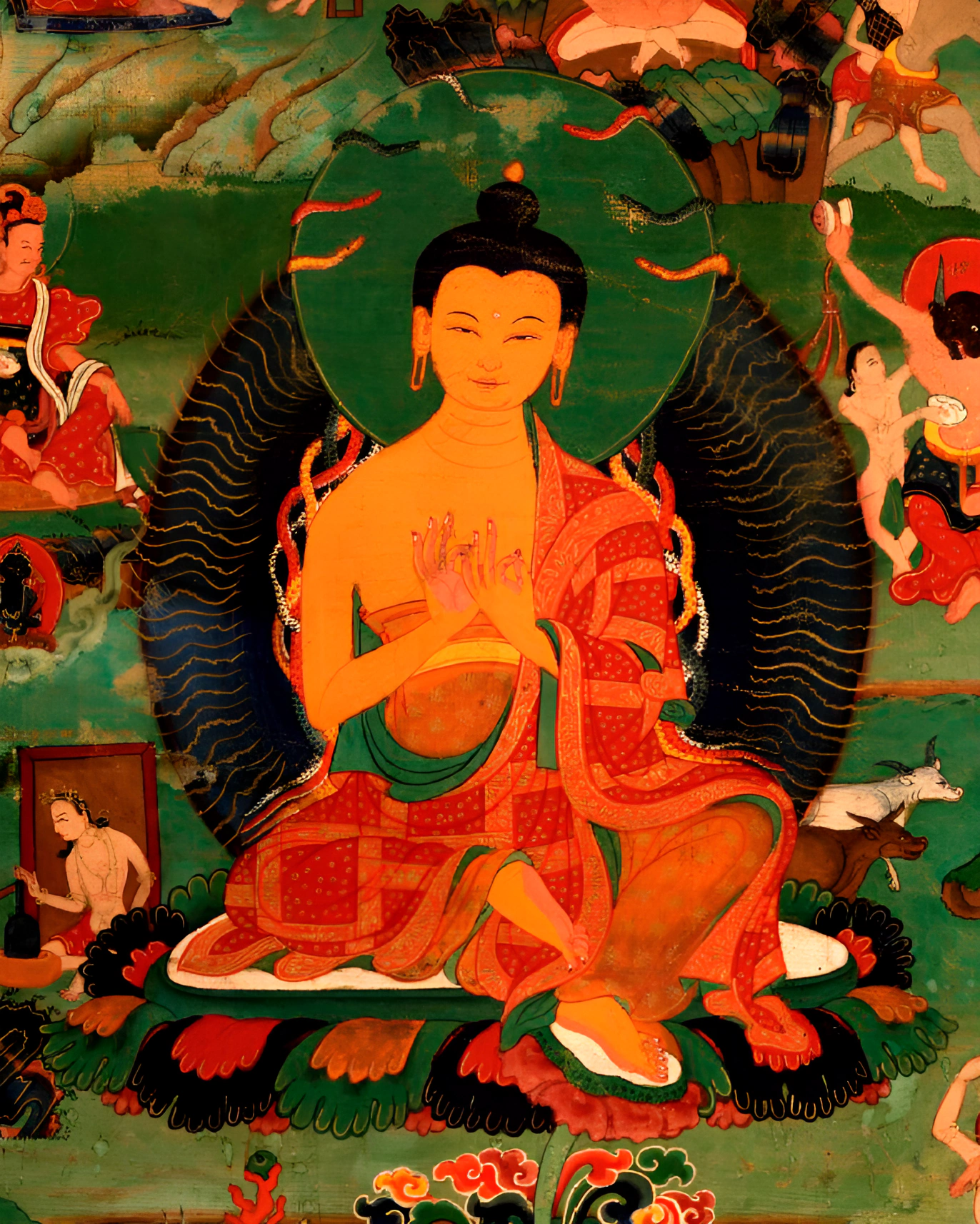
| 6 Quotes | |
| Known as | Acharya Nagarjuna |
| Occup. | Philosopher |
| From | India |
| Born | South India |
| Died | South India |
| Cause | Natural Causes |
| Cite | |
Citation Formats
APA Style (7th ed.)
Nagarjuna biography, facts and quotes. (2026, February 11). FixQuotes. https://fixquotes.com/authors/nagarjuna/
Chicago Style
"Nagarjuna biography, facts and quotes." FixQuotes. February 11, 2026. https://fixquotes.com/authors/nagarjuna/.
MLA Style (9th ed.)
"Nagarjuna biography, facts and quotes." FixQuotes, 11 Feb. 2026, https://fixquotes.com/authors/nagarjuna/. Accessed 7 Mar. 2026.
Early Life and Background
Nagarjuna stands at the hinge-point where Indian Buddhist thought moved from the early scholastic Abhidharma into the self-critical daring of Mahayana. His life is difficult to date with precision, but most historians place him in the late 2nd to early 3rd century CE, under the long shadow of the Satavahana Deccan and the cosmopolitan trade routes that connected the Krishna-Godavari region to the western seaports and the north. In such a world, monasteries were not only religious centers but also libraries, debating halls, and banking institutions, and philosophical argument could travel almost as quickly as spices and textiles.Biographical tradition, elaborated in later Indian, Tibetan, and Chinese sources, paints him as a Brahmin-born prodigy who turned to Buddhism, became a master of debate, and revitalized the bodhisattva ideal at a time when sectarian boundaries were hardening. These traditions also place him in close relationship with royal power and monastic institutions - a plausible setting for a thinker whose writings presuppose audiences trained in logic, grammar, and the technical vocabularies of multiple Buddhist schools. The legends are not neutral: they frame him as a healer of doctrinal pride, a figure who could meet scholasticism on its own turf and still point beyond it.
Education and Formative Influences
Nagarjuna was formed in a culture where philosophy meant public reasoning: formal debate, careful definition, and relentless testing of premises. He knew the Abhidharma project of enumerating reality into dharmas, and he engaged non-Buddhist interlocutors shaped by Brahmanical metaphysics and emerging logical traditions. The Mahayana sutras, especially the Prajnaparamita corpus, provided his deepest provocation - not as poetry alone, but as a demand to reinterpret doctrine so that compassion and insight were not separate accomplishments but the same awakening seen from different angles.Career, Major Works, and Turning Points
His central work is the Mulamadhyamakakarika (Root Verses of the Middle Way), a compact series of arguments that dismantles any claim that things exist inherently, whether as substances, moments, causes, or persons, while preserving the practical validity of ordinary experience and Buddhist path language. Alongside it stand works attributed to him that shaped Mahayana ethics and statecraft, including the Ratnavali (Precious Garland) and a body of epistles and treatises whose authorship varies by tradition but whose influence is unmistakable. A key turning point was his decision to meet the age's hunger for ontological certainty with a method of analysis that refuses to grant any concept the dignity of a final ground - turning philosophy into a discipline of unlearning without collapsing into nihilism.Philosophy, Style, and Themes
Nagarjuna's philosophy, later called Madhyamaka, is best understood as therapy for the mind's compulsion to freeze experience into self-existing entities. He argues that whatever arises does so dependently - on causes, parts, concepts, and relations - and therefore cannot possess an independent essence. The psychological target is not mere error but the craving for metaphysical security that masquerades as wisdom. “Things derive their being and nature by mutual dependence and are nothing in themselves”. In his hands, emptiness (sunyata) is not a cosmic substance but the name for this lack of intrinsic nature, a view meant to loosen grasping while protecting the everyday world of responsibility, suffering, and relief.His style is pared to the bone: short verses, repeated dilemmas, and the famous method of refuting all four exhaustive alternatives (catuskoti) to show that any final formulation overreaches. Yet the analytic severity serves an ethical end. To be empty is not to be meaningless; it is to be workable, vulnerable, and interconnected. Desire and aversion are treated as cognitive habits with bodily consequences, and liberation is pictured as a deeper kind of pleasure than any thrill of acquisition: “There is pleasure when a sore is scratched, But to be without sores is more pleasurable still. Just so, there are pleasures in worldly desires, But to be without desires is more pleasurable still”. Even his reflections on loss and separation aim at emotional realism rather than consolation by doctrine: “The logs of wood which move down the river together Are driven apart by every wave. Such inevitable parting Should not be the cause of misery”. The inner life implied by these lines is disciplined, unsentimental, and compassionate - a mind trained to see how clinging turns contingency into torment.
Legacy and Influence
Nagarjuna became a foundational authority across Mahayana Asia: in India through commentarial lineages, and later in Tibet through the great expositors who argued over how to read his "emptiness" without turning it into either absolutism or voidism. His influence is visible wherever Buddhism learned to criticize its own concepts while preserving the path - from monastic debate curricula to meditative instructions that treat views as tools to be released. More broadly, he remains one of world philosophy's sharpest anatomists of reification: a thinker who showed that the question "what is ultimately real?" can be the very mechanism of suffering, and that clarity is sometimes achieved not by adding a final answer, but by removing the need for one.Our collection contains 6 quotes written by Nagarjuna, under the main topics: Wisdom - Learning - Letting Go - Anger - Self-Improvement.
Nagarjuna Famous Works
- 200 Ratnavali (Text)
- 200 Sixty Verses on Reasoning (Text)
- 200 Vigrahavyavartani (Text)
- 150 Mulamadhyamakakarika (Text)
Source / external links