
Nancy Pelosi Biography Quotes 28 Report mistakes
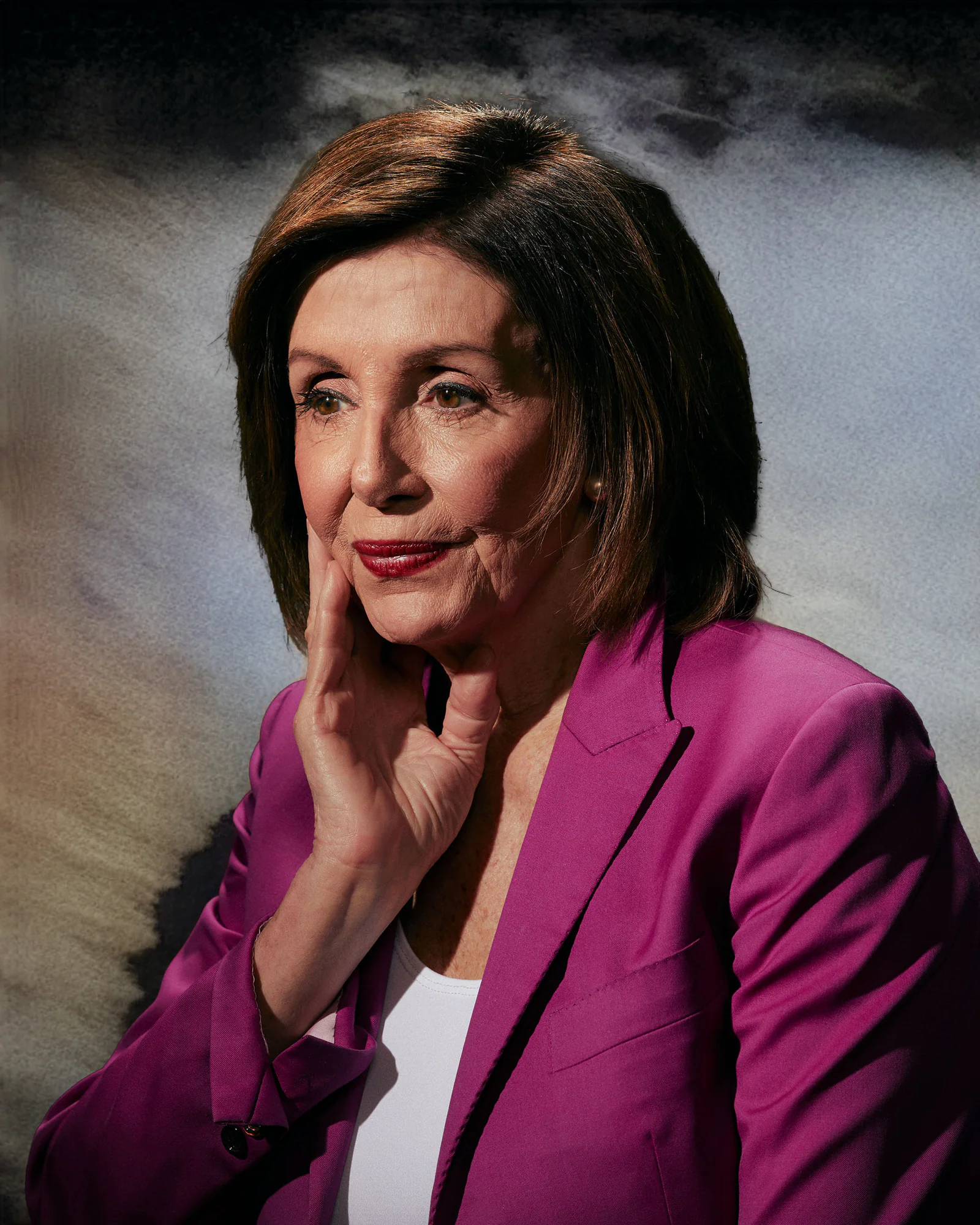
| 28 Quotes | |
| Born as | Nancy Patricia D'Alesandro |
| Occup. | Politician |
| From | USA |
| Spouse | Paul Pelosi (1963) |
| Born | March 26, 1940 Baltimore, Maryland, USA |
| Age | 86 years |
| Cite | |
Citation Formats
APA Style (7th ed.)
Nancy pelosi biography, facts and quotes. (2026, February 3). FixQuotes. https://fixquotes.com/authors/nancy-pelosi/
Chicago Style
"Nancy Pelosi biography, facts and quotes." FixQuotes. February 3, 2026. https://fixquotes.com/authors/nancy-pelosi/.
MLA Style (9th ed.)
"Nancy Pelosi biography, facts and quotes." FixQuotes, 3 Feb. 2026, https://fixquotes.com/authors/nancy-pelosi/. Accessed 26 Mar. 2026.
Early Life and Background
Nancy Patricia D'Alesandro was born on March 26, 1940, in Baltimore, Maryland, into a Catholic, Italian-American political family whose dinner-table vocabulary was precincts, patronage, and public works. Her father, Thomas D'Alesandro Jr., rose from New Deal-era ward politics to become a U.S. congressman and later mayor of Baltimore; her mother, Annunciata "Nancy" Lombardi D'Alesandro, ran the household with the same vote-counting seriousness that governed her husband's campaigns. The Great Depression's memory and World War II's mobilization still shaped Baltimore's civic culture, and Pelosi absorbed an early lesson that government could be both intimate and muscular - a force that paved streets, funded schools, and stitched neighborhoods into a city.That upbringing also gave her a lifelong feel for how power actually moves: through relationships, favors, and the trust built by showing up. In a family where politics was regarded less as ideology than as responsibility, she learned to read people, to listen for what they needed, and to keep disagreements inside the tent until the votes were secured. The Baltimore machine did not produce an ascetic idealist; it produced a disciplined organizer, comfortable with hard bargaining, coalition maintenance, and the moral language of service that Catholic urban politics often paired with practical dealmaking.
Education and Formative Influences
Pelosi attended the Institute of Notre Dame in Baltimore, then studied political science at Trinity College in Washington, D.C., graduating in 1962. The proximity to national government, coupled with the early-1960s ferment over civil rights and Cold War policy, widened her horizon beyond city politics. After marrying Paul Pelosi in 1963, she moved to San Francisco, where the city's Democratic clubs, labor networks, and donor class became her apprenticeship; raising five children in the 1960s and 1970s also sharpened her interest in bread-and-butter policy, especially health care and education, long before those issues became her signature legislative battlegrounds.Career, Major Works, and Turning Points
Pelosi rose through party organization as a fundraiser and strategist, becoming chair of the California Democratic Party (1981-1983) and later leading the Democratic Congressional Campaign Committee. Elected in a 1987 special election to represent San Francisco in the U.S. House, she built a reputation as a meticulous vote counter and message enforcer, advancing to House Democratic leader in 2002 and making history in 2007 as the first woman Speaker of the House. Her speakerships (2007-2011; 2019-2023) defined two eras: confrontation with the George W. Bush administration over Iraq and executive power, and later a polarized struggle with the Trump administration that included government shutdown brinkmanship, the passage of major COVID-19 relief, and two impeachments. Her major legislative triumph was shepherding the Affordable Care Act through the House in 2010, a victory that fused movement energy, procedural mastery, and unyielding caucus discipline, at significant political cost to members who cast the deciding votes.Philosophy, Style, and Themes
Pelosi's governing philosophy is a blend of old-school party stewardship and modern policy ambition: use power to deliver tangible benefits, then defend those gains with relentless organization. Her public rhetoric often returns to a civic catechism of duty and coalition. “Let's just do what is right for the American people. And those of us who are involved in politics and government know that our responsibility is to the American people, that we have a responsibility to find our common ground, to seek it and to find it”. The line sounds conciliatory, but it also reveals her psychology as a leader - she treats politics as an obligation to assemble majorities, not merely to express conviction. That instinct helps explain her tolerance for internal dissent up to the moment it threatens the count; then persuasion hardens into pressure.Her style is procedural, lawyerly, and results-driven, sometimes producing phrases that become symbols in opponents' hands. During the Affordable Care Act fight she argued for legislating through misinformation and panic: “But we have to pass the bill so you can find out what is in it, away from the fog of the controversy”. Read as strategy rather than gaffe, it exposes her comfort with institutions as truth machines - committees, scoring, implementation, and the slow clarification of real-world effects. It also shows her willingness to accept short-term reputational damage to secure long-term policy architecture. Beneath the tactical surface sits a consistent social-democratic impulse: "Think of an economy where people could be an artist or a photographer or a writer without worrying about keeping their day job in
Our collection contains 28 quotes written by Nancy, under the main topics: Justice - Nature - Leadership - Freedom - Honesty & Integrity.
Other people related to Nancy: Sam Farr (Politician), Patrick McHenry (Politician), Barbara Lee (Politician), Jim McDermott (Politician), Robert Matsui (Politician), Mike Simpson (Politician), Ralph Regula (Politician), Donald M. Payne (Politician), Steve King (Politician), Roy Blunt (Politician)
Source / external links