
Nancy Reagan Biography Quotes 16 Report mistakes
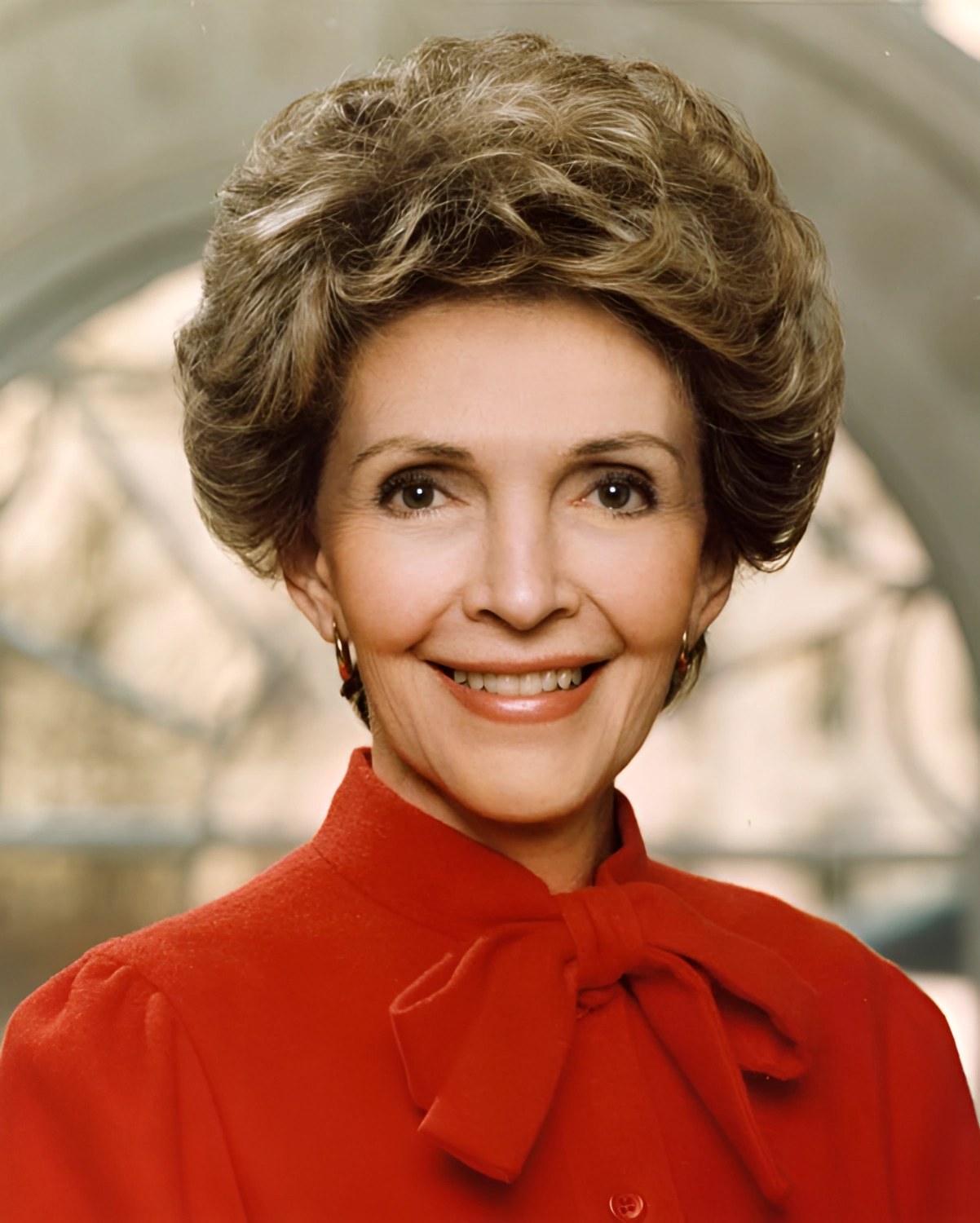
| 16 Quotes | |
| Occup. | First Lady |
| From | USA |
| Born | July 6, 1921 |
| Age | 104 years |
| Cite | |
Citation Formats
APA Style (7th ed.)
Nancy reagan biography, facts and quotes. (2026, February 17). FixQuotes. https://fixquotes.com/authors/nancy-reagan/
Chicago Style
"Nancy Reagan biography, facts and quotes." FixQuotes. February 17, 2026. https://fixquotes.com/authors/nancy-reagan/.
MLA Style (9th ed.)
"Nancy Reagan biography, facts and quotes." FixQuotes, 17 Feb. 2026, https://fixquotes.com/authors/nancy-reagan/. Accessed 26 Mar. 2026.
Early Life and Background
Nancy Davis Reagan was born Anne Frances Robbins on July 6, 1921, in New York City, a child of performance and instability. Her mother, Edith Luckett, was an actress who toured for work; her father, Kenneth Robbins, was a salesman whose drinking and distance shadowed the household. In practice, Nancy grew up with a feeling of being temporarily placed in the world - first in the care of relatives in Maryland, then shifting as her mother's career required. The future First Lady learned early that composure could be a kind of shelter, and that private anxiety was best managed behind a well-kept public face.In 1929 her mother married Loyal Davis, a prominent Chicago neurosurgeon, who adopted Nancy and anchored the family on the North Shore. The move to Illinois coincided with the Great Depression, an era that sharpened American beliefs about respectability, work, and moral order. Nancy absorbed those codes at home and in society, cultivating a meticulous poise that would later be read by admirers as elegance and by critics as calculation. Beneath it was a consistent need for security - personal, marital, and national - and a protective instinct that became central to her identity.
Education and Formative Influences
She attended Girls Latin School of Chicago and then Smith College, graduating in 1943 with a degree in drama. Smith gave her technique and discipline, but her formative influence remained the theater itself - a world of cues, timing, and controlled emotion. That training taught her how to project warmth while monitoring risk, a skill set that translated cleanly into politics. The war years also reinforced a civic seriousness in American culture, and Nancy emerged with a belief that public life demanded both presentation and moral clarity.Career, Major Works, and Turning Points
After working briefly as a sales clerk, she went to Hollywood, signed with MGM, and appeared in films such as "Night into Morning" (1951) and "Donovan's Brain" (1953), often playing the composed, romantic lead. A pivotal turn came during the anti-communist ferment of the early 1950s: facing confusion with another Nancy Davis in union records, she sought help from Screen Actors Guild president Ronald Reagan. Their courtship advanced quickly, and they married in 1952, forming a partnership that fused ambition with mutual dependence. As Reagan moved from actor to GE spokesman to politician, Nancy became the vigilant manager of his calendar, gatekeeper of confidants, and emotional barometer - a role that deepened when he became governor of California (1967-1975) and then president (1981-1989), surviving the trauma of the 1981 assassination attempt and its aftermath.Philosophy, Style, and Themes
Nancy Reagan's inner life revolved around devotion and control: devotion to a husband she considered her destiny, and control as an antidote to the unpredictability of childhood and the volatility of public power. She framed her marriage as the beginning of her authentic self - “My life really began when I married my husband”. Read psychologically, the sentence is both romantic and revealing: it suggests a self defined through attachment, and it helps explain her fierce protectiveness toward Reagan, from staff infighting to schedule discipline to her later reliance on astrology after the assassination attempt. Her most consistent theme was preventing isolation - in family, in leadership, and in the presidency itself.Her style as First Lady mixed old-Hollywood stagecraft with an unembarrassed belief in moral messaging. The "Just Say No" campaign against drug abuse made her a national symbol of 1980s parental anxiety, and she insisted on its nonpartisan premise - “I don't intend for this to take on a political tone. I'm just here for the drugs”. Yet she also understood that culture was politics by other means, and she spoke bluntly about obscenity, sexuality, and public standards, arguing for restraint and mystery over commodification: “Pornography is pornography, what is there to see? Movies are attempting to destroy something that's supposed to be the most beautiful thing a man and a woman can have by making it cheap and common. It's what you don't see that's attractive”. Across these positions ran a belief that society could be guided by example, that symbolism mattered, and that discipline - personal and cultural - was a form of care.
Legacy and Influence
Nancy Reagan left an enduring model of the modern First Lady as strategist, protector, and cultural actor, not merely a ceremonial spouse. Her White House years were marked by controversy - from the cost of the executive mansion redecorations to her influence over staffing and access - but also by a widely recognized steadiness in moments of danger and decline. In the 1990s and 2000s, as Ronald Reagan's Alzheimer's disease progressed, she became his principal guardian and the public face of a family's private grief, later advocating for embryonic stem cell research in a notable departure from some conservative orthodoxy. She died in 2016, remembered as both a polarizing political figure and a vivid case study in how intimate loyalty can shape national history, making the First Lady's role a consequential arena of American power.Our collection contains 16 quotes written by Nancy, under the main topics: Witty One-Liners - Ethics & Morality - Justice - Sarcastic - Leadership.
Other people related to Nancy: Craig Shirley (Author), Larry Speakes (Public Servant), Kitty Kelley (Journalist), James Baker (Politician), James Brolin (Actor)
Source / external links