
Napoleon Bonaparte Biography Quotes 83 Report mistakes
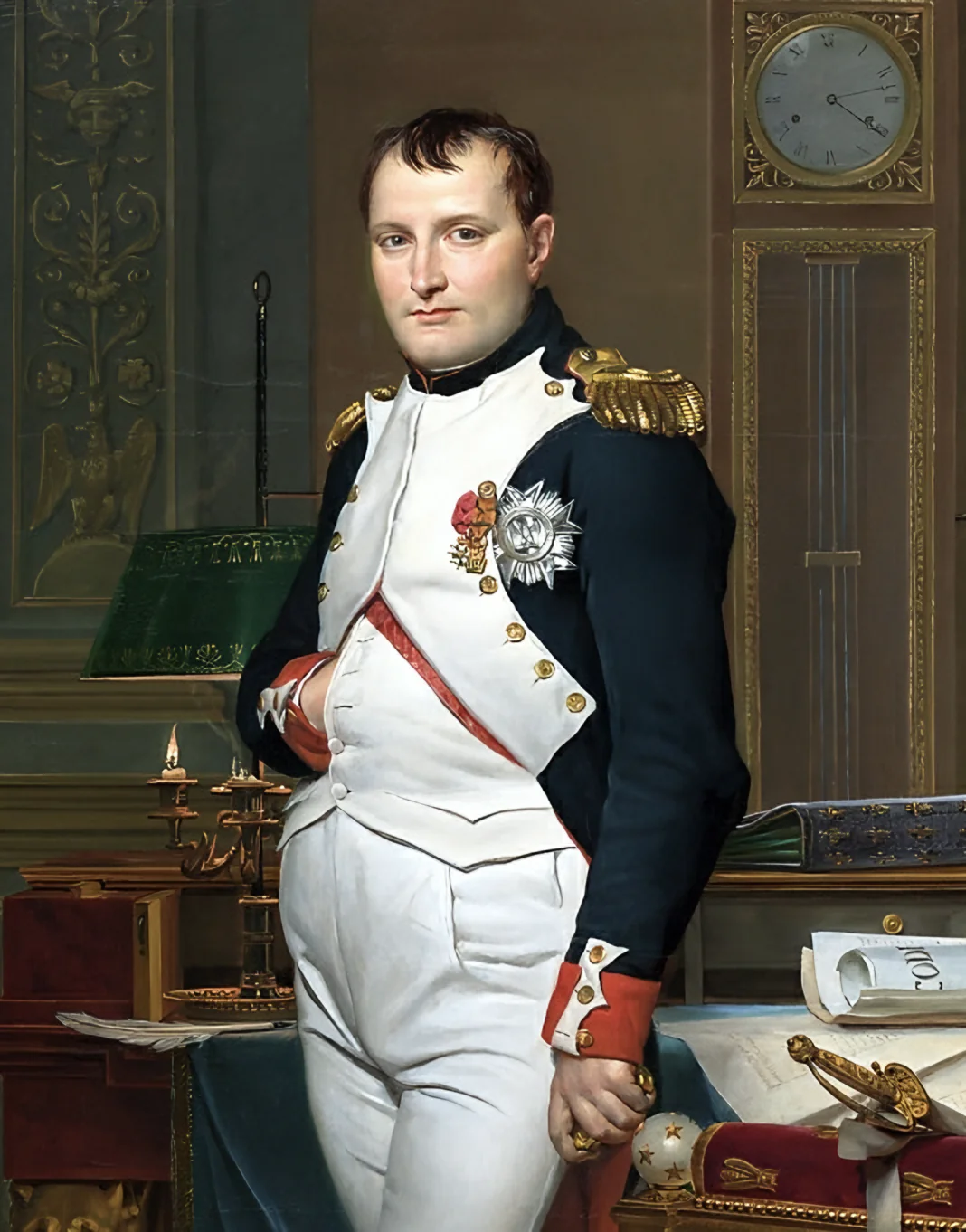
| 83 Quotes | |
| Known as | Napoleon I |
| Native name | Napoléon Bonaparte |
| Occup. | Leader |
| From | France |
| Spouse | Josephine de Beauharnais |
| Born | August 15, 1769 Ajaccio, Corsica, France |
| Died | May 5, 1821 St. Helena, United Kingdom |
| Cause | Stomach cancer |
| Aged | 51 years |
| Cite | |
Citation Formats
APA Style (7th ed.)
Napoleon bonaparte biography, facts and quotes. (2026, February 10). FixQuotes. https://fixquotes.com/authors/napoleon-bonaparte/
Chicago Style
"Napoleon Bonaparte biography, facts and quotes." FixQuotes. February 10, 2026. https://fixquotes.com/authors/napoleon-bonaparte/.
MLA Style (9th ed.)
"Napoleon Bonaparte biography, facts and quotes." FixQuotes, 10 Feb. 2026, https://fixquotes.com/authors/napoleon-bonaparte/. Accessed 24 Mar. 2026.
Early Life and Background
Napoleon Bonaparte was born on 1769-08-15 in Ajaccio, Corsica, into a minor noble family only recently absorbed into the French state after France took the island from Genoa. His father, Carlo Buonaparte, maneuvered within the new regime; his mother, Letizia Ramolino, was austere, practical, and formative in Napoleon's lifelong discipline and thrift. Corsica in his childhood was a place of clan loyalties and anti-imperial memory, and the young Napoleon grew up with a sharp sense of status insecurity - French by passport, Corsican by temperament, and always alert to humiliation.That tension became fuel. He spoke French with an accent, read voraciously, and learned early to treat identity as an instrument. The Revolution later gave him what Corsica could not: a stage large enough for his ambition, and institutions brittle enough for a decisive officer to climb. The emotional pattern that repeats throughout his life begins here - a need to master circumstance through will, calculation, and speed, paired with a private fear of being erased by mediocrity or exile.
Education and Formative Influences
With a scholarship, he entered French military schools - first at Brienne-le-Chateau (1779) and then the Ecole Militaire in Paris, graduating in 1785 as a second lieutenant of artillery. Artillery training suited him: it was mathematical, technical, and merit-sensitive, rewarding those who could think in trajectories and logistics rather than pedigree. He absorbed Enlightenment reading and the era's cult of Roman exemplars, but his deepest education was institutional: he learned how paper, budgets, supply depots, and promotion lists actually moved power, and he learned to write quickly, argue crisply, and impose a plan.Career, Major Works, and Turning Points
The Revolution transformed him from minor officer to national figure: his performance at the siege of Toulon (1793) made his name; his suppression of the royalist uprising of 13 Vendemiaire (1795) brought political patrons; and his Italian Campaign (1796-1797) displayed a new kind of operational warfare - fast concentration, living off the land, and relentless pursuit - while also producing proclamations that crafted him as both liberator and inevitable force. In Egypt (1798-1799) he chased strategic glory and propaganda amid tactical brilliance and strategic overreach; returning to France, he seized power in the coup of 18 Brumaire (1799), becoming First Consul and then Emperor (1804). He reshaped France through the Napoleonic Code, centralized administration, and financial stabilization, while his wars remade Europe from Austerlitz (1805) to the Peninsular quagmire (1808 onward) and the catastrophic invasion of Russia (1812). Defeat followed: abdication (1814), exile to Elba, the Hundred Days and Waterloo (1815), and final exile on Saint Helena, where he died on 1821-05-05 after years of confinement, illness, and dictation of a self-justifying legend.Philosophy, Style, and Themes
Napoleon's inner life mixed romantic self-myth with a cold engineer's mind. He believed history belonged to those who acted faster than rivals could interpret, and he treated perception as a battlefield. His maxim “Four hostile newspapers are more to be feared than a thousand bayonets”. was not theatrical - it was a diagnosis. He built bulletins, portraits, ceremonies, and a court to convert victories into legitimacy, and he punished dissent because he understood that narrative could dissolve an empire as surely as a lost campaign. The same instinct made him a compulsive organizer: dossiers, maps, marginal notes at 2 a.m., and a constant demand for quantifiable facts.His strategic style fused audacity with calculated risk, a preference for the decisive blow over cautious equilibrium. “Never interrupt your enemy when he is making a mistake”. captures his patience at the tactical moment - he could wait precisely so that an opponent would commit fully to the wrong move, then strike with concentrated force. Yet he also cultivated fatalism as a psychological tool, to keep himself and his marshals moving when probability turned grim: “The torment of precautions often exceeds the dangers to be avoided. It is sometimes better to abandon one's self to destiny”. That fatalism masked a deeper anxiety: that hesitation would return him to insignificance. Across his life, love, loyalty, and law appear less as ends than as levers; even his civil reforms, durable as they proved, were bound to a personal vision of order imposed from above.
Legacy and Influence
Napoleon's legacy is a paradox of liberation and domination. He accelerated the end of feudal structures, standardized administration, and embedded legal principles that outlasted his dynasty, while his wars caused immense destruction and provoked a century of nationalist reaction. He professionalized modern statecraft - the alignment of bureaucracy, conscription, finance, and public messaging - and he left a template for charismatic authority that later leaders imitated, feared, or studied. In exile he became his own historian, turning defeat into an epic of destiny, so that Europe inherited not only institutions and borders altered by his campaigns, but also a model of how a life can be engineered into legend.Our collection contains 83 quotes written by Napoleon, under the main topics: Witty One-Liners - Motivational - Ethics & Morality - Truth - Wisdom.
Other people related to Napoleon: Anne Louise Germaine de Stael (Author), Marie Louise (Royalty), Eugene Sue (Novelist), Joel Barlow (Poet)
Frequently Asked Questions
- What did Napoleon do: He established the Napoleonic Code, led numerous military campaigns, expanded the French Empire, and influenced European politics.
- How old was Napoleon when he became Emperor: 35 years old
- How old was Napoleon when he died: 51 years old
- Napoleon Bonaparte story: Napoleon rose to prominence during the French Revolution, became Emperor of the French, and led France in a series of military campaigns across Europe before his eventual defeat.
- Napoleon Bonaparte family tree: Napoleon was the second son of Carlo Buonaparte and Letizia Ramolino. He married twice; first to Joséphine de Beauharnais and then to Marie Louise of Austria, with whom he had one legitimate son, Napoleon II.
- Napoleon Bonaparte siblings: He had seven siblings: Joseph, Lucien, Elisa, Louis, Pauline, Caroline, and Jérôme.
- Why was Napoleon exiled: He was exiled due to his defeat and abdication, first to Elba and then to Saint Helena after the Hundred Days campaign.
- Napoleon Bonaparte height: Around 5 feet 6 inches (1.68 meters)
- How old was Napoleon Bonaparte? He became 51 years old
Napoleon Bonaparte Famous Works
- 1910 The Corsican: A Diary of Napoleon's Life in His Own Words (Book)
- 1831 Napoleon's Military Maxims (Book)
Source / external links