
Napoleon Hill Biography Quotes 59 Report mistakes
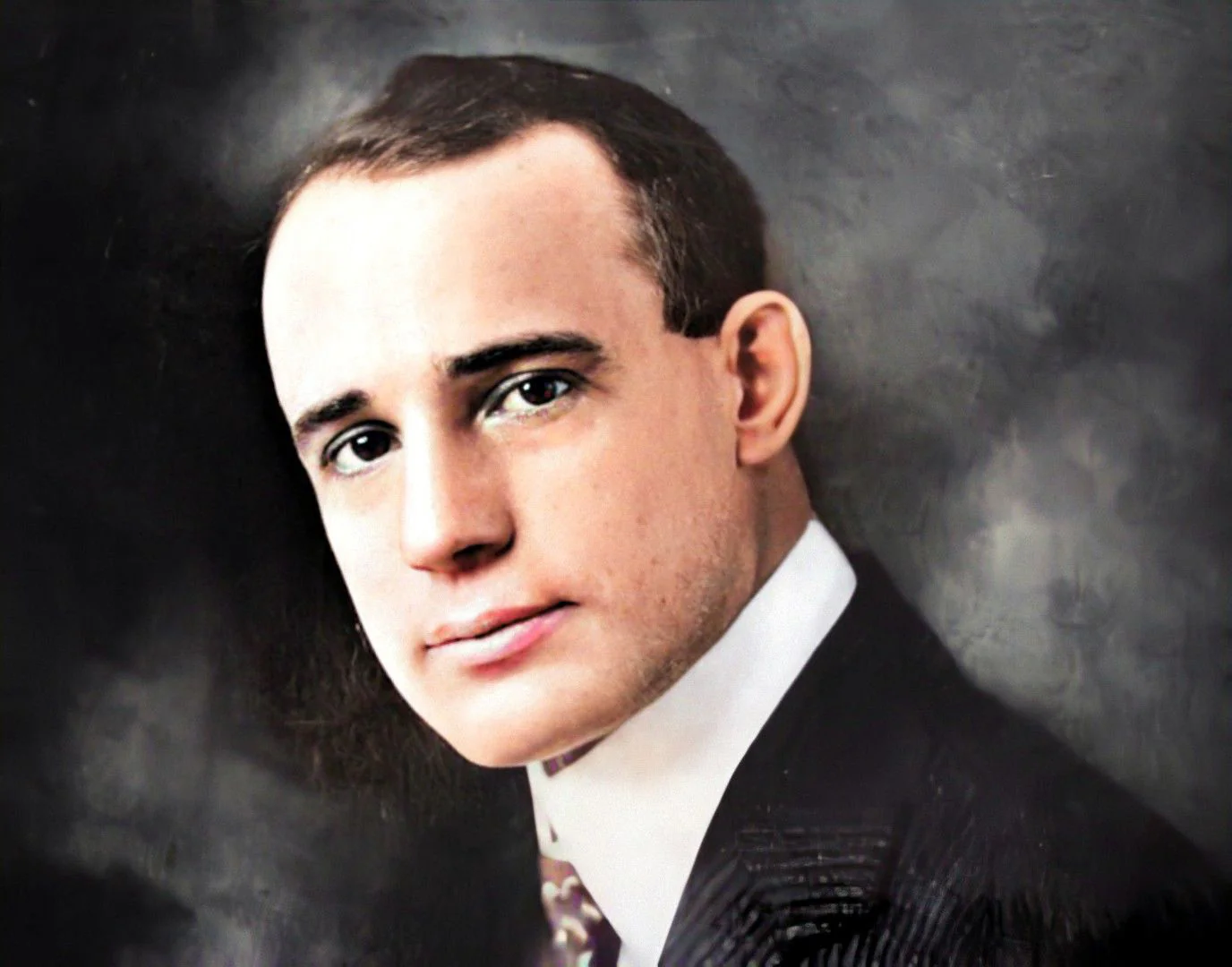
| 59 Quotes | |
| Born as | Oliver Napoleon Hill |
| Occup. | Writer |
| From | USA |
| Born | October 26, 1883 Pound, Virginia, USA |
| Died | November 8, 1970 South Carolina, USA |
| Aged | 87 years |
| Cite | |
Citation Formats
APA Style (7th ed.)
Napoleon hill biography, facts and quotes. (2026, February 2). FixQuotes. https://fixquotes.com/authors/napoleon-hill/
Chicago Style
"Napoleon Hill biography, facts and quotes." FixQuotes. February 2, 2026. https://fixquotes.com/authors/napoleon-hill/.
MLA Style (9th ed.)
"Napoleon Hill biography, facts and quotes." FixQuotes, 2 Feb. 2026, https://fixquotes.com/authors/napoleon-hill/. Accessed 25 Mar. 2026.
Early Life and Background
Oliver Napoleon Hill was born on October 26, 1883, in a small cabin near Pound in Wise County, Virginia, an Appalachian region marked by hard farm labor, thin cash economies, and the aftershocks of the Civil War. His mother died when he was still a boy, and the mix of grief, scarcity, and early responsibility shaped a temperament that would later translate private insecurity into public formulas for self-mastery. In the folklore of his life, he carried a restless streak in adolescence, but the deeper pattern is recognizable: a young man trying to convert the unpredictability of rural life into something governable - habits, rules, and an inner narrative of upward motion.When his father remarried, Hill gained a stepmother often credited with steadying him and encouraging literacy. That domestic shift mattered because it reframed ambition as something more than escape; it could be structured. The mountains also trained his eye for the language of aspiration and persuasion: preachers, politicians, and traveling salesmen offered models of how words could lift people out of resignation. Hill would spend his career refining that same promise - that inner discipline, directed desire, and strategic association could turn constraint into leverage.
Education and Formative Influences
Hill studied at the then Southern Baptist educational network in Virginia (commonly linked to Georgetown College in Kentucky in later retellings) and took early jobs in journalism, learning how to craft narrative authority and how to interview for effect. In 1908, he was introduced to the steel magnate Andrew Carnegie, who challenged him to study the common principles of success among leading figures of American industry - a challenge Hill later presented as the founding commission of his lifes work. Whether embellished or not, the idea fit its age: Progressive Era faith in systems, measurement, and expert knowledge, paired with a booming national appetite for self-improvement amid rapid industrial change.Career, Major Works, and Turning Points
Hill spent the 1910s-1930s as a lecturer, editor, and promoter, moving through the worlds of mail-order business education and motivational speaking, and he built a public persona as a translator of elite achievement into repeatable method. The Great Depression became his major proving ground: in 1937 he published Think and Grow Rich, framed as the distilled results of decades of interviews and observation and quickly positioned as both a manual and a morale instrument for a country living through mass unemployment. Later works such as The Law of Success (often issued as a multi-volume course) and posthumous compilations like You Can Work Your Own Miracles extended the brand. His life also contained controversy - shifting business ventures, disputed claims, and the blurred line between research and marketing - yet those very ambiguities reveal how tightly he belonged to an era when personal advancement was sold as both education and salvation.Philosophy, Style, and Themes
Hills core claim was psychological: success begins as an interior organization before it becomes an exterior event. He treated desire as a disciplined force, not a wish, insisting that imagined outcomes must be translated into plans, routines, and alliances. “First comes thought; then organization of that thought, into ideas and plans; then transformation of those plans into reality. The beginning, as you will observe, is in your imagination”. The sentence is less mystical than it sounds - it is an argument about attention and rehearsal. Hill wrote for readers who felt acted upon by economic cycles, bosses, and bad luck; his promise was that the mind could be trained to stop narrating defeat and start rehearsing initiative.His style blended salesmanship with moral instruction, often personifying qualities like persistence and faith as if they were tools on a workbench. The psychological subtext is a man trying to build certainty in a century that repeatedly shattered it - war, boom-and-bust, and the humiliation of poverty. Thus his aphorisms function as self-administered commands: “Opportunity often comes disguised in the form of misfortune, or temporary defeat”. Read as biography, the line suggests a defensive optimism, a way to metabolize setbacks by giving them future meaning. He also hardened motivation into identity: “Persistence is to the character of man as carbon is to steel”. Hill was not merely advocating grit; he was offering readers a persona to inhabit when circumstances made them feel small, turning endurance into a form of self-respect.
Legacy and Influence
Hill died on November 8, 1970, in the United States, after decades as a widely circulated voice in the self-help marketplace, and his influence only expanded as later motivational movements adopted his vocabulary of goals, mindset, and masterminds. Think and Grow Rich became a template for modern personal development literature, business seminars, and entrepreneurial culture, shaping how Americans narrate ambition - as a blend of mental discipline, social network, and moralized effort. Even where critics challenge the factual scaffolding of his origin story, Hills lasting power lies in his psychological offer: to treat inner life as a workshop where confidence can be constructed, setbacks reframed, and aspiration given a practical script.Our collection contains 59 quotes written by Napoleon, under the main topics: Motivational - Wisdom - Never Give Up - Learning - Resilience.
Other people related to Napoleon: Ben Sweetland (Author), W. Clement Stone (Businessman), Gary Ryan Blair (Writer), David Joseph Schwartz (Businessman), Claude M. Bristol (Writer)
Napoleon Hill Famous Works
- 2011 Outwitting the Devil (Book)
- 1960 Success Through a Positive Mental Attitude (Book)
- 1945 The Master-Key to Riches (Book)
- 1937 Think and Grow Rich (Book)
- 1928 The Law of Success (Book)
Source / external links