
Nat Friedman Biography Quotes 10 Report mistakes
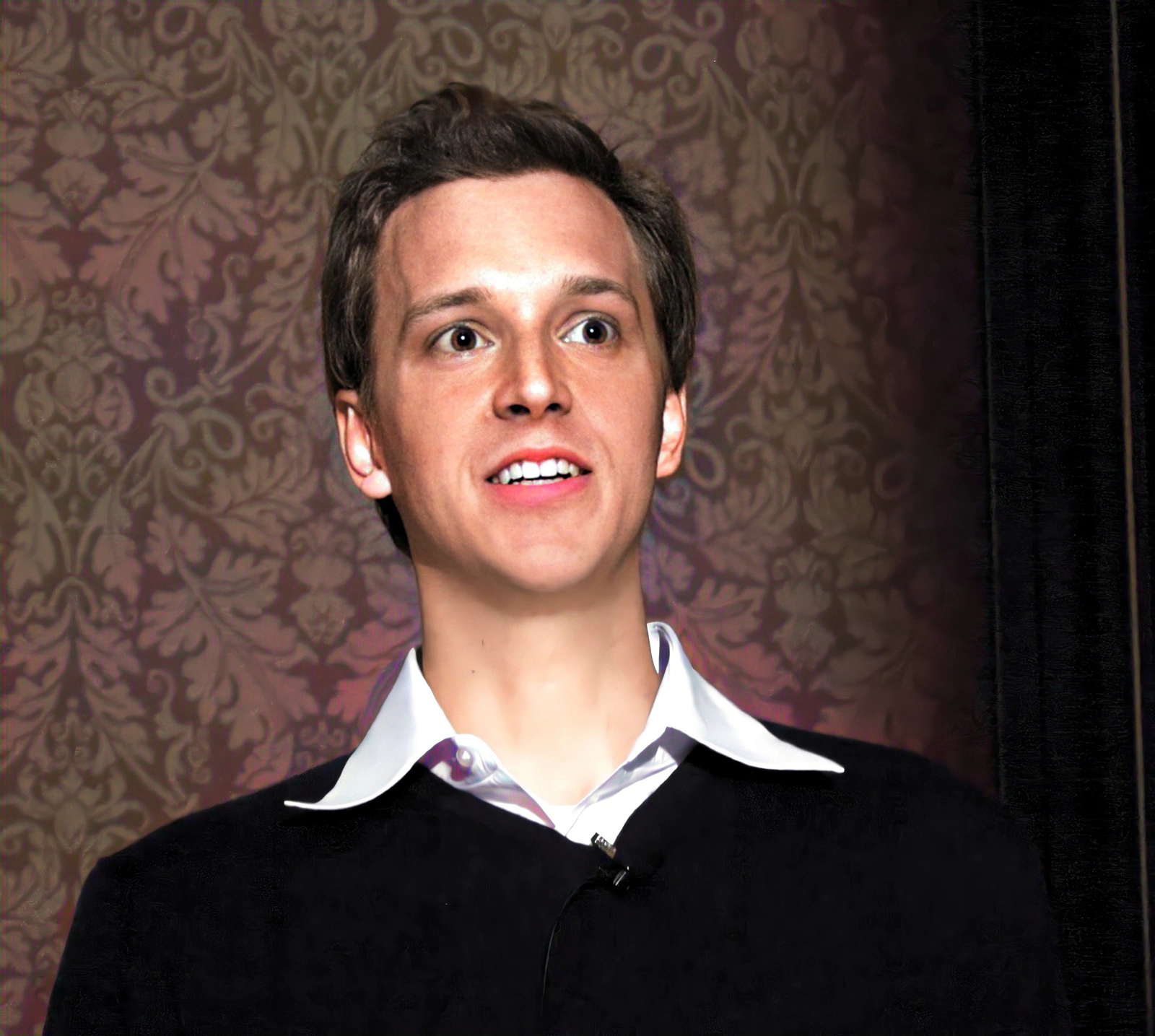
| 10 Quotes | |
| Born as | Nathaniel Dourif Friedman |
| Occup. | Businessman |
| From | USA |
| Born | August 6, 1977 |
| Age | 48 years |
| Cite | |
Citation Formats
APA Style (7th ed.)
Nat friedman biography, facts and quotes. (2026, February 11). FixQuotes. https://fixquotes.com/authors/nat-friedman/
Chicago Style
"Nat Friedman biography, facts and quotes." FixQuotes. February 11, 2026. https://fixquotes.com/authors/nat-friedman/.
MLA Style (9th ed.)
"Nat Friedman biography, facts and quotes." FixQuotes, 11 Feb. 2026, https://fixquotes.com/authors/nat-friedman/. Accessed 28 Mar. 2026.
Early Life and Background
Nathaniel Dourif Friedman was born on August 6, 1977, in the United States, into the first generation that would grow up with personal computing as an ordinary household fact rather than a laboratory novelty. His earliest professional identity formed less around a single industry than around an instinct: treat software not as a finished artifact but as a living system shaped by communities, incentives, and tools. That instinct later made him unusually fluent at translating between engineers and executives, and between the volunteer energy of open source and the sober constraints of enterprise IT.Friedman came of age as the dot-com era crested and then broke. For many of his contemporaries, the crash was an argument for caution; for Friedman it was an argument for durability. He gravitated toward problems with long time horizons: operating systems, developer tooling, and the economics of platforms. The throughline in his biography is not a sequence of pivots but a consistent fascination with how software spreads - and what makes it stick.
Education and Formative Influences
Friedman attended the Massachusetts Institute of Technology, an environment that rewarded first-principles thinking and exposed him to the emerging logic of open source as both engineering method and distribution strategy. MIT in the late 1990s also meant proximity to the culture of Linux, GNU tools, and Internet-scale collaboration - a culture that trained ambitious builders to see the boundary between "product" and "community" as permeable, and to treat infrastructure as a competitive advantage.Career, Major Works, and Turning Points
Early in his career, Friedman became known in the Linux ecosystem through work associated with Ximian, the open-source company founded by Miguel de Icaza and Nat's brother, Daniel Robbins, and later acquired by Novell; Friedman served in leadership roles there, pushing on practical adoption problems such as desktop usability, enterprise integration, and software management. That period shaped his reputation as a businessman with an engineer's sensibility: interested in the unglamorous details that determine whether technology actually lands inside organizations. Much later, he moved into higher-profile platform leadership, ultimately becoming CEO of GitHub (2019-2021) after Microsoft's acquisition, where his tenure emphasized developer experience, open-source stewardship, and scaling collaboration tools that had become essential infrastructure for modern software. After leaving GitHub, he remained a prominent investor and advisor in technology, continuing to focus on developer platforms and the long-run leverage of tooling.Philosophy, Style, and Themes
Friedman's worldview is built around a practical theory of momentum: that technology wins when it lowers friction for both users and administrators, and when its economics invite experimentation. He spoke plainly about the distribution engine of open systems - “A lot of that momentum comes from the fact that Linux is free”. The line is not ideology; it is a psychological tell. He tends to read markets as systems of incentives, and to treat cost, licensing, and ease of trial as product features as real as UI. That same incentive-mindedness shows up in his recurring emphasis on deployment and management - not because it is glamorous, but because it determines whether an innovation survives contact with the enterprise.A second thread is his bias toward tooling that respects the realities of professional work: debugging, integration, and the mess of heterogeneous environments. When he noted that “Big Linux deployments have reached the point where it's become a real problem for administrators that they don't have nice tools to manage their servers and desktops”. , he was naming the adult stage of a platform: the moment when adoption exposes operational debt. The psychology here is disciplined rather than romantic - a preference for finishing over merely inventing. That sensibility culminates in a product-builder's mantra: “This is what people need: an easy-to-deploy, easy-to-use tool”. Across roles - from early Linux commercialization to leading GitHub - his style has been to remove barriers so communities can scale: standardize the path, automate the boring parts, and let developers spend their attention on what only humans can do.
Legacy and Influence
Friedman's enduring influence is as a bridge figure in the maturation of open source from insurgent culture to default infrastructure. In the Linux era, he helped articulate why adoption hinges on management, integration, and usability as much as on kernel virtues; at GitHub, he stewarded one of the central institutions of modern software collaboration at a time when trust, governance, and sustainability became existential questions for the ecosystem. His biography is ultimately a case study in how software history is made: not only by writing code, but by shaping the conditions under which other people can write, share, maintain, and rely on it at global scale.Our collection contains 10 quotes written by Nat, under the main topics: Technology - Coding & Programming.
Source / external links