
Natan Sharansky Biography Quotes 32 Report mistakes
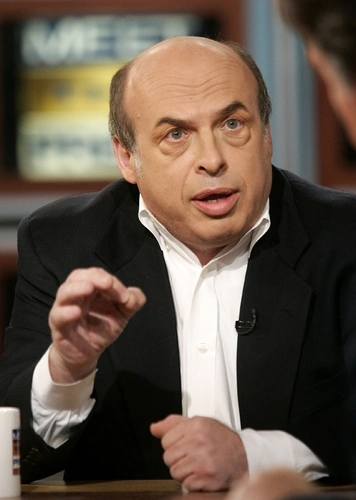
| 32 Quotes | |
| Occup. | Writer |
| From | Russia |
| Born | January 20, 1948 |
| Age | 78 years |
| Cite | |
Citation Formats
APA Style (7th ed.)
Natan sharansky biography, facts and quotes. (2026, February 11). FixQuotes. https://fixquotes.com/authors/natan-sharansky/
Chicago Style
"Natan Sharansky biography, facts and quotes." FixQuotes. February 11, 2026. https://fixquotes.com/authors/natan-sharansky/.
MLA Style (9th ed.)
"Natan Sharansky biography, facts and quotes." FixQuotes, 11 Feb. 2026, https://fixquotes.com/authors/natan-sharansky/. Accessed 24 Mar. 2026.
Early Life and Background
Anatoly (later Natan) Borisovich Shcharansky was born on January 20, 1948, in Stalino in the Ukrainian SSR (today Donetsk, Ukraine), and grew up in a Soviet world designed to make private conscience invisible. In Russian-speaking Jewish families of the postwar USSR, identity was both routine and perilous: Jews were marked in internal passports, and antisemitism could be bureaucratic rather than openly violent - a steady pressure on education, careers, and self-respect. The state demanded outward conformity; the individual learned the arts of silence, coded speech, and inward resistance.Sharansky came of age after Stalin, during the Khrushchev-Thaw-to-Brezhnev-stagnation arc, when intellectual ambition could coexist with political paralysis. For many Soviet Jews, Israel became a moral compass and an imagined exit, and the refusal of permission to emigrate turned a personal choice into a political status. The refusenik movement was not simply about leaving - it was about insisting that the state could not own the future, the family, or the soul.
Education and Formative Influences
Trained as a mathematician and computer specialist, Sharansky studied at the Moscow Institute of Physics and Technology, a crucible of Soviet scientific excellence that also exposed him to the contradictions of a system that prized intellect while policing thought. In the 1970s he gravitated toward dissident circles and the Jewish emigration struggle, absorbing the moral vocabulary of universal human rights and the practical discipline of documenting abuses, learning that the language of law could become a weapon against lawlessness.Career, Major Works, and Turning Points
By the mid-1970s Sharansky had become a prominent refusenik and a liaison for dissidents, linked to the Moscow Helsinki Group and to Western journalists. Arrested by the KGB in 1977 on charges including espionage and treason, he was convicted in 1978 and sentenced to 13 years of hard labor and prison, much of it in Perm-35 and in Vladimir Prison; hunger strikes and punishment cells hardened his reputation as a prisoner of conscience. International campaigns made him a symbol of Soviet repression, and in February 1986 he was freed in a U.S.-Soviet prisoner exchange at the Glienicke Bridge and allowed to emigrate to Israel, where he Hebraized his name to Natan Sharansky. He entered Israeli public life, co-founding Yisrael BaAliyah to represent immigrant interests and later serving in multiple cabinet roles, while his books - including Fear No Evil (with Stefani Hoffman) and The Case for Democracy (with Ron Dermer) - distilled prison-tested insights into arguments about tyranny, civic courage, and the prerequisites of peace.Philosophy, Style, and Themes
Sharansky writes like an engineer of moral systems: he breaks regimes into components, tests incentives, and asks what happens to truth when fear becomes a governing technology. His own conversion from Soviet subject to dissident was psychological before it was political - the moment one stops performing belief and begins acting as if inner freedom is real. That experience gave him a lifelong suspicion of unanimity and of mass performances of loyalty; he argued that apparent consensus in closed societies is often theater designed for rulers and foreigners alike, a lesson he later extended to other authoritarian contexts.In his geopolitical thinking, democracy is not a cultural ornament but a mechanism that changes how leaders handle failure and aggression. “Non-democratic regimes always need to mobilize their people against external enemies in order to maintain internal stability”. That sentence is less a slogan than a diagnosis of fear-society metabolism: external conflict becomes internal glue. Yet he also resisted cultural determinism: “It is important to remember that some of the most serious thinkers once thought that democracy was not compatible with the cultures of Germany, Italy, Japan, Latin America and Russia”. His optimism, unusually severe in its origins, is rooted in the laboratory of his own captivity: “My optimism is not based primarily on the successful march of democracy in recent times but rather is based on the experience of having lived in a fear society and studied the mechanics of tyranny that sustain such a society”. The style that emerges is polemical but personal - policy arguments anchored in the memory of what fear does to ordinary speech, friendship, and moral choice.
Legacy and Influence
Sharansky endures as a bridge figure between dissident memoir and democratic-statecraft: a man whose authority was earned in punishment cells and then spent in parliamentary rooms. In Israel he helped frame immigrant integration as a civic project, and internationally he became a touchstone for arguments linking human rights to security, insisting that durable peace requires accountable institutions rather than charismatic strongmen. His books remain widely cited in debates over authoritarian resilience, the ethics of engagement, and the hidden psychology of compliance - a legacy defined by the claim that the first revolution is internal, and that regimes fall when enough individuals stop pretending.Our collection contains 32 quotes written by Natan, under the main topics: Justice - Freedom - War - Peace - Human Rights.
Other people related to Natan: Andrei Sakharov (Physicist)
Natan Sharansky Famous Works
- 2020 Never Alone: Prison, Politics, and My People (Book)
- 2008 Defending Identity: Its Indispensable Role in Protecting Democracy (Book)
- 2004 The Case For Democracy: The Power of Freedom to Overcome Tyranny and Terror (Book)
- 1988 Fear No Evil (Book)
Source / external links