
Nataša Pirc Musar Biography Quotes 10 Report mistakes
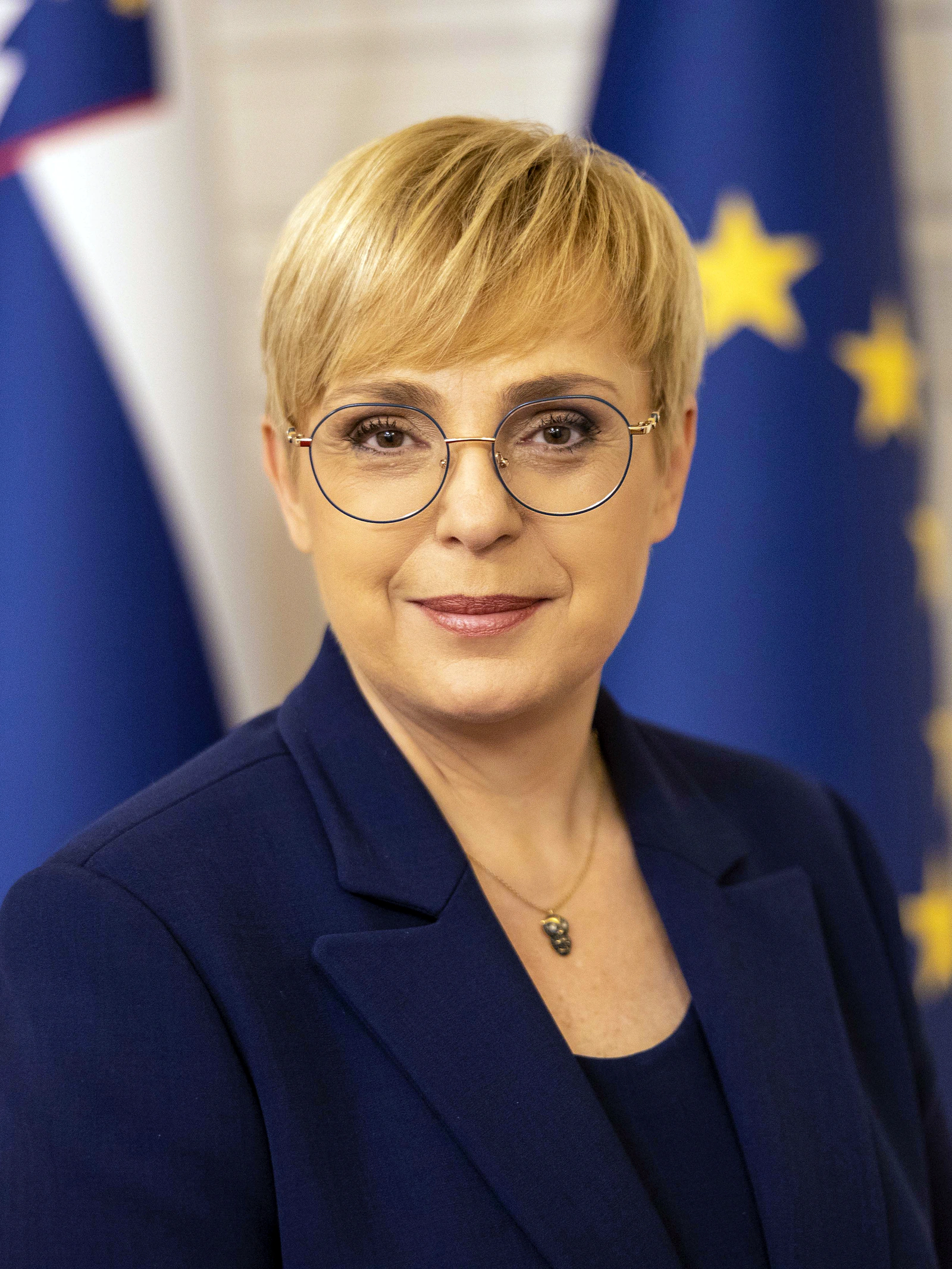
| 10 Quotes | |
| Born as | Nataša Pirc |
| Occup. | President |
| From | Slovenia |
| Spouse | Aleš Musar |
| Born | May 9, 1968 Ljubljana, Socialist Republic of Slovenia, Yugoslavia |
| Age | 57 years |
| Cite | |
Citation Formats
APA Style (7th ed.)
Nataša pirc musar biography, facts and quotes. (2026, February 18). FixQuotes. https://fixquotes.com/authors/natasa-pirc-musar/
Chicago Style
"Nataša Pirc Musar biography, facts and quotes." FixQuotes. February 18, 2026. https://fixquotes.com/authors/natasa-pirc-musar/.
MLA Style (9th ed.)
"Nataša Pirc Musar biography, facts and quotes." FixQuotes, 18 Feb. 2026, https://fixquotes.com/authors/natasa-pirc-musar/. Accessed 31 Mar. 2026.
Early Life and Background
Nataxa Pirx Musar (born Natasa Pirx, 1968) came of age in the last decades of socialist Yugoslavia, in a Slovenia that was outwardly stable yet intellectually restless. The late-1980s in Ljubljana and other Slovenian centers were marked by a rising civil society, sharper debates about censorship and federal power, and a widening sense that the republics would soon be forced to choose between loyalty to a crumbling federation and the risks of sovereignty. Her early worldview was shaped less by grand ideology than by the practical question ordinary people faced: who protects the individual when institutions become instruments of politics.Slovenia's 1991 independence and the quick, tense Ten-Day War were a generational hinge. For Pirx Musar, the transition to a new state created both opportunity and moral pressure: freedoms would not sustain themselves without rules, and rules would be meaningless without rights. The new republic rapidly built democratic institutions, but it also inherited the dilemmas of post-communist Europe - privatization, media power, and the contested handling of the past. Those tensions formed the emotional background of her later public profile: a belief that a small country survives by treating law, credibility, and social cohesion as strategic assets.
Education and Formative Influences
She trained as a lawyer in Ljubljana, entering public life at a moment when Slovenia was professionalizing its judiciary and administrative state while also Europeanizing - joining NATO and the EU in 2004. Her formative influences were practical rather than theoretical: constitutional protections, European human-rights norms, and the hard lessons of the transition years in which new liberties collided with old habits of secrecy. Work in and around media and legal institutions sharpened her understanding that information can be both a public good and a weapon, and that credibility is won by procedure - not by proclamations.Career, Major Works, and Turning Points
Pirx Musar built her reputation at the intersection of law, journalism, and public accountability, becoming known nationally as the first Information Commissioner of the Republic of Slovenia (2004-2014), a post created to enforce access to public information and personal-data protection. In that role she pursued transparency across ministries and state bodies, arguing that democratic trust depends on the public's ability to audit power. After leaving the commission, she worked as an attorney and remained a visible civic voice, including in Slovenia's debates over media freedom, privacy, and the limits of state surveillance. Her defining political turning point came with her successful independent presidential campaign, culminating in her election as President of the Republic of Slovenia in 2022 and inauguration in December - a role in which she has sought to speak above party conflict while keeping the rule-of-law vocabulary close to everyday life.Philosophy, Style, and Themes
Pirx Musar's inner logic is legalistic but not cold: she treats rights as lived experience, not as slogans. Her public language often returns to dignity as the foundation stone that precedes ideology, a consistent theme for a leader formed by post-socialist institutional building. When she insists that “The world may be changing, but the need for respect for human dignity remains as important as ever”. , she is revealing a psychological preference for stable moral anchors in an era of rapid technological and geopolitical flux. Dignity, in her framing, is not a sentimental word; it is the justification for restraints on power, for social inclusion, and for institutions that can survive political moods.A second recurring theme is the ethics of time - the belief that a nation must master its past without becoming captive to it. Her assertion that “Only a country that is not burdened by the past can direct all its energy towards the future. And we must be well prepared for it”. reflects a Slovenian post-independence predicament: how to acknowledge historical wounds, collaboration, and ideological violence while building a shared civic identity. That forward-facing ethic is paired with a stewardship patriotism rather than a triumphalist one, captured in her line, “We must love our country because it is ours. We must love it for the sake of future generations. We must love it so that we can pass it on to our successors in excellent condition”. Taken together, these statements map a personality inclined to responsibility, procedural fairness, and intergenerational thinking - traits reinforced by years spent adjudicating what the state must reveal and what it may legitimately keep private.
Legacy and Influence
Her lasting influence is likely to rest on how she normalized a rights-based vocabulary in Slovenian public leadership: transparency as a daily discipline, privacy as a democratic necessity, and dignity as the bridge between liberal principles and social solidarity. As a president emerging from the professional world of information governance, she embodies a distinctly 21st-century type of head of state for a small EU country - less mythmaker than institutional guardian. In a region where politics can still polarize around memory and identity, Pirx Musar's significance lies in insisting that democratic adulthood is measured not by rhetorical unity but by the state's willingness to be accountable, humane, and future-ready.Our collection contains 10 quotes written by Nataša, under the main topics: Nature - Equality - Human Rights - Aging - Vision & Strategy.
Source / external links