
Nathaniel Hawthorne Biography Quotes 34 Report mistakes
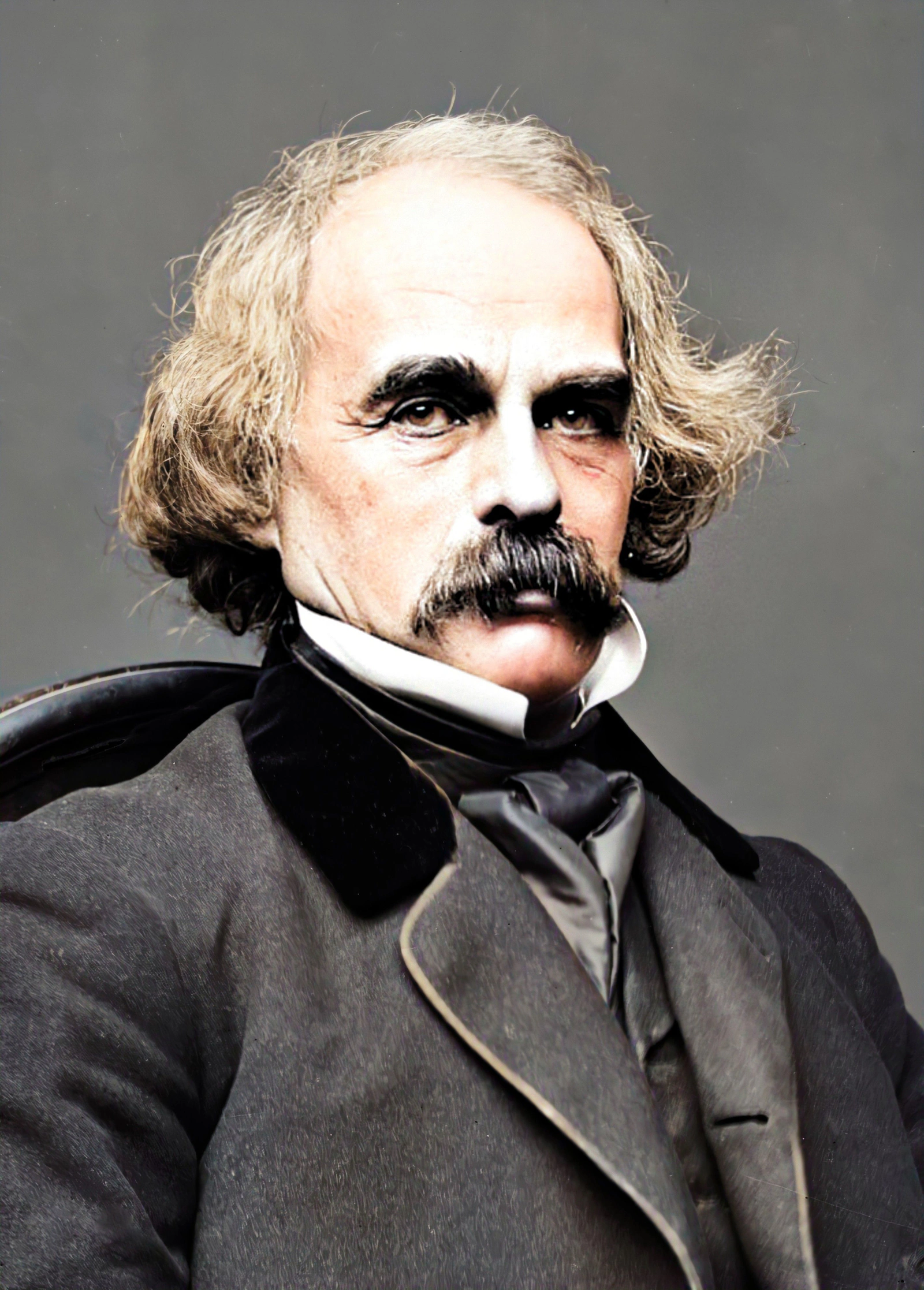
| 34 Quotes | |
| Born as | Nathaniel Hathorne |
| Occup. | Novelist |
| From | USA |
| Born | July 4, 1804 Salem, Massachusetts, United States |
| Died | May 19, 1864 Plymouth, New Hampshire, United States |
| Aged | 59 years |
| Cite | |
Citation Formats
APA Style (7th ed.)
Nathaniel hawthorne biography, facts and quotes. (2026, February 11). FixQuotes. https://fixquotes.com/authors/nathaniel-hawthorne/
Chicago Style
"Nathaniel Hawthorne biography, facts and quotes." FixQuotes. February 11, 2026. https://fixquotes.com/authors/nathaniel-hawthorne/.
MLA Style (9th ed.)
"Nathaniel Hawthorne biography, facts and quotes." FixQuotes, 11 Feb. 2026, https://fixquotes.com/authors/nathaniel-hawthorne/. Accessed 6 Mar. 2026.
Early Life and Background
Nathaniel Hawthorne was born Nathaniel Hathorne on 1804-07-04 in Salem, Massachusetts, into a family whose prestige was shadowed by its Puritan severity and, most notoriously, an ancestor-judge involved in the 1692 witchcraft trials. The old seaport was declining from its mercantile height, and the boy grew up amid a culture that prized moral vigilance and social memory - the kind of place where reputation outlived the living and the past behaved like a creditor.His father, a sea captain, died of yellow fever in Suriname in 1808, leaving Hawthorne to be raised largely within a female household led by his mother, Elizabeth Clarke Manning Hawthorne. The family withdrew into a kind of quiet seclusion that left him both protected and inwardly solitary, sharpening his sense of hidden lives, private guilt, and the strange power of community judgment. He later added a "w" to his surname, symbolically loosening the grip of inherited history even as he made that history the engine of his art.
Education and Formative Influences
Hawthorne attended Bowdoin College in Maine (graduated 1825), forming friendships with Henry Wadsworth Longfellow and Franklin Pierce and reading widely in British and European literature while absorbing the young republics tensions between democratic promise and moral inheritance. After college he returned to Salem for years of disciplined, almost monastic apprenticeship, writing tales and sketches and learning how to turn local legend, Puritan theology, and psychological introspection into narrative pressure - an education in obscurity that taught him both patience and the costs of isolation.Career, Major Works, and Turning Points
His first novel, Fanshawe (1828), he later disowned, but the 1830s and early 1840s brought recognition through short fiction, culminating in Twice-Told Tales (1837, expanded 1842) and the darkly allegorical stories that would define him. A brief experiment in utopian labor at Brook Farm (1841) supplied material for The Blithedale Romance (1852), while his marriage to Sophia Peabody in 1842 and their life at The Old Manse in Concord connected him to New England Transcendentalists even as he remained skeptical of their optimism. The turning point was The Scarlet Letter (1850), written in financial urgency after losing a Salem Custom House post, followed quickly by The House of the Seven Gables (1851) and The Marble Faun (1860). His friendship with Pierce led to a U.S. consulship in Liverpool (1853-1857), yielding The English Notebooks and sharpening his sense of how old-world institutions and new-world innocence mirrored each other. He died on 1864-05-19 while traveling with Pierce in New Hampshire.Philosophy, Style, and Themes
Hawthornes imagination was moral rather than doctrinal: he distrusted easy redemption and refused to flatter either Puritan certainty or modern self-congratulation. He was fascinated by the moment when private intention becomes public meaning - how a symbol (a letter, a veil, a birthmark) can colonize a whole life. “Words - so innocent and powerless as they are, as standing in a dictionary, how potent for good and evil they become in the hands of one who knows how to combine them”. The line reads like a craft note, but it also confesses anxiety: language is not merely expressive, it is consequential, and the writer bears responsibility for the psychic and social aftereffects of arrangement.Again and again he tests heroism against self-doubt and communal scrutiny, creating protagonists who ache to be good yet fear their own motives. “The greatest obstacle to being heroic is the doubt whether one may not be going to prove one's self a fool; the truest heroism is to resist the doubt; and the profoundest wisdom, to know when it ought to be resisted, and when it be obeyed”. That psychology animates Arthur Dimmesdale, Ethan Brand, and countless Hawthorne figures who are neither villains nor saints but wounded moral experimenters. His view of happiness is similarly oblique, almost clinical about the minds tendency to turn desire into self-punishment: “Happiness in this world, when it comes, comes incidentally. Make it the object of pursuit, and it leads us a wild-goose chase, and is never attained”. In his fiction, the chase itself becomes a sin of narrowing - a willful fixation that blinds characters to ordinary grace.
Legacy and Influence
Hawthorne helped define American romance as a form capable of historical depth, symbolic intensity, and psychological realism without abandoning the uncanny. His Puritan New England became a national myth-space where later writers could stage conflicts between individual conscience and collective power, from Henry James to William Faulkner to Toni Morrison. In classrooms and criticism, The Scarlet Letter remains a touchstone for thinking about shame, sexuality, public surveillance, and the politics of forgiveness; in the broader culture, his very name evokes the idea that the past is never past, only rewritten - sometimes as art, sometimes as indictment.Our collection contains 34 quotes written by Nathaniel, under the main topics: Witty One-Liners - Ethics & Morality - Wisdom - Truth - Art.
Other people related to Nathaniel: Henry Wadsworth Longfellow (Poet), Henry W. Longfellow (Poet), James Thomas Fields (Publisher), George Edward Woodberry (Critic), Carl Clinton Van Doren (Critic), Edwin Percy Whipple (Writer), Franklin Pierce (President), Van Wyck Brooks (Critic)
Nathaniel Hawthorne Famous Works
- 1860 The Marble Faun (Novel)
- 1852 The Blithedale Romance (Novel)
- 1851 The House of the Seven Gables (Novel)
- 1850 The Scarlet Letter (Novel)
- 1846 Mosses from an Old Manse (Short Story Collection)
- 1837 Twice-Told Tales (Short Story Collection)