
Neil Armstrong Biography Quotes 27 Report mistakes
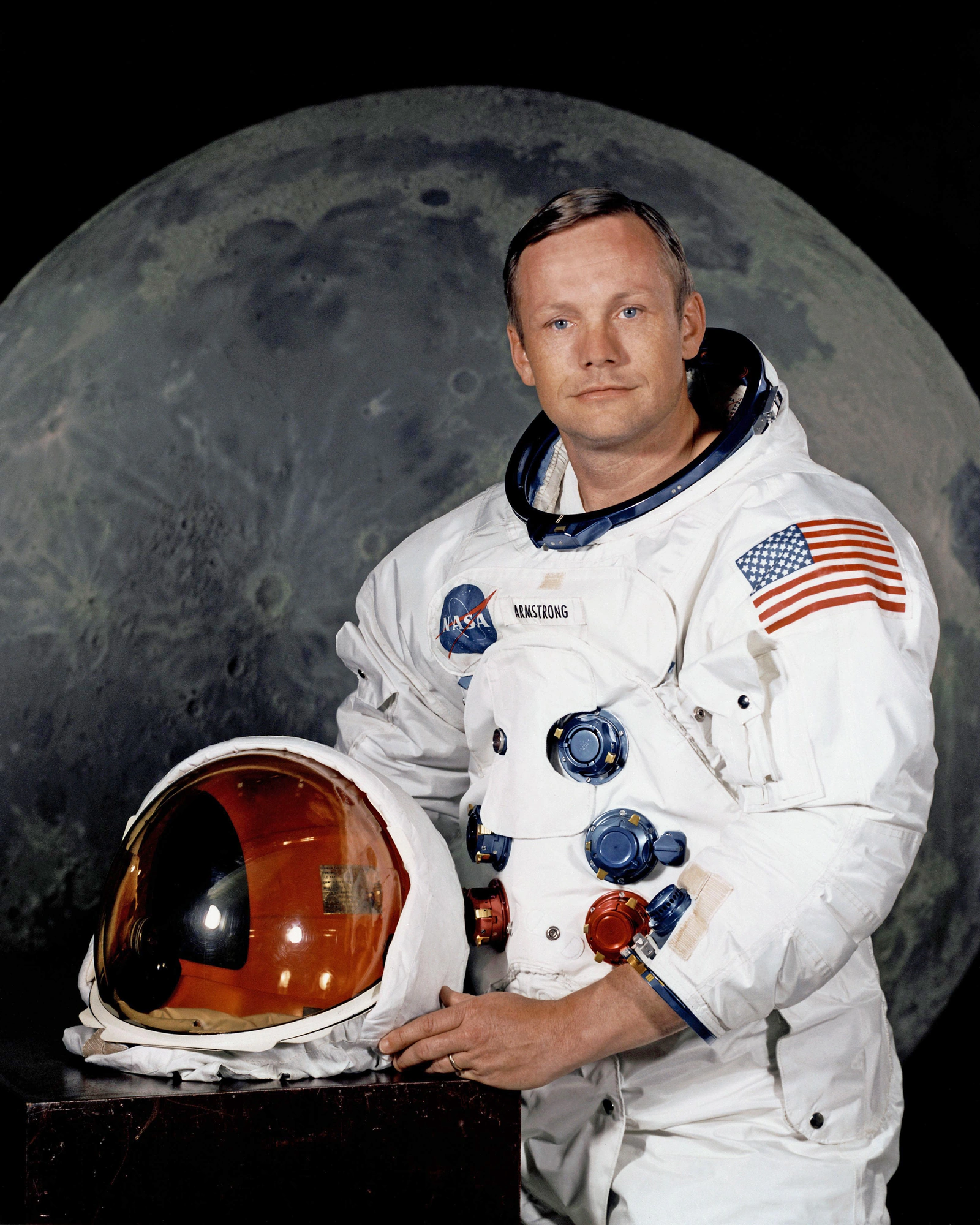
| 27 Quotes | |
| Born as | Neil Alden Armstrong |
| Occup. | Astronaut |
| From | USA |
| Spouse | Janet Shearon |
| Born | August 5, 1930 Wapakoneta, Ohio, USA |
| Died | August 25, 2012 Cincinnati, Ohio, USA |
| Cause | Cardiovascular disease |
| Aged | 82 years |
| Cite | |
Citation Formats
APA Style (7th ed.)
Neil armstrong biography, facts and quotes. (2026, February 11). FixQuotes. https://fixquotes.com/authors/neil-armstrong/
Chicago Style
"Neil Armstrong biography, facts and quotes." FixQuotes. February 11, 2026. https://fixquotes.com/authors/neil-armstrong/.
MLA Style (9th ed.)
"Neil Armstrong biography, facts and quotes." FixQuotes, 11 Feb. 2026, https://fixquotes.com/authors/neil-armstrong/. Accessed 6 Mar. 2026.
Early Life and Background
Neil Alden Armstrong was born on 1930-08-05 in Wapakoneta, Ohio, a small town shaped by Midwestern thrift and the long shadow of Dayton's aviation pioneers. His father, Stephen Koenig Armstrong, worked as a state auditor, moving the family around Ohio; his mother, Viola Louise Engel, held the household steady. The constant relocations - from Warren to St. Marys to other stops - made Armstrong quietly adaptable, a boy learning to observe first, speak later, and find continuity in skills rather than places.Aviation became his continuity. He built model airplanes, devoured aeronautical lore, and made his first airplane flight as a child, an experience he later connected to Ohio's mythology of lift and invention: “As a boy, because I was born and raised in Ohio, about 60 miles north of Dayton, the legends of the Wrights have been in my memories as long as I can remember”. By his mid-teens he was taking flying lessons, earning a student pilot certificate before he could drive - a pattern that would define him: competence first, ceremony later.
Education and Formative Influences
Armstrong entered Purdue University to study aeronautical engineering under the U.S. Navy's Holloway Plan, which combined college with flight training and service. The Korean War interrupted his studies; after being called to active duty, he flew from aircraft carriers as a naval aviator, experiencing the severe discipline of operational flying and the moral weight of risk borne for others. Returning to Purdue to finish his degree, he emerged as a pilot-engineer hybrid, formed by wartime pragmatism and by a postwar America that treated flight as both technology and national identity.Career, Major Works, and Turning Points
After graduation Armstrong joined NACA, later NASA, as a research pilot at the High-Speed Flight Station at Edwards Air Force Base in California, flying X-series aircraft in the era when test pilots routinely wrote their own epitaphs. He flew the X-15 and other experimental planes, learned to translate danger into data, and became known for an unshowy, analytic calm. Selected as an astronaut in 1962, he flew Gemini 8 in 1966, surviving a terrifying roll caused by a stuck thruster by improvising a recovery that saved the crew. That crisis, and the technical seriousness it demanded, foreshadowed Apollo 11. On 1969-07-20, commanding Eagle with Buzz Aldrin while Michael Collins orbited above, he piloted the lunar module past a boulder field to a safe touchdown and radioed the line that marked a new boundary for humanity: “Houston, Tranquillity Base here. The Eagle has landed”. His first steps and the mission's success made him a symbol, though he spent the rest of his life resisting the flattening effects of fame. After leaving NASA he served as Deputy Associate Administrator for Aeronautics, then taught aerospace engineering at the University of Cincinnati, later advising industry and serving on investigative commissions, including the panel that examined the Challenger disaster. He died on 2012-08-25 in the United States after complications following heart surgery.Philosophy, Style, and Themes
Armstrong's public style was precise, spare, and engineering-minded, a rhetoric tuned to checklists rather than charisma. That restraint was not a lack of feeling but a way of keeping emotion proportional to responsibility. He habitually redirected praise toward systems and teams, reflecting how large technical projects actually work and how dangerous it is to confuse a heroic narrative with causal reality: “We had hundreds of thousands of people all dedicated to doing the perfect job, and I think they did about as well as anyone could ever have expected”. In him, humility functioned as a safety device.Under the calm voice was a profound sensitivity to scale and consequence. The Moon did not make him feel bigger; it made him feel smaller in a way that sharpened ethics and perspective: "It suddenly struck me that that tiny pea, pretty and blue, was the Earth. I put up my thumb and shut one eye, and my thumb blotted out the planet Earth. I didn't feel like a giant. I felt very, very small" [QuoteID
Our collection contains 27 quotes written by Neil, under the main topics: Witty One-Liners - Motivational - Leadership - Deep - Live in the Moment.
Other people related to Neil: Gordon Cooper (Astronaut)
Source / external links