
Nguyen Van Thieu Biography Quotes 4 Report mistakes
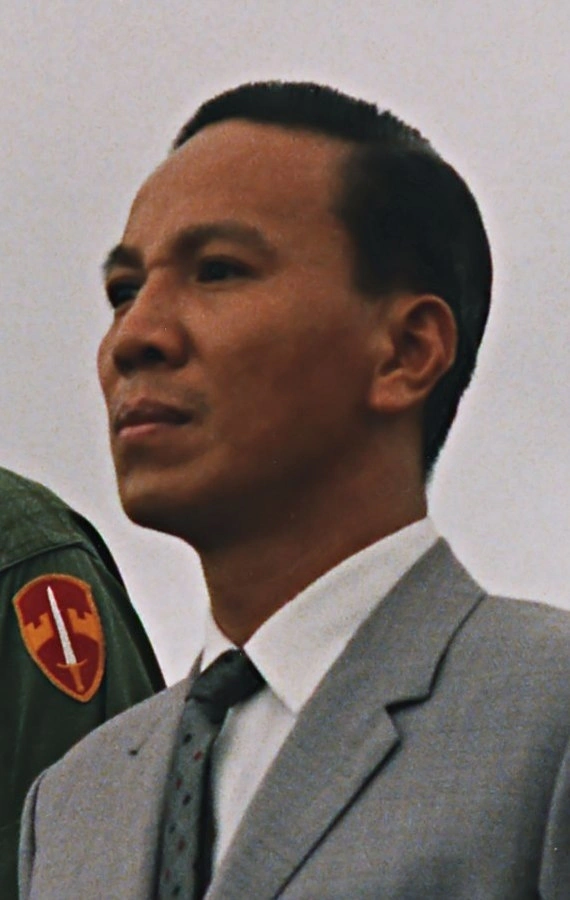
| 4 Quotes | |
| Occup. | Statesman |
| From | Vietnam |
| Born | April 5, 1923 |
| Died | September 29, 2001 |
| Aged | 78 years |
| Cite | |
Citation Formats
APA Style (7th ed.)
Nguyen van thieu biography, facts and quotes. (2026, February 11). FixQuotes. https://fixquotes.com/authors/nguyen-van-thieu/
Chicago Style
"Nguyen Van Thieu biography, facts and quotes." FixQuotes. February 11, 2026. https://fixquotes.com/authors/nguyen-van-thieu/.
MLA Style (9th ed.)
"Nguyen Van Thieu biography, facts and quotes." FixQuotes, 11 Feb. 2026, https://fixquotes.com/authors/nguyen-van-thieu/. Accessed 27 Mar. 2026.
Early Life and Background
Nguyen Van Thieu was born on 1923-04-05 in Phan Rang, in Ninh Thuan province, French Indochina, a dry coastal region where Cham, Vietnamese, and colonial institutions met in uneasy proximity. Raised amid the stratified realities of French rule and the ferment of Vietnamese nationalism, he came of age as World War II destabilized the colonial order and as competing visions of liberation - communist, monarchist, republican, sectarian - fought for the same word: independence.That early landscape shaped a temperament more guarded than charismatic. Thieu learned politics first as survival: weighing patrons, reading power, and distrusting declarations that were not backed by force. The years of Japanese occupation, the 1945 collapse of French authority, and the subsequent First Indochina War made the central dilemma of his life visceral - how to build a non-communist Vietnamese state under constant pressure from both insurgency and foreign allies with their own priorities.
Education and Formative Influences
Thieu trained for the military rather than the salon. He joined the French-sponsored Vietnamese National Army and later advanced through the institutions that became the Army of the Republic of Vietnam (ARVN), receiving professional education that stressed hierarchy, territorial security, and anti-communist doctrine. Mentored by senior officers and shaped by the experience of fighting the Viet Minh and later the Viet Cong, he absorbed a conviction that political legitimacy in wartime flowed from control of the countryside, disciplined armed force, and the ability to keep external patrons engaged without surrendering sovereignty - a balancing act that would define his presidency.Career, Major Works, and Turning Points
Thieu rose through ARVN ranks during the 1950s and early 1960s, moving from field command into the turbulent officer politics of Saigon. After the 1963 overthrow of Ngo Dinh Diem, he became a prominent general in a state repeatedly reset by coups and factional bargains; in 1965 he joined the ruling directorate and, paired with Air Marshal Nguyen Cao Ky, became a central face of the post-coup regime. Elected president in 1967 and re-elected in 1971 under controversial conditions, he presided over the high-water mark and then the contraction of South Vietnam: pacification efforts, the strain of the Tet Offensive aftermath, the U.S.-backed Vietnamization strategy, and the wrenching 1973 Paris Peace Accords that withdrew American combat forces while leaving North Vietnamese forces in place. As U.S. aid and political will eroded, Thieu confronted accelerating battlefield and fiscal collapse; he resigned in April 1975, denouncing Washington, and fled into exile, living in Taiwan and later the United States until his death on 2001-09-29.Philosophy, Style, and Themes
Thieu's governing mind was that of an officer-politician who mistrusted rhetoric and read war as the truest language. His anti-communism was not abstract but experiential, formed by years of insurgency and by the North's ability to use negotiation as maneuver. In that spirit he insisted, “Don't listen to what the Communists say, but look at what they do”. The line captures his psychological core: suspicion as prudence, and prudence as a moral stance when words can be weaponized. It also reveals his limitations - an emphasis on security often outpacing coalition-building, and a tendency to treat dissent as vulnerability rather than feedback.His style as president mixed public resolve with private anxiety about abandonment. The Paris settlement and the subsequent U.S. congressional cuts intensified an older fear that allies could redefine commitments midstream. His bitterness was not only personal; it was strategic, rooted in the belief that credibility itself is a battlefield asset. “But the United States did not keep its word. Is an American's word reliable these days?” That question, rhetorical and raw, shows a man interpreting defeat through the lens of promises and leverage, not merely tactics. Yet it also indicates how he framed South Vietnam's struggle - as a fight for "freedom" coupled to alliance guarantees - and how the collapse of those guarantees narrowed his options until withdrawal, redeployment, and political compromise became impossible to sell at home.
Legacy and Influence
Thieu remains one of the most contested figures of the Vietnam War era: to critics, an authoritarian whose elections, patronage networks, and security-driven governance weakened the very civic legitimacy needed for endurance; to supporters, a leader asked to build a state while fighting a total war and managing a superpower patron increasingly eager to exit. His exile statements hardened a narrative of abandonment that still shapes Vietnamese diaspora memory, while historians continue to debate the relative weight of Saigon's internal fractures versus Washington's strategic retrenchment and Hanoi's long-term coercive advantage. In the end, Thieu's influence lies less in policy innovations than in the stark lesson his life embodies - the fragility of small-state sovereignty when war, ideology, and alliance politics collide.Our collection contains 4 quotes written by Nguyen, under the main topics: Truth - Honesty & Integrity - War - Betrayal.
Source / external links