
Nguyen Xuan Phuc Biography Quotes 20 Report mistakes
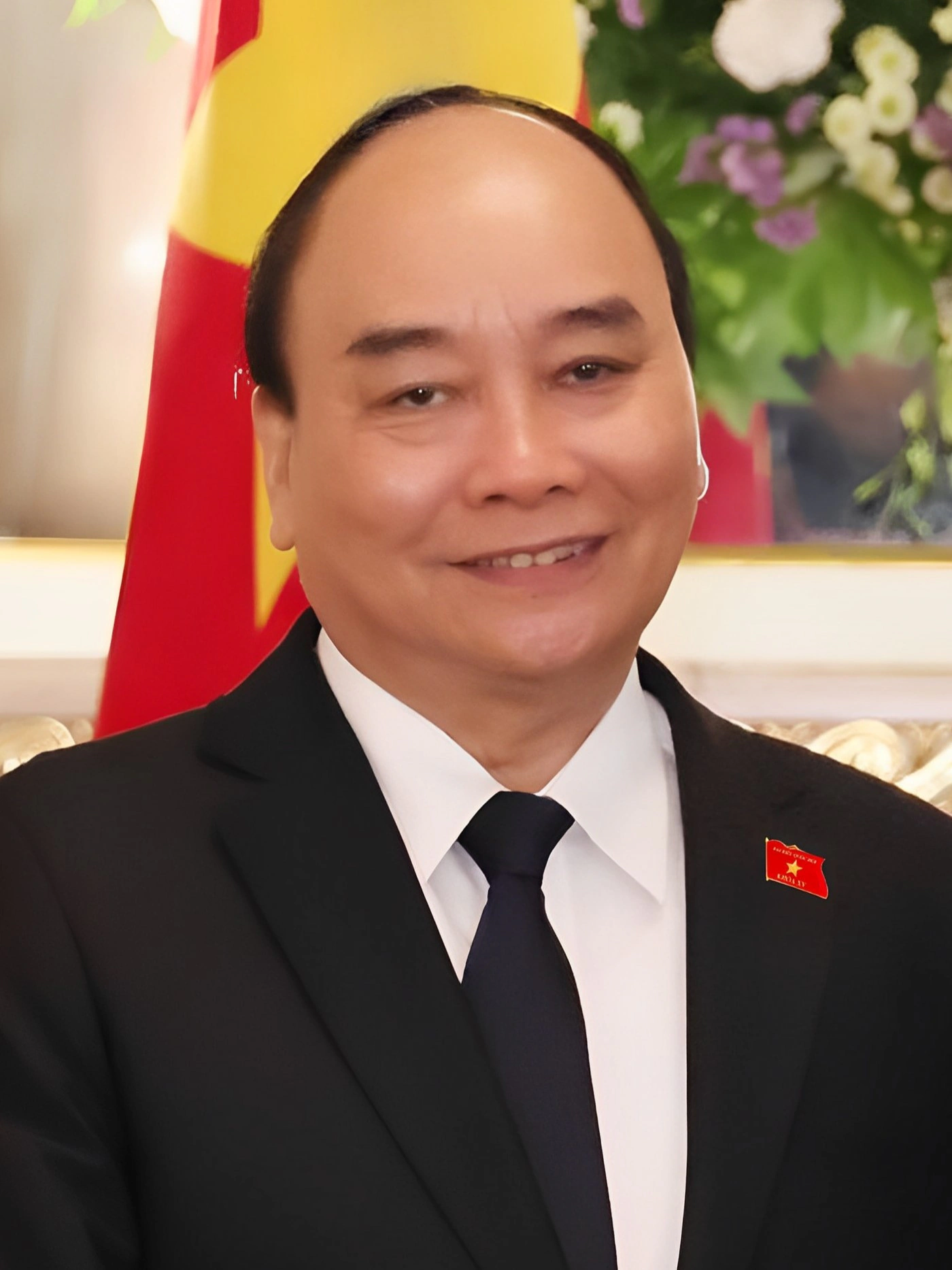
| 20 Quotes | |
| Occup. | Politician |
| From | Vietnam |
| Born | July 20, 1954 Quang Nam |
| Age | 71 years |
| Cite | |
Citation Formats
APA Style (7th ed.)
Nguyen xuan phuc biography, facts and quotes. (2026, February 11). FixQuotes. https://fixquotes.com/authors/nguyen-xuan-phuc/
Chicago Style
"Nguyen Xuan Phuc biography, facts and quotes." FixQuotes. February 11, 2026. https://fixquotes.com/authors/nguyen-xuan-phuc/.
MLA Style (9th ed.)
"Nguyen Xuan Phuc biography, facts and quotes." FixQuotes, 11 Feb. 2026, https://fixquotes.com/authors/nguyen-xuan-phuc/. Accessed 12 Feb. 2026.
Early Life and Entry into Public Service
Nguyen Xuan Phuc was born in 1954 in Quang Nam Province, central Vietnam. He entered public service after the country's reunification, building a career in local administration at a time when the state was consolidating institutions and introducing gradual economic reforms. His early responsibilities centered on economic management and administrative affairs, areas that would shape his later reputation as a pragmatic organizer who prioritized implementation and inter-agency coordination.Provincial Leadership and Rise to National Prominence
Phuc's first major steps came in the central region, where he worked through the ranks of provincial government. His roles broadened from departmental work to leadership positions that required balancing development planning, budget allocation, and social programs. He became known for attention to detail, a methodical approach to dossiers, and an emphasis on measurable outcomes. As he moved to the national stage, he brought with him the perspective of a provincial administrator dealing with investors, infrastructure, and the day-to-day challenges of public services.From Deputy Prime Minister to Prime Minister
By the early 2010s Phuc was serving in the central government in positions that put him close to the executive core, including work in the Government Office and the deputy premiership. He became a member of the Politburo, joining the country's top leadership cohort. In 2011 he served as Deputy Prime Minister in the cabinet of Prime Minister Nguyen Tan Dung, where he was tasked with administrative reform and oversight of several socio-economic portfolios. At the 12th National Congress of the Communist Party of Vietnam in 2016, the leadership was reshaped under General Secretary Nguyen Phu Trong. The National Assembly subsequently elected Phuc as Prime Minister. As head of government, he worked with key deputies such as Truong Hoa Binh, Pham Binh Minh, and Vu Duc Dam, and coordinated closely with National Assembly Chair Nguyen Thi Kim Ngan during his early term.Domestic Governance and Economic Policy
As Prime Minister, Phuc focused on improving the business environment, promoting administrative simplification, and supporting export-oriented manufacturing. He pressed ministries and provinces to cut red tape, encouraged the development of e-government tools, and emphasized macroeconomic stability. Vietnam recorded solid growth between 2016 and 2019, aided by a favorable global environment and strong domestic reforms. When the COVID-19 pandemic struck in 2020, his government initially prioritized containment through public health measures and border controls, while attempting to maintain continuity for production and supply chains. Coordination with Deputy Prime Ministers, particularly Vu Duc Dam on health responses and Pham Binh Minh on external facilitation, was a defining feature of this period. Throughout, Phuc aligned with Nguyen Phu Trong's broader anti-corruption drive, which strengthened internal discipline and governance standards across state entities.Foreign Policy and International Engagement
Phuc's tenure corresponded with an active period in Vietnam's international integration. He supported the implementation of multiple trade agreements and promoted investment diversification. In 2017, Vietnam hosted the APEC Economic Leaders' Week in Da Nang, a high-profile moment in which he, as head of government, welcomed leaders from the Asia-Pacific and showcased the country's development agenda. His diplomacy was pragmatic and economy-focused, aiming to balance relations among major partners while preserving strategic autonomy. He worked in conjunction with key security and foreign affairs figures such as Minister of Public Security To Lam and senior diplomats under the direction of the deputy prime minister in charge of foreign affairs.Transition to the State Presidency
After the 13th National Congress in 2021, Vietnam's leadership format evolved once more. Phuc was elected State President by the National Assembly in April 2021, succeeding Nguyen Phu Trong in that office. In the new arrangement, Pham Minh Chinh became Prime Minister and Vuong Dinh Hue was elected National Assembly Chair, forming the country's four-pillars leadership alongside General Secretary Nguyen Phu Trong. As President, Phuc performed constitutional duties related to state representation, defense and security oversight at the council level, and high-level diplomacy. He received visiting heads of state and led delegations abroad, with Vice President Vo Thi Anh Xuan assisting him in ceremonial and constitutional functions.Resignation and Political Accountability
In early 2023, amid a broader focus on integrity in public service and investigations into misconduct by some officials during the pandemic period, Phuc tendered his resignation from the presidency. The National Assembly accepted his resignation, and he also left his positions in the Party's top organs. The move was framed within the principle of political responsibility in a system that emphasizes collective leadership and accountability. Following his departure, Vice President Vo Thi Anh Xuan served as acting president until the legislature elected a new head of state. The reshuffle occurred alongside other senior changes, including the earlier departures of Pham Binh Minh and Vu Duc Dam from the government, underscoring the depth of the accountability campaign led by Nguyen Phu Trong.Leadership Style and Working Relationships
Phuc's leadership was characterized by an administrator's focus on execution: deadlines, inspection trips, and inter-ministerial coordination. He built working relationships across the cabinet and the Party apparatus, often convening with deputies such as Truong Hoa Binh and Vu Duc Dam on social and technological programs and with Pham Binh Minh on external affairs. In the legislature he engaged with National Assembly leaders, initially Nguyen Thi Kim Ngan and later Vuong Dinh Hue, pressing for legal frameworks to support modernization. In security and legal matters he interacted with key figures including To Lam. His tenure was also marked by close coordination with Prime Ministers he served with or succeeded, from Nguyen Tan Dung to Pham Minh Chinh, as well as with General Secretary Nguyen Phu Trong, whose strategic direction on anti-corruption and cadre integrity deeply shaped the environment in which Phuc governed.Legacy
Nguyen Xuan Phuc's national career spans the arc of Vietnam's state-building in the reform era: provincial development, central administration, the premiership, and the presidency. He is associated with efforts to streamline administration, sustain growth, and deepen global economic integration, while also being part of a leadership period defined by stronger internal oversight. The accountability-driven end to his presidential term places his legacy within Vietnam's evolving expectations for public service conduct. Yet his years as Prime Minister left a durable imprint on economic management and on the habits of practical governance that he championed: a focus on implementation, institutional coordination, and stability amid uncertainty.Our collection contains 20 quotes written by Nguyen, under the main topics: Nature - Learning - Equality - Peace - Legacy & Remembrance.
Source / external links